Is it risky or subversive for Academician Ge Junbo to complete the world’s first polymer interventional valve implantation?
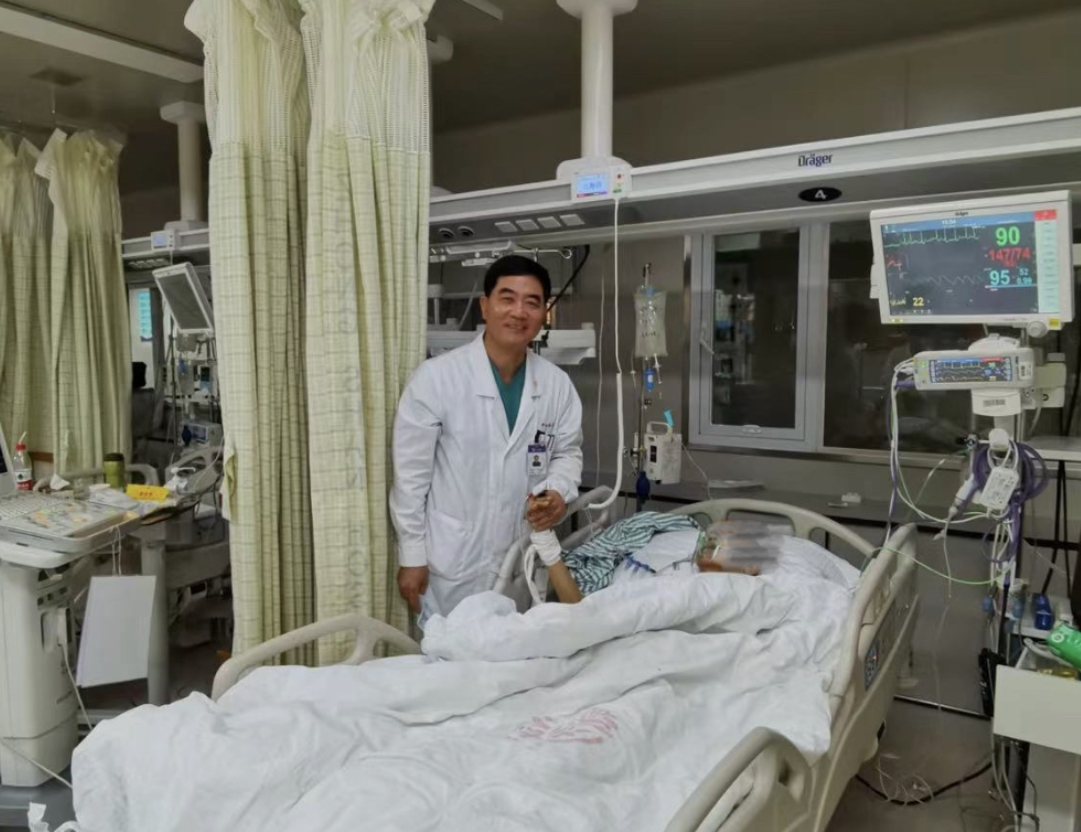
On July 6th, Professor Ge Junbo, academician of China Academy of Sciences and director of the Department of Cardiology, Zhongshan Hospital affiliated to Fudan University, implanted the world’s first polymer-based artificial heart valve for an 80-year-old patient with severe aortic stenosis. At present, the patient is in good condition.
The heart valve used in this operation is Polymer TAVR TRISKELE, a synthetic polymer nanocomposite aortic valve replacement system independently developed by Shanghai Yixin Medical. It has achieved a generational breakthrough in valve materials and is expected to extend the life of heart valves by about 10 years on the basis of current biological valves.
A leap in materials science
In the past, artificial heart valves used pericardium tissue from pigs or cows, also known as biological valves. Although animal pericardium tissue has been clinically used for many years, it has proved that it has good durability and antithrombotic performance, but its service life is still limited, generally only 10-15 years, and the processing and sewing requirements are very high, so it can not be cut into some special shapes.
With the improvement of materials science, polymers can make up for the shortcomings of pericardial valves to a certain extent, and it is easier to process and cut. In vitro simulation experiments, some polymers show a longer service life than traditional bovine pericardial valves. Pulsating flow tests show that the service life of polymer valves can be as long as 25 years, and like biological pericardial valves, polymer valves do not need lifelong anticoagulation, nor do they produce noise from mechanical valves, and they have zero calcification and zero noise.
A material expert told the First Financial Reporter that the research and development of polymer valves is very difficult. After decades of research and repeated verification, scientists, clinicians and materials scientists around the world have made a breakthrough in the past two years and developed a polymer valve that meets clinical requirements, and there are still few enterprises in the world that have mastered this core technology.
Academician Ge Junbo participated in the evaluation of TRISKELE aortic valve replacement system from the animal experiment stage. He was confident in this revolutionary polymer material and technology, and the operation went smoothly.
"We think this is a subversive material, and multi-polymer polymer valves and degradable endothelial-promoting valves may replace biological valves as new choices. It has only been proved in animal experiments that its results are good, but there are still many uncertainties in the human body. " Academician Ge Junbo told the First Financial Reporter after the operation, "We are now conducting a study on the feasibility of the human body. The first thing is to ensure the safety of patients."
Ge Junbo emphasized that improving valve durability is one of the key directions of valve research and development in the next stage, and developing treatment programs for young patients and paying attention to lifelong management programs for young patients with aortic stenosis is also an important direction that needs efforts.
The long-term effect has yet to be verified.
From animal experiment to human implantation, polymer valve has taken a key step in the history of cardiac interventional surgery in China. In May last year, Foldax, an American medical device innovation company, completed the first multi-polymer mitral valve implantation in the local area, using the polymer material LifePolymer developed by Tria Company in the United States. Foldax Company is also the first enterprise in the world to push polymer valves into clinical practice, but Foldax’s valves are surgical valves. This time, Academician Ge Junbo applied multi-polymer valves to interventional valve replacement surgery (TAVR) valves, which is the first in the world.
However, it will take a long time for this kind of multi-polymer valve to be truly applied and popularized in clinic. "The concept of polymer valve material is very good. The first human implantation proves that this concept is feasible, but more questions need long-term research to answer. For example, how long is the life of this valve? Now only in vitro mechanical simulation experiments prove that there is no biological simulation." Professor Pan Wenzhi from the Department of Cardiology, Zhongshan Hospital affiliated to Fudan University, who participated in the operation, told the First Financial Reporter.
Some insiders also suggested that we should pay attention to the complications after polymer valve implantation. "The progress of materials science has made rapid progress in polymer valves in the past two years, but it is far from mature. Implanting into the human body is a great adventure, and the mechanism of subsequent complications is still unclear." A related person in the medical device industry told the First Financial Reporter.
The first financial reporter consulted the global patent database of Wisdom Bud and found that there are currently more than 2,000 patent applications in the field of polymer heart valves in the world, including more than 1,700 invention patents.
Many enterprises in China are also developing polymer valves. The enterprises with the highest number of patent applications include Dejin Medical, Xintong Medical, Xianjian Technology, Qiming Medical and Peijia Medical, and some of them have completed animal experiments. Peijia Medical has named the next generation of polymer valve products TaurusApex. At present, animal experiments have been completed and the results have been published, and preparations are being made for human clinical research.