Why is the Jaguar XEL, which starts at less than 170,000, still not recommended?
In today’s fierce price war, second- and third-tier luxury brand cars seem to have reached the point where no one cares. Previously, those who were in the early 200,000 have quietly come to the 160,000 price of naked cars. You know, a few years ago, this price could only buy one or, but now you can jump "two levels" in a row, not only buying B-class cars, but also B-class cars of luxury brands.
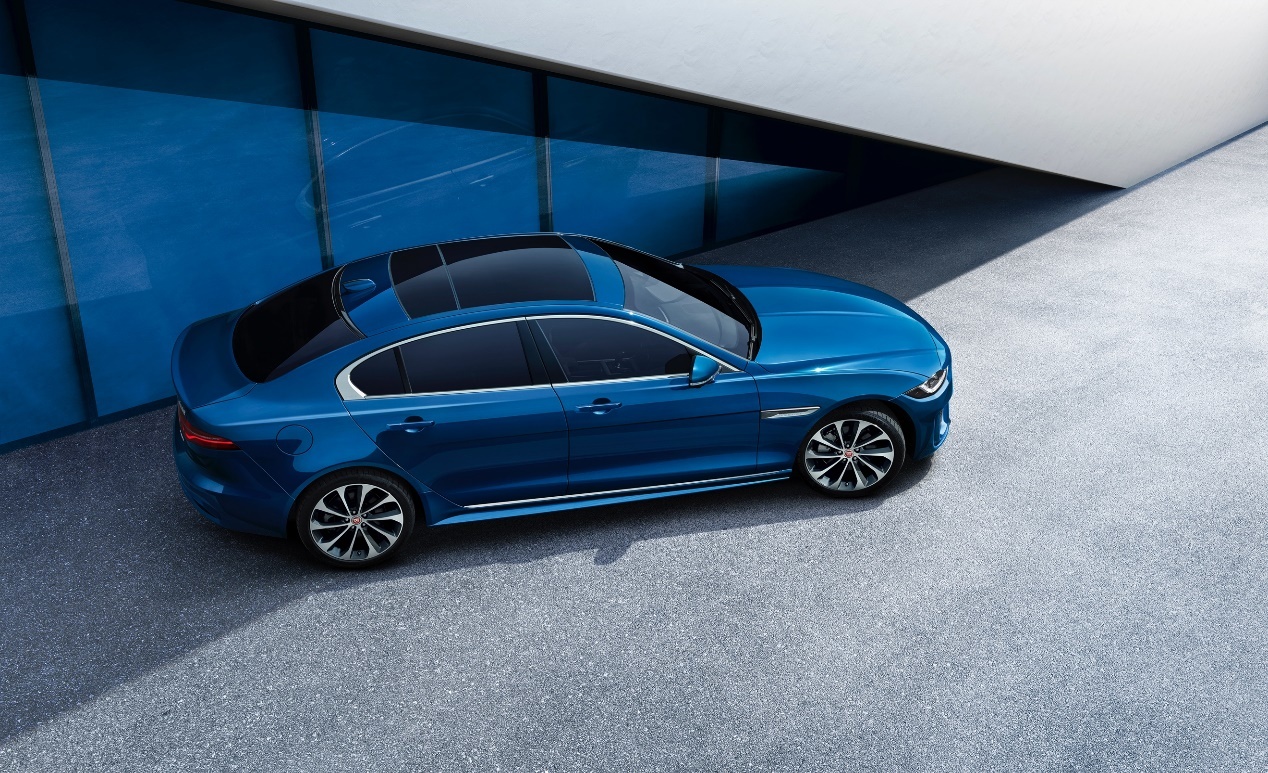
First of all, there will be a certain "moisture" in this price, for example, you need to do staging, or you need to choose a certain body decoration. If you follow the 5-year staging or add the decoration of the original 4S quotation, the overall price will still break through 200,000, after all, "wool comes from sheep". But overall, it is no different from the price of the previous year, and it becomes just the "routine" of the 4S store.
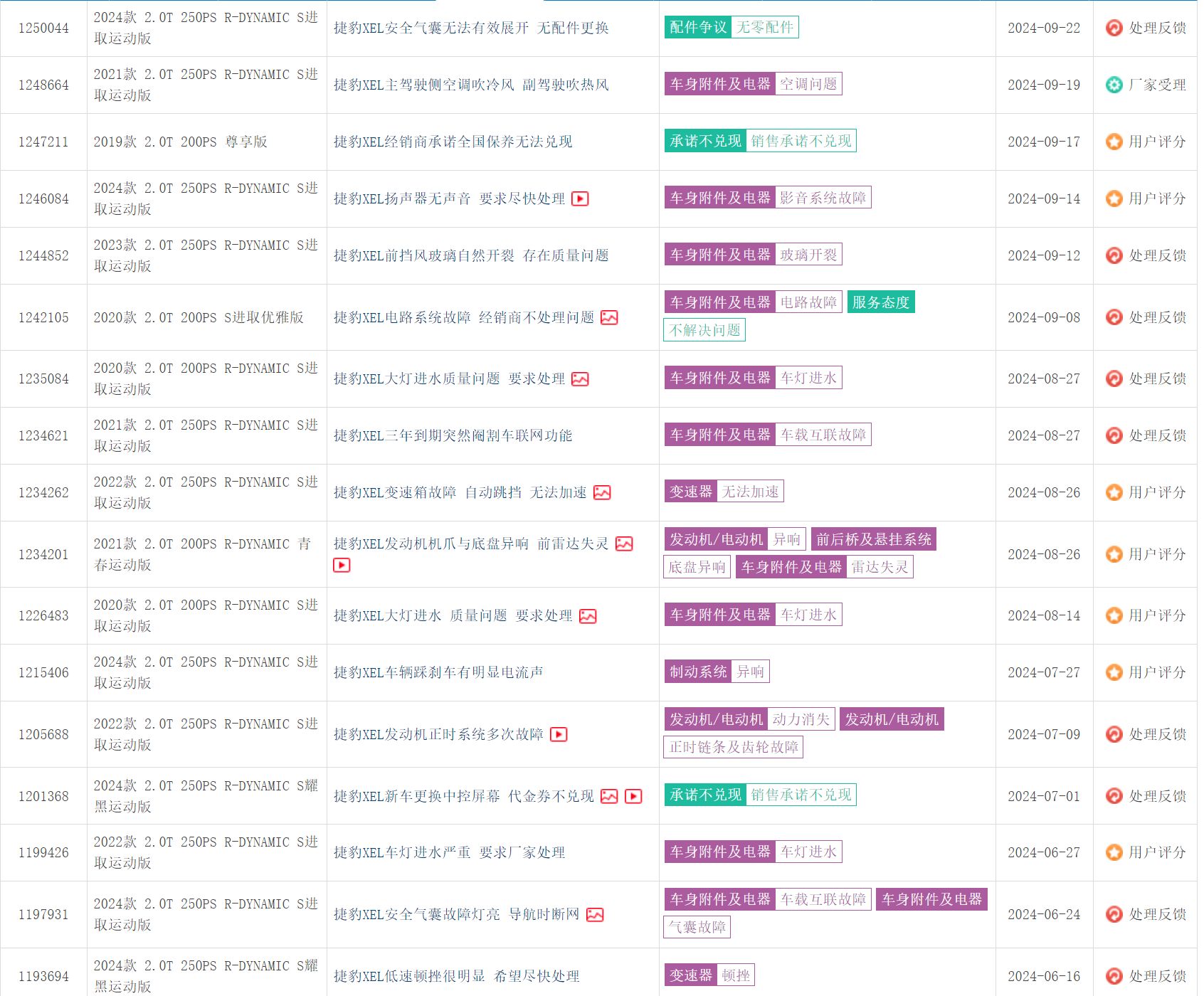
Secondly, the failure rate of Jaguar is still not low. Although it has been continuously updated for 7 or 8 years, even the latest 2024 model still has leaking headlights, engine timing and transmission shake problems. And these more "low-level" problems should have been solved in the first change. This may mean that Jaguar has not put too much "thought" on the domestic XEL, resulting in the car’s sales even if it is changed every year.
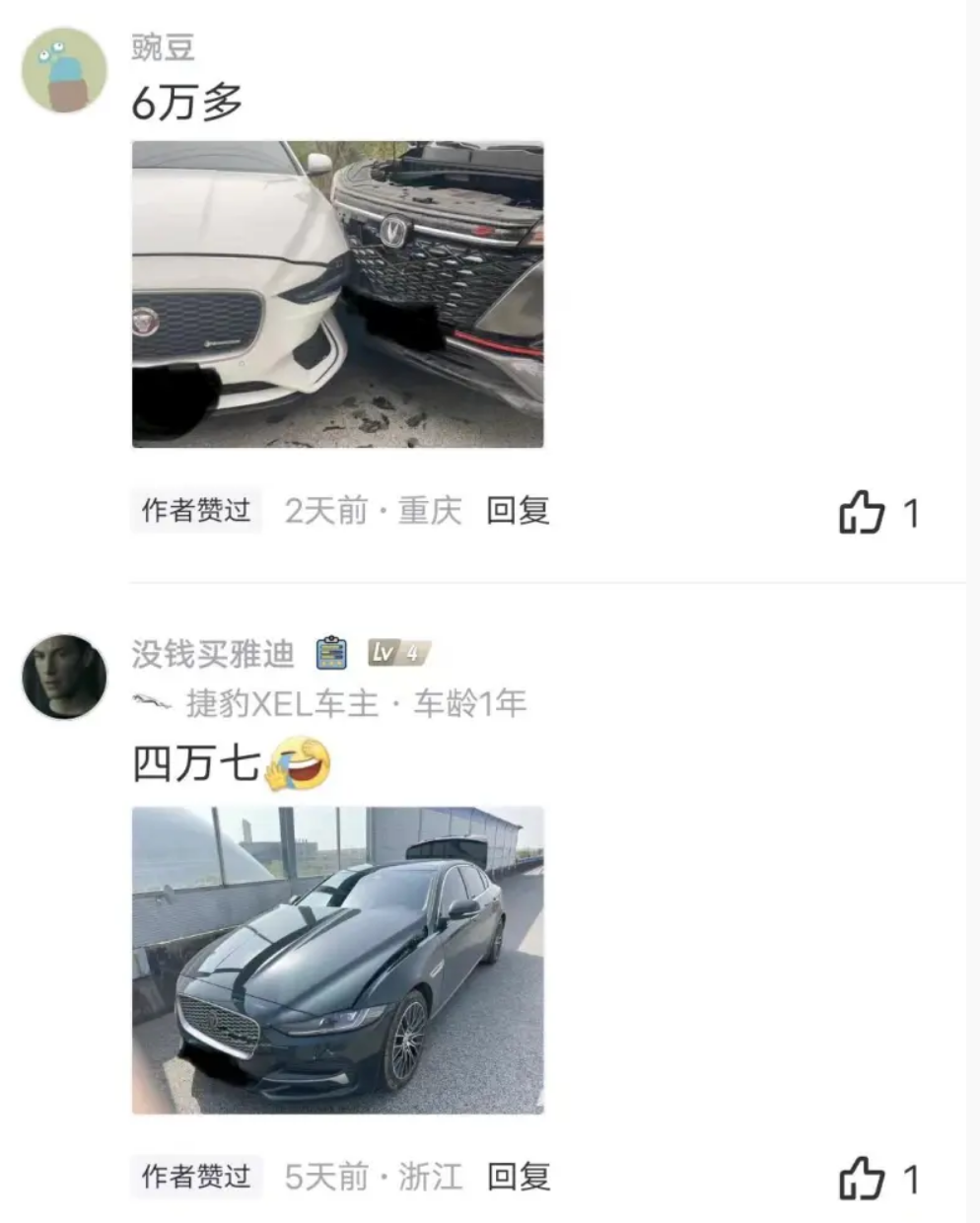
Secondly, even if this car is already domestically produced, its after-sales price is still high. You can see many car owners "posting orders" on the Internet. Even a small cut on the front face requires 5-60,000 maintenance costs. Compared with its car price, it is definitely "sky-high". Even the price of its accessories is higher than that of first-line luxury brands.
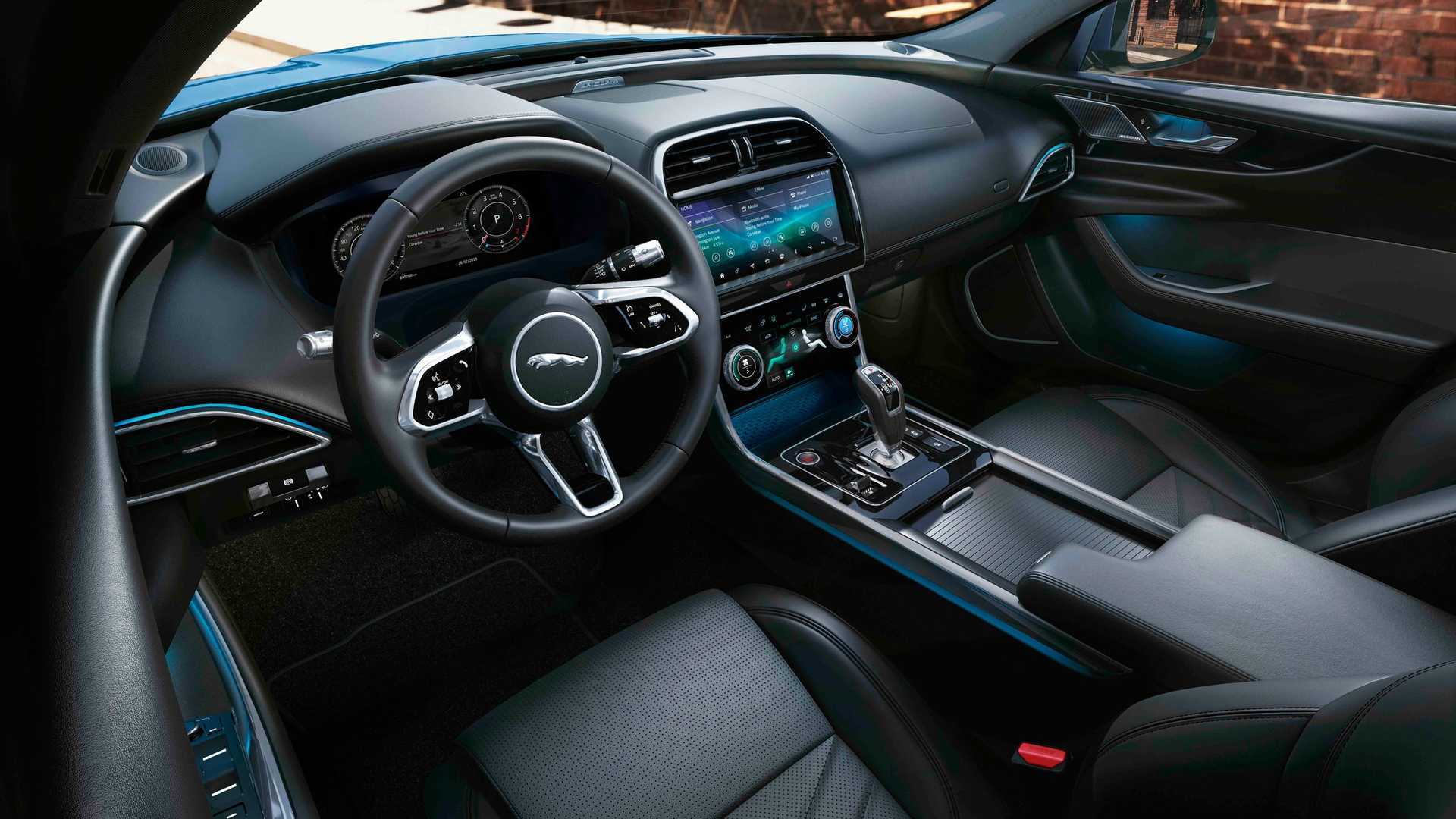
Although it is understandable that the car price is cheap and relies on after-sales recycling profits, excessive after-sales prices will continue to hurt the brand itself. In the case of low stability of body quality, after-sales prices are sky-high, which may be the reason why the Jaguar brand is increasingly away from consumers even if it continues to reduce prices.