Infant packaged drinking water opens the era of certification

  China Consumer News reported (Reporter Sun Yanming) Recently, according to the Food Safety Law, Certification and Accreditation Regulations and other laws and regulations, China Inspection Science and Technology Testing and Certification Co., Ltd. launched the certification of natural packaged drinking water for infants. The Implementation Rules for the Certification of Natural Packaging Drinking Water for Infants formulated by the certification body have been filed with the National Certification and Accreditation Administration, and applications for enterprise certification will be accepted nationwide from now on.

  Le Fenpeng, vice-president of Beijing Packaging Drinking Water Industry Association, secretary-general of Standardization Committee of Beijing Baby Products Industry Association and the first drafter of the group standard of Natural Packaging Drinking Water for Infants, said in an interview with China Consumer News that at present, enterprises that produce packaged drinking water for infants rarely carry out the testing and certification of infant drinking water products, mainly according to the National Standard for Food Safety Packaging Drinking Water, and do not adopt special water standards suitable for infants’ physiological characteristics. Some infant drinking water production enterprises adopt enterprise standards. It is suggested that infant drinking water production enterprises should carry out comprehensive product testing, improve product quality by applying for infant natural packaging drinking water certification and formulating group standards or enterprise standards higher than national standards.

  Implement voluntary certification

  In recent years, with the improvement of living standards of Chinese residents, the healthy growth of infants and young children has received more attention. Some parents specially give their children packaged drinking water for the sake of their children’s health, and all kinds of packaged drinking water for infants have attracted the attention of many consumers once they are listed.

  According to Le Fenpeng, product certification is divided into compulsory certification and voluntary certification. At the end of 1990s, China’s voluntary product certification started. After more than 20 years of development, it has accumulated rich experience and played an active role in improving product quality, guiding industry development and protecting consumers’ rights and interests.

  Certification mark is a bridge to build trust between consumers and enterprises, and it is also a convenient way for consumers to identify food characteristics and make purchase decisions quickly, and it is also a commitment made by enterprises to consumers through third-party certification institutions.

  China Inspection Science and Technology Testing and Certification Co., Ltd. adopts internationally accepted product certification technology, and conducts third-party certification and evaluation activities for products of infant natural packaged drinking water manufacturers according to the Standard for Infant Natural Packaged Drinking Water and related certification rules. Production enterprises can apply for voluntary product certification, and after passing the certification, they can obtain the certification mark and certificate of natural packaged drinking water for infants and young children. The certificate is valid for 3 years, and the products within the validity period can use the certification mark. Le Fenpeng pointed out that products that can pass the certification of natural packaged drinking water for infants and young children not only meet the national requirements in terms of production conditions, quality indicators, safety indicators and management control, but also need to supervise, inspect and test the certified products every year to ensure that the certified products continue to be qualified and the quality is more guaranteed.

  Safety indicators are stricter.

  "Infant drinking water safety not only affects the infant period, but also affects the health of infants throughout their lives. Therefore, the safety indicators of drinking water for infants and young children are stricter than those for adults. " Li Fuxing, director of Beijing Public Health Drinking Water Research Institute, said in an interview with China Consumer News that the infant period is the fastest and most vigorous stage of metabolism. In terms of unit weight, the cell liquid exchange rate of infants is 8 times that of adults, and the metabolic rate is 2 times that of adults. At the same time, the newborn’s kidney is not yet mature, and the ability to excrete solute and secrete antidiuretic hormone by pituitary is limited.

  Le Fenpeng said that in 2003, the "Effects of Nutritional Minerals in Drinking Water on Infant Nutrition" issued by the World Health Organization proposed that drinking water sodium ≤ 20mg/L, sulfate ≤ 200mg/L。

  China’s national standards for packaged drinking water include National Standards for Food Safety: Packaged Drinking Water and National Standards for Food Safety: Drinking Natural Mineral Water. In April, 2020, Beijing Packaging Drinking Water Industry Association issued the group standard "Infant Natural Packaging Drinking Water", which clearly stipulated the technical requirements, mining and processing requirements, inspection rules, labeling, packaging, transportation and storage requirements of infant natural packaging drinking water products, filling the gaps in domestic infant natural packaging drinking water standards.

  Weng Yongsong, director of the Group Standards Committee of Beijing Packaging Drinking Water Industry Association, said in an interview with the reporter of China Consumer News that the standard has revised and adjusted the relevant indicators on the premise of meeting the National Food Safety Standard for Packaging Drinking Water. Among them, three boundary indicators were added, namely, total dissolved solids, pH value and sodium, which met the requirements of the national standard "Hygienic Standard for Drinking Water". Increase two microbial limit indicators, namely Streptococcus faecalis and Clostridium perfringens; Ten limit indicators were adjusted, including carbon tetrachloride, chloroform, oxygen consumption, lead, arsenic, cadmium, mercury,
Anionic synthetic detergent, total α Radioactivity, total β Radioactivity index and limit indicators are better than the requirements of National Food Safety Standard for Packaged Drinking Water.

  The market space is huge.

  On March 1st, the reporter of China Consumer News saw on the shelf of wu mart packaged drinking water located in Yuetan South Street, Xicheng District, Beijing that there were three types of packaged drinking water for infants on the shelf, and the retail price of each type was more than twice that of ordinary packaged drinking water. Among them, the price of 1 liter bottled Evergrande Ice Spring Baby Water is 4.8 yuan, 256 ml bottled Evergrande Low Sodium Baby Water is 1.5 yuan, and 1 liter bottled Nongfu Spring Infant Natural Water is 9 yuan.
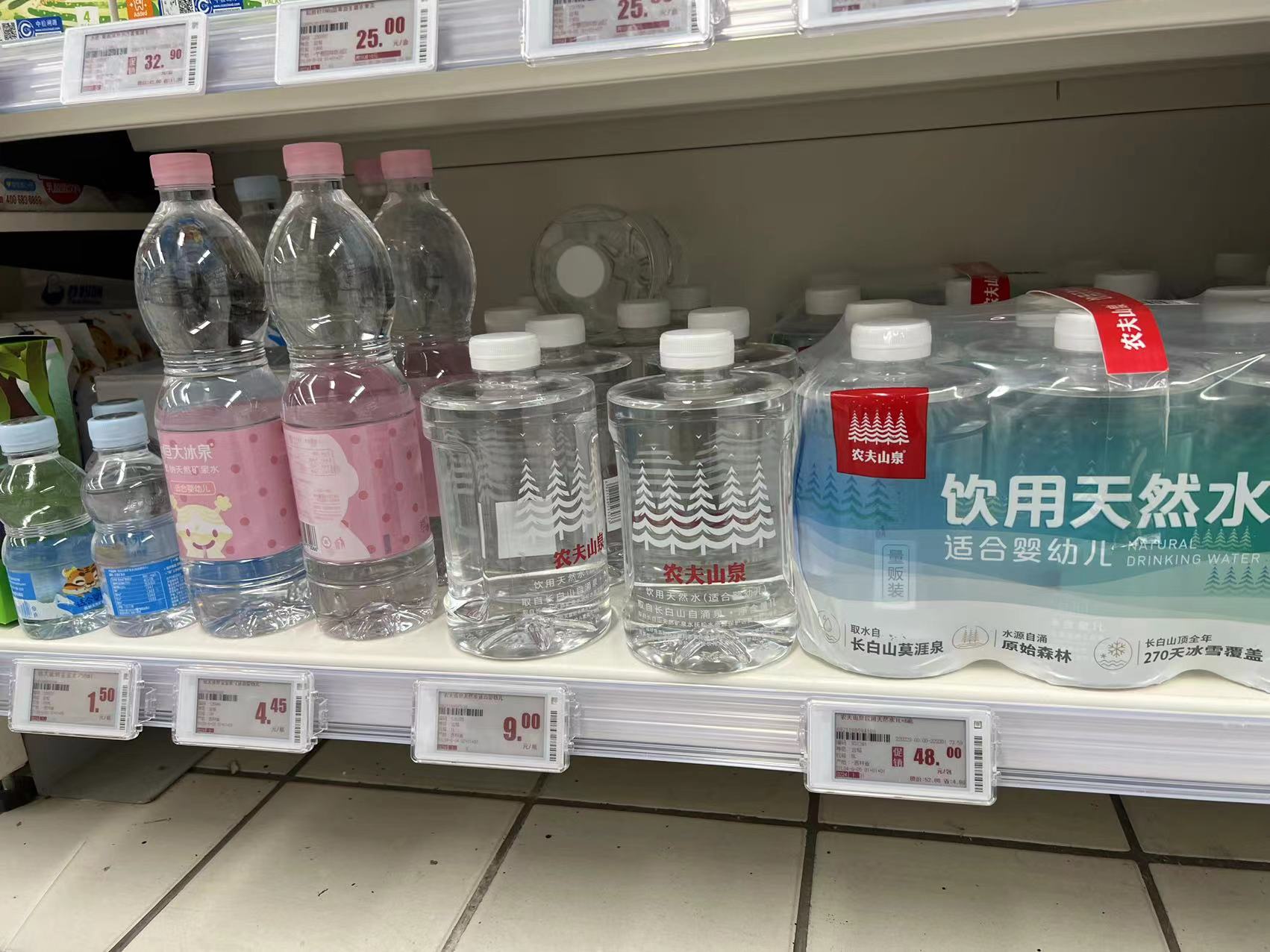
Packaged drinking water for infants sold on supermarket shelves. Sun Yanming/photo

Packaged drinking water for infants sold on supermarket shelves. Sun Yanming/photo

  According to the survey data, from 2015 to 2019, the demand for maternal and child water in China increased from 8.9 million bottles to 52.2 million bottles, with a compound annual growth rate of about 55.6%; The maternal and child water market has reached 240 million yuan, but it accounts for a very small proportion in the global market. Weng Yongsong said that there are still few consumers of packaged drinking water for infants in China, and only nearly 50 water companies have relevant production qualifications.

  The data of the seventh national census shows that China is 0-mdash; The total number of 3-year-old infants is 70 million, 0-mdash; The number of 6-year-old infants is 180 million, and the number of new births reaches 1750&mdash every year; Between 19.5 million. According to the latest data released by the National Bureau of Statistics, in 2021, the birth population in China was 10.62 million. China’s huge infant population base has laid a solid customer base for the infant packaged drinking water market.

  "At present, maternal and child water has been basically popularized in developed countries in Europe and America, but it is still in the primary stage of public cognition in China." Le Fenpeng said that in recent years, China’s maternal and child water market has developed strongly. In the future, with the improvement of public awareness, the market has great development potential.

  Tip: You should look at key indicators when purchasing.

  How do consumers choose packaged drinking water that meets the physiological characteristics of infants? In this regard, Li Fuxing said that consumers should carefully read the product labels, mainly focusing on key indicators, including sodium ions less than 20mg/L and total dissolved solids at 30-mdash; 100mg/L, pH 7-mdash; Between eight. In addition, it depends on the water source, and it is best to make a comprehensive and systematic scientific evaluation of the water source on the basis of general testing.

  At present, there are a few illegal enterprises in the infant drinking water market that produce fake and shoddy products at will. For example, some packaged infant drinking water is made by adding baking soda tablets to pure water, and the sodium ion reaches more than 100 mg/L.

  Le Fenpeng suggested that when consumers choose packaged drinking water for infants and young children, they should preferably obtain brands that meet the standard test report and certification of packaged drinking water for infants and young children, and boil the packaged drinking water for infants and young children before drinking it. It is not recommended to choose pure water because it contains almost no mineral elements.
China’s foreign trade development is strong enough for fresh fruits to grab "fresh" customs clearance and promote summer consumption.

CCTV News:This summer, the momentum of China’s foreign trade development is very strong.

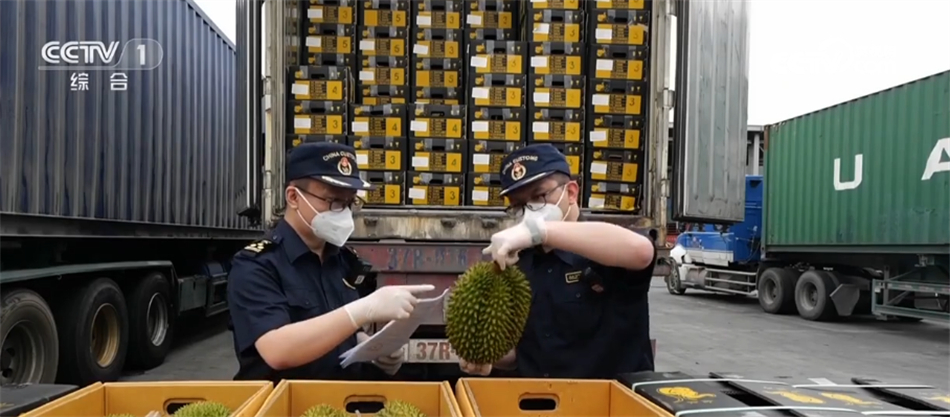
China is the largest fruit consumer in the world. Recently, tropical fruits from Thailand, Laos and other Southeast Asian countries are entering the peak season of production and marketing, and border crossings have also ushered in the peak of entry of tropical fruits from ASEAN countries. At Hekou Port in Yunnan, just after 8: 00 a.m., the Sino-Vietnamese Honghe Highway Bridge was getting on and off, and a freight vehicle loaded with 20 tons of fresh durian from Vietnam was undergoing entry quarantine inspection.

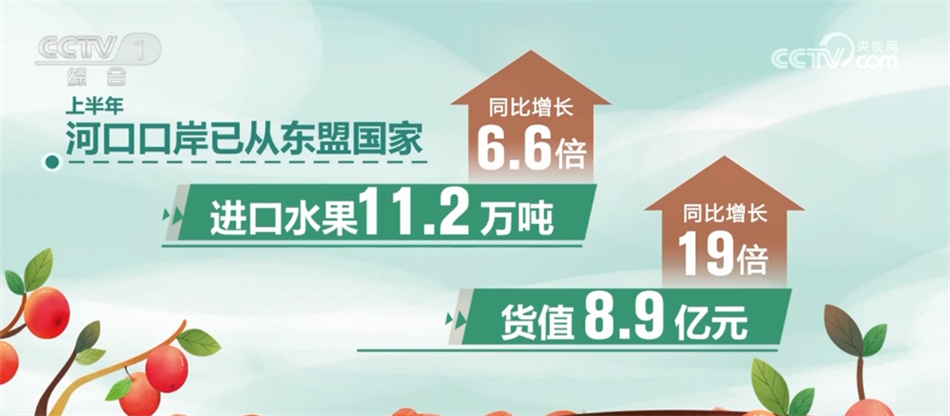
With the full entry into force of Regional Comprehensive Economic Partnership (RCEP), the import scale of estuary ports has gradually expanded. In the first half of the year, the port has imported 112,000 tons of fruits from ASEAN countries, with a value of 890 million yuan, up 6.6 times and 19 times respectively.

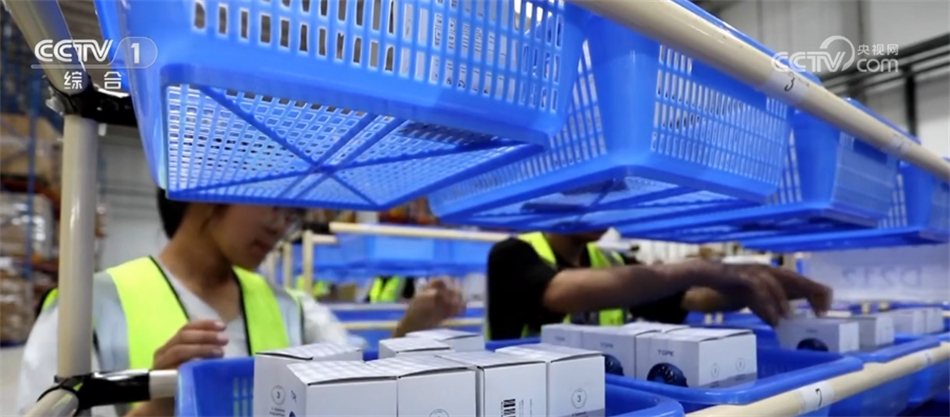
Under the high temperature, cool household appliances have become hot pets, which continue to stimulate consumption vitality. Nearly 30% of the cross-border e-commerce export goods in Shandong Province are gathered in the cross-border e-commerce comprehensive test area in Weihai, Shandong Province.

Cong Aijun, Deputy Director of Weihai Customs Post Office:Since the summer, the number of domestic electric fans, air-conditioning fans and other small household appliances exported through cross-border e-commerce retail has increased significantly. Among them, in June, exports reached 83,000 orders, an increase of about 200% from the previous month, with an average weekly export of about 20,000 orders, which is still growing.

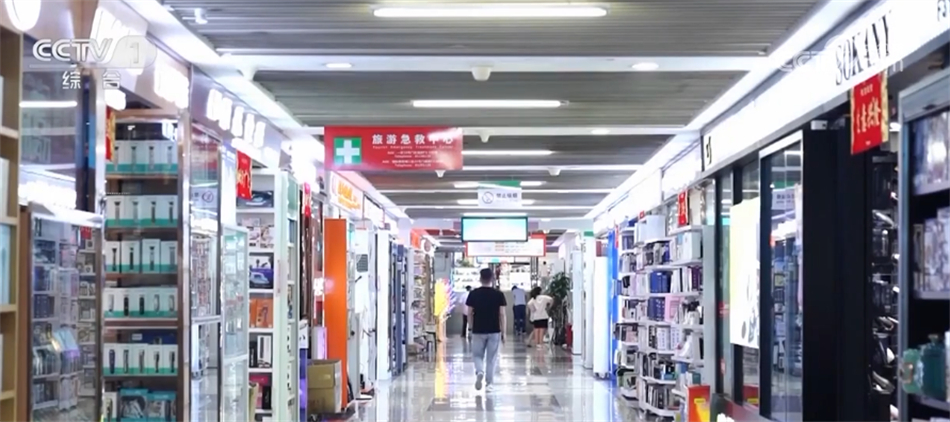
At 9 am on the 16th, a Turkish businessman got a brand-new business license in Yiwu International Trade Service Center. At this moment, the total number of business entities in Yiwu market exceeded 1 million, and the investment sources of these business entities radiated from 31 provincial administrative regions, Hong Kong, Macao and Taiwan regions and 155 countries on six continents. What attracts entrepreneurs from all over the world?

Yiwu Linkou International Trading Co., Ltd. Jia Weide Hassan:I like doing business with China people here, and we can easily buy high-quality products here.

Attention! Working hours have changed.

Unconsciously

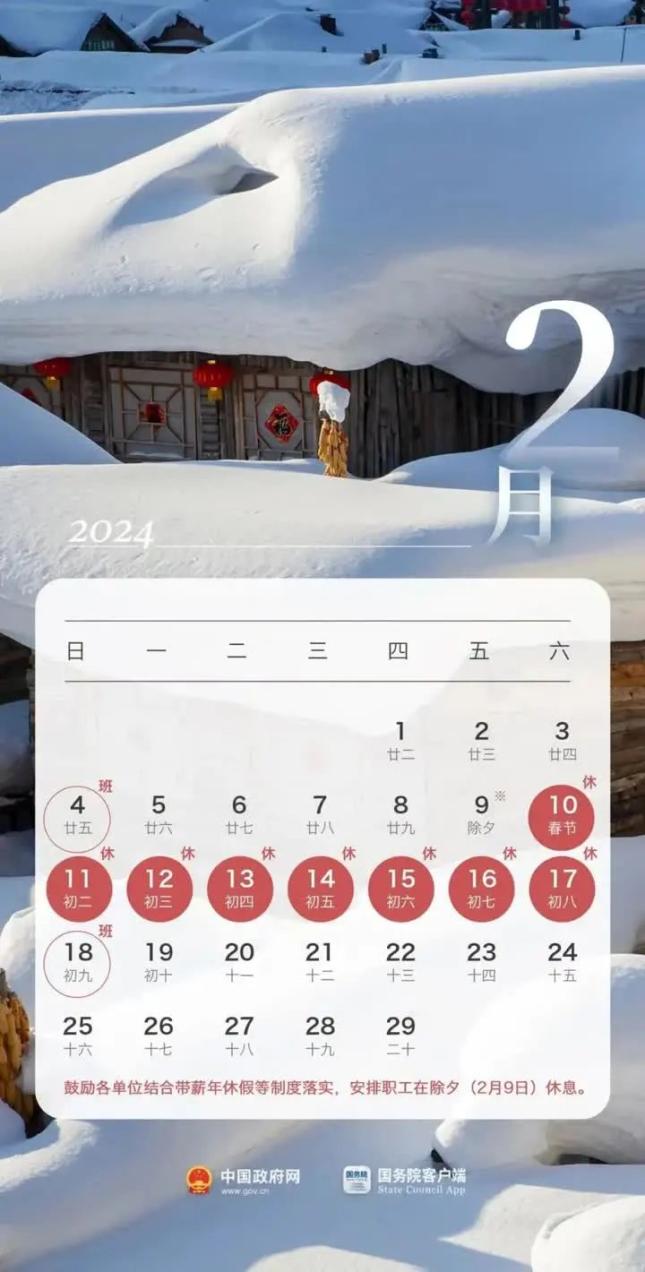
The eight-day Spring Festival holiday is coming to an end.

While enjoying the holiday life

Don’t forget.

February 18th is a working day.

According to the general office of the State Council.

Notice on Some Holiday Arrangements in 2024

The Spring Festival is on holiday from February 10th to 17th.

A total of 8 days

February 18th (Sunday)

Going to work!

That is to say, after the eight-day holiday,

I have to work for six days.

Friends who usually set the working day alarm clock.

Don’t forget to set the alarm clock.

In case of being late

Original title: "Attention! Working hours have changed.

Read the original text

[CCTV Review] Heavy! The State Council issued a document to rectify Internet financial risks and regulate "crowdfunding to buy a house" and other behaviors

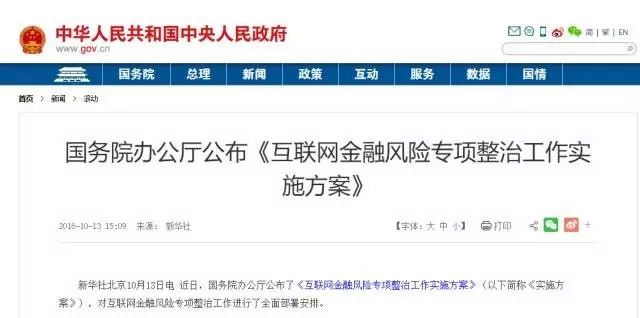
Today (13th), the State Council released the Implementation Plan for Special Remediation of Internet Financial Risks. Comprehensive arrangements were made for the special rectification of Internet financial risks. This move means that the official "sword" refers to the internet financial risks, sets a "military order" and sets a "timetable".

The plan calls for the completion of the special rectification of Internet financial risks by the end of March next year, and the key rectification areas include:

P2P peer-to-peer lending and Equity Crowdfunding Business

Asset management and cross-border financial business through the Internet.

Third-party payment service

Advertising in the field of internet finance

The goal is to form an overall report on Internet finance rectification in China, and establish and improve a long-term mechanism for Internet finance supervision.

In addition, the following five documents were released today:

The People’s Bank of China and other 17 ministries and commissions "Implementation Plan for Asset Management through the Internet and Special Remediation of Cross-border Financial Business Risks";

The People’s Bank of China and other 14 ministries and commissions "Implementation Plan for Special Remediation of Risks of Non-bank Payment Institutions";

CBRC’s Implementation Plan for P2P peer-to-peer lending Risk Special Remediation Work.

China Insurance Regulatory Commission and other 15 ministries and commissions "Implementation Plan for Special Remediation of Internet Insurance Risks".

The CSRC and other 15 ministries and commissions "Implementation Plan for Special Remediation of Equity Crowdfunding Risks"

Specifically:

For P2P platform: no fund pool can be set up.

The "Program" stipulates that:

P2P peer-to-peer lending Platform should keep the legal bottom line and policy red line, implement the nature of information intermediary, and shall not set up a fund pool, issue loans or illegally raise funds.

Interpretation:

Wang Yahong, an expert on financial issues:In recent years, after the incidents such as Easy Rent Bao and Pan Asia Institute, Internet finance has not had time to develop and show its inclusive side, and it has prematurely assumed a disgraceful reputation. Strict supervision of P2P industry is conducive to the healthy and orderly development of Internet finance, and it is necessary and timely to carry out special rectification.

For the equity crowdfunding business: no false targets shall be published, and no self-financing shall be allowed.

The State Council’s "Program" stipulates that:

The equity crowdfunding platform shall not publish false targets, raise funds by itself, or raise funds in disguised form. It shall strengthen the information disclosure obligations and shareholders’ rights protection requirements for financiers and equity crowdfunding platforms, and shall not make false statements and misleading propaganda.

Interpretation:

After the publication of the Administrative Measures for Private Equity Crowdfunding (Trial) (Draft for Comment) in December 2014, there was no formal policy for equity crowdfunding since then, and the supervision was backward. This time, the State Council’s notice may have pointed out the key supervision direction in the future.

For real estate finance: it is forbidden to make down payment and standardize crowdfunding to buy a house.

The "Program" stipulates that:

Real estate development enterprises, real estate intermediaries and internet finance institutions shall not engage in real estate finance business by using P2P peer-to-peer lending platform and equity crowdfunding platform without obtaining relevant financial qualifications; Standardize internet "crowdfunding to buy a house" and other behaviors, and prohibit all kinds of institutions from carrying out "down payment" business.

Interpretation:

Under the background of tightening regulation of the property market, it is strictly forbidden to leverage the property market through black-box operations such as crowdfunding to buy a house and down payment.

For Internet companies to engage in cross-border financial business: they should obtain qualifications.

The "Program" stipulates that:

Internet enterprises shall not rely on the Internet to carry out corresponding business without obtaining relevant financial business qualifications, and the essence of conducting business shall conform to the obtained business qualifications.

Without the approval of the relevant departments, many kinds of financial products issued by private placement may not be sold to the public through packaging or splitting.

Interpretation:

Seventeen ministries and commissions, including the central bank, issued the "Implementation Plan for Special Remediation of Asset Management and Cross-border Financial Business Risks through the Internet", proposing that the key points of remediation include: all kinds of Internet enterprises with asset management-related business qualifications but irregular business; All kinds of internet enterprises that carry out financial services such as asset management across borders; Internet enterprises with a number of financial business qualifications and obvious comprehensive operating characteristics.

For third-party payment services: no unlicensed operation is allowed.

In answering a reporter’s question, the leading group for special rectification of Internet financial risks pointed out:

The rectification in the field of third-party payment focuses on the risk of non-bank payment institutions’ reserve funds, inter-agency clearing business, and unlicensed payment business. The third-party payment field has implemented business licenses, and special rectification work will be carried out for institutions that operate payment business without licenses.

Interpretation:

Zhao Wei, Deputy Secretary General of Financial Innovation and Internet Finance Legal Research Center of China University of Political Science and Law:

In recent years, the third-party payment industry has developed rapidly. Non-bank payment institutions have played a positive role in promoting the innovation of payment services and improving and upgrading the level of payment services. However, some problems have also been exposed in its rapid development, especially some payment institutions and even commercial banks have opened payment channels to institutions and personnel engaged in payment business without permission, providing payment convenience, which has caused many cases of infringing on customers’ rights and disrupting financial order.

From the characteristics of the risk events and cases that have occurred, the payment business without a license mainly involves: First, the core business of acquiring bank cards without a license, such as "second clearing". The second is to operate online payment services without a license, such as "big merchant settlement" and electronic wallets that open payment accounts. The third is the issuance and acceptance of multi-purpose prepaid cards without a license.

From the perspective of social harm, the harm of unlicensed payment business is becoming more and more serious. The first is to endanger the safety of customers’ funds and seriously infringe on consumers’ rights and interests. Secondly, it endangers the security of payment information and encourages criminal behavior. Finally, it endangers the market operation order and has no bottom line competition. It has seriously disrupted the market operation order and endangered the safe and steady operation of the payment service market.

Therefore, the just released "Implementation Plan for Special Remediation of Risks of Non-bank Payment Institutions" has made it clear that the rectification of unlicensed payment business should be included in the special rectification of risks of non-bank payment institutions, and all relevant cooperative departments should clarify their responsibilities and determine the time plan, so as to complete centralized cleaning and disposal before the end of November 2016. The "Proposal" also emphasizes the need to promote the establishment of a working mechanism for the normalization and rectification of unlicensed payment services. Only by increasing punishment and forming a long-term system and long-term measures can we completely eliminate the "black sheep" and maintain the healthy development of the payment service market.

Cctv review

Special rectification is an important step to gradually improve the Internet financial supervision system. Internet finance is a new thing, and the deep integration of Internet and finance is also the general trend, which will have a more profound impact on financial products, business scope, organizational structure and service forms. However, the old financial supervision mechanism has lagged behind the development of internet finance in many aspects, so there are many loopholes in practice. On the other hand, the complex structure of Internet finance projects also increases the difficulty of supervision in reality.

The special rectification work is to check and fill the gaps in a targeted manner, further clarify the risk bottom line of Internet finance, protect legal operations, and resolutely crack down on illegal and illegal activities. This means that we can take an important step in gradually improving the supervision of financial Internet financiers, and on this basis, we can further standardize the development of Internet finance, maintain market stability, and effectively protect the interests of market participants.

As a new thing, the development of Internet finance needs not only market-driven, but also technological innovation and policy-standardized development. These are the three pillars supporting the development of Internet finance. Only when the pillars are more stable can Internet finance develop more rapidly in the future and have the opportunity to fully demonstrate its unique charm of innovation and inclusiveness.

Wen Wen Zhao, Deputy Secretary-General of Financial Innovation and Internet Finance Legal Research Center of China University of Political Science and Law

Wang Yahong, an expert on financial issues

Producer/Editor-in-Chief Tang Yi/Li Zhe

Editor/Ji Zhiwen