Learn to think, practice and realize the spirit of precepts, remember to entrust and take the initiative.

  Once again, the Great Hall of the People is brightly lit, and on the red background board, the words "China People’s Police Flag Awarding Ceremony" are particularly eye-catching;

  Listening again, the General Secretary of the Supreme Leader presented the flag to the China People’s Police Force and delivered a training speech, which was a spiritual baptism of loyalty to the police soul.

  … …

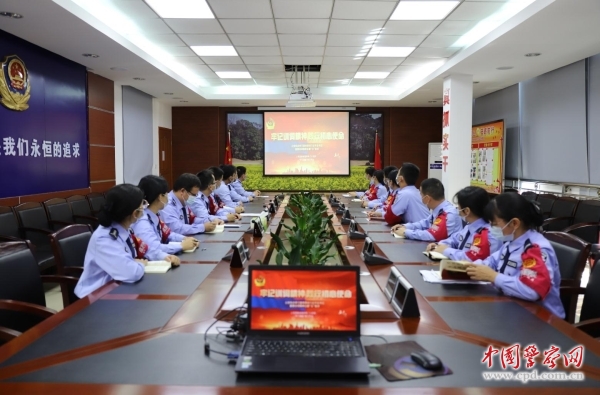
  On October 12th, the Press and Publicity Bureau of the Ministry of Public Security, in conjunction with People’s Daily Online and the Learning Platform of Learning Power, jointly organized "Keeping in mind the spirit of precepts and practicing the initial mission" — — The public security organs studied, publicized and implemented the spiritual theme "Cloud" of the Supreme Leader’s General Secretary’s important training words. Through host interviews, video shows and guest comments, they educated and guided the public security police to deeply understand the significance of important training words, and consciously armed their minds, guided practice and promoted their work with the spirit of important training words.

  In the studio, experts and professors from the Party School of the CPC Central Committee and the People’s Public Security University of China made authoritative interpretations and in-depth summaries; In the "cloud" connection, advanced public security collectives and representatives of police models from all over the country talked about their feelings and practical achievements in studying and implementing the spirit of important training words. Through a unique "cloud" preaching, the majority of police officers will further set off a spiritual upsurge of studying, propagating and implementing the important instructions of General Secretary of the Supreme Leader.

  Innovative ways, careful organization, revisiting training vocabulary and gathering strength

  This is a vivid classroom for in-depth study of the important motto spirit of the Supreme Leader’s General Secretary, and it is a platform for exchange of experience for a typical model to practice the important motto spirit.

  In order to do a good job in this presentation, the Press and Publicity Bureau of the Ministry of Public Security carefully planned and innovated methods, closely adhered to the general requirements of party loyalty, serving the people, fair law enforcement and strict discipline, and used cloud connection, cloud interview and other means to combine video with graphics and text, and carefully designed all aspects of the presentation, striving to achieve the organic integration of expert interpretation and grassroots practice, and enhance the attractiveness and effectiveness of the presentation process. Public security organs at all levels attach great importance to it, carefully organize it, and carefully organize the public security police and auxiliary police to listen and watch it through various forms.
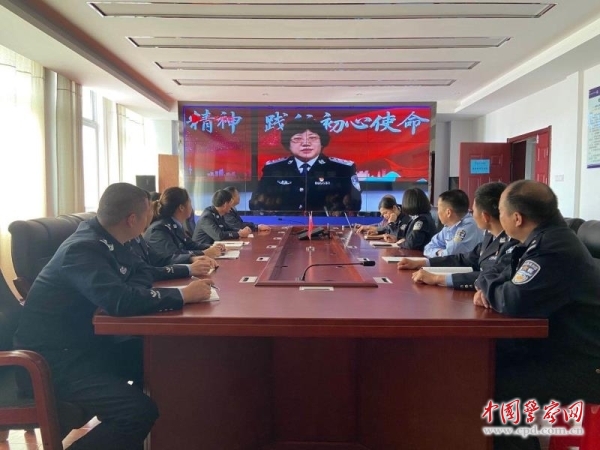
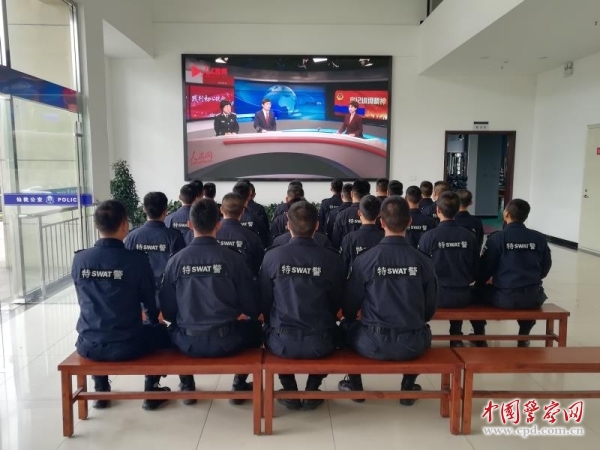
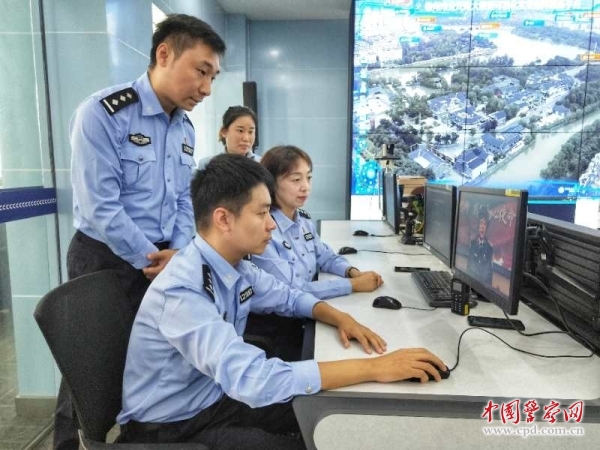
  In Fujian, Hainan and Yunnan, public security organs at all levels held conferences to watch collectively. In Heilongjiang, Guangdong, Shanghai, Jiangxi, Shandong and Henan, after the patrol interval and duty, the public security police opened the live broadcast page to study hard; In Hebei, Inner Mongolia, and Gansu, the police actively participated in the interaction and left a message to reply after forwarding Weibo; In Ningxia, Hubei, Hunan, Guangxi, Chongqing, Sichuan, Guizhou, Shaanxi, Xinjiang, Xinjiang Production and Construction Corps and other places, through WeChat WeChat official account and Weibo, the public security police waited in front of their mobile phones early … …
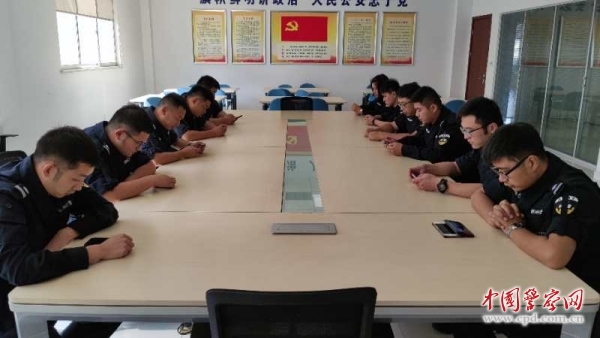
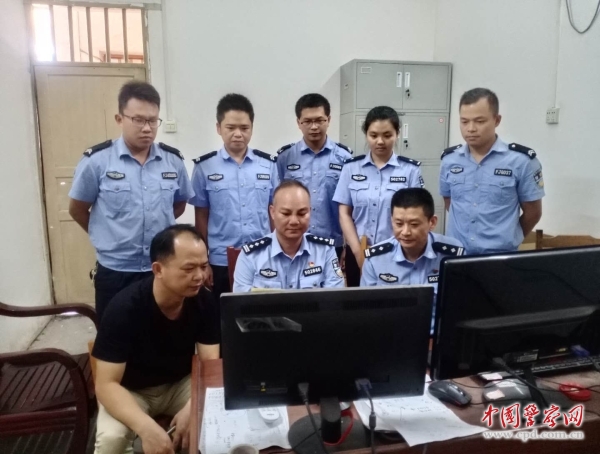
  "By listening to watch ‘ Cloud ’ The preaching gave me a new understanding of the profound connotation of the spirit of the important instructions of the General Secretary of the Supreme Leader. " Zhao Deyong, a policeman from the third brigade of the Traffic Police Branch of Shizuishan City Public Security Bureau, Ningxia Hui Autonomous Region, said that he will further strengthen the "four consciousnesses", strengthen the "four self-confidences" and achieve the "two safeguards", and always maintain a high degree of ideological and political action with the CPC Central Committee with the supreme leader as the core, and be absolutely loyal, absolutely pure and absolutely reliable.

  Promoted by layers and widely watched, the "Cloud" preaching deeply interprets the spirit of the important motto of the Supreme Leader General Secretary, leading the public security police to effectively turn the spirit of the important motto into the spiritual driving force to promote their work — —

  "The important motto is a general mobilization of the Supreme Leader General Secretary and the CPC Central Committee for the people’s police to better perform their duties and missions in the new stage of development." "We must firmly grasp the loyalty to the party, the soul of building a police, the foundation of serving the people, the foundation of law enforcement, and the importance of strict discipline." … …

  From the southeast coast to the northwest desert, from the South China Sea island to the northern Xinjiang Linhai, through the small mobile phone screen, the majority of police and experts and scholars are at zero distance; Through the interaction of online messages and the explanation of experts in simple terms, the infinite enthusiasm of the majority of public security police to learn the spirit of important training words is aroused, and the powerful force of continuous progress is gathered.

  In Xinjiang, the theme of "Cloud" has brought spiritual food to the grassroots police. After watching the lecture, Juck Zhang, a policeman from the town police station of Yuli County Public Security Bureau, said that the banner guides the direction, the training vocabulary gathers great trust, and the general secretary’s attention and love for the people’s police team will surely unite the majestic power and inspire the people’s police to be fearless, dare to take responsibility and March forward courageously in fulfilling their new historical mission.

  Typical leads vivid narration and drives the police to study and practice.

  The first-class hero model of the national public security system, Meng Kunyu, deputy detachment leader of the Central District Detachment of the Traffic Management Bureau of Beijing Public Security Bureau, Gutian Police Station of Shanghang County Public Security Bureau of Fujian Province, and Donglai Street Police Station of Daowai Branch of Harbin Public Security Bureau of Heilongjiang Province & HELIP; …

  A typical model that is familiar to everyone, an exciting and vivid story. Through the "cloud" connection, the publicity activities also invited advanced collectives and police heroes from different regions and police types in China to use their own personal experiences to profoundly explain the vivid practice of the general requirements of loyalty to the party, serving the people, fair law enforcement and strict discipline in the front line of police camps.

  "Learn from the model of the majority of comrades-in-arms and make new contributions under the guidance of the spirit of important training words." Yang Rong, deputy to the National People’s Congress, deputy director of Sanqiao Police Station of Xinghualing Branch of Taiyuan Public Security Bureau and Jingangli Community Police, said after watching the lecture that we should faithfully perform the sacred duties of the people’s police with more firm beliefs, higher morale and more solid style.

  The story from the front line, the experience from the grassroots, the advanced deeds of the police camp model are more shining through the "cloud" preaching video display and multi-party interaction.

  People’s public security for the people! Once again, I relive the video of Shao Yuchun, deputy director of Xincun Street Police Station of Jiang ‘an Branch of Wuhan Public Security Bureau, Hubei Province, who took the suspected sick old man to the hospital regardless of his personal safety, which was touching.

  In Shao Yuchun’s hometown, his deeds inspired the broad masses of public security police who are still fighting in the front line of epidemic normalization prevention and control. Huang Jing, a policeman from Dazhijie Police Station of Jiang ‘an District Branch of Wuhan Public Security Bureau, said that as a young policeman, he will study and understand the spirit of important training words seriously, continue to take the advanced anti-epidemic as an example, adhere to his ideals and Do not forget your initiative mind, earnestly perform his duties, and bloom the most beautiful youth in ordinary posts.

  Create an excellent public security team! The video shows a thrilling picture. Ceng Hao, the most beautiful grass-roots policeman in China, the deputy detachment leader of the special police detachment of Nanning Public Security Bureau, and the captain of the "South Tiger Commando", decisively killed the vicious gangsters who took hostages at the critical moment, relying on the excellent quality tempered by strict discipline.

  Li Fei, a police officer of Kaiyuan Railway Public Security Bureau, who was on the way to take the D3832 train, watched the lecture on his mobile phone during the work break. He said that as a railway police policeman, he would continue to base himself on his work, constantly standardize law enforcement, improve his ability to deal with complex problems and resolve contradictions and disputes, and effectively protect people’s lives and property.

  Learning on the cloud enters the brain and the heart, condensing the majestic motivation.

  "From a strategically advantageous position, experts and scholars have interpreted the spirit of the important motto of the Supreme Leader General Secretary from the theoretical height of the inheritance and practice of the spiritual core of the people’s police and the development of the team. I have benefited a lot from listening to it."

  "One typical theme, one touching story at a time, and the typical people around us use their own practical experience to make a good start for the police to thoroughly study and implement the spirit of important training words."

  … …

  The "Cloud" announcement was also launched simultaneously through the learning platform of the powerful country, People’s Daily and the national public security new media matrix, and was forwarded and pushed by key news and commercial websites and new media platforms such as China Net, China Youth Net, CCTV, Sohu and Today Headlines. On the website, Weibo, and WeChat, every message has not only the learning exchange of preaching live broadcast, but also the spark collision of thoroughly implementing the spirit of important training words.

  Can’t forget, adhering to the absolute leadership of the party, the 87-year-old first director of Gutian Police Station of Shanghang County Public Security Bureau of Fujian Province tells the story of Gutian Police Station guarding the Red Holy Land for 61 years; We can’t forget that, with the people as the center, the plaque of "People’s Home" in front of Donglai Street Police Station of Daowai Branch of Harbin Public Security Bureau in Heilongjiang Province reflects a bright light; We must not forget that the public security bureau of Zhangjiagang City, Jiangsu Province has been rated as a national public security organ law enforcement demonstration unit by the Ministry of Public Security for five consecutive years by strictly regulating fair and civilized law enforcement; We must not forget that the Party and the police are strictly controlled in an all-round way, and Shaoshanchong Police Station of Shaoshan City Public Security Bureau of Hunan Province has been in zero violation of discipline for 66 years … …

  Through connecting and telling again and again, the majority of public security police have effectively put the learning content into their minds and turned the spirit of important training words into a powerful driving force to guide practice and promote work.

  After watching the presentation, Yang Wan, secretary of the Party Committee and stationmaster of Maanshan Border Inspection Station of Anhui Entry-Exit Frontier Inspection Station, said that as an important law enforcement force stationed at the front line of Guomen Port, it will take studying and implementing the spirit of important precepts as a major political task and pay close attention to it, especially turning it into a driving force for maintaining integrity and innovation in daily work, striving to cultivate the "craftsman" spirit and "intellectual creativity" ability of Maanshan border inspection team, and strive to inject new vitality and kinetic energy into economic and social development.

  “‘ Cloud ’ Preaching is an incentive and an encouragement. " Hu Lei, director of the Khmer Police Station of the Public Security Bureau of Pu ‘an County, Guizhou Province, said that in the future work, in accordance with the general requirements of loyalty to the party, serving the people, justice in law enforcement and strict discipline, we will keep our initial intentions, take on the mission, find the gap, grasp the implementation, and unremittingly fulfill the tasks entrusted by the party and the people in the new era.
Ni Jianwei and Wang Xinxing: Focus on improving the resilience and safety level of the industrial chain supply chain

Author: Ni Jianwei, distinguished professor, Qiantang, City College of Zhejiang University; Wang Xinxing is a research assistant of China Municipal Government Supervision and institute for public policy, a key think tank in Zhejiang Province.
[In-depth study, publicity and implementation of the spirit of the 20th Party Congress]
The Party’s Report to the 20th CPC National Congress clearly pointed out that efforts should be made to improve the resilience and safety level of the industrial chain supply chain. The Central Economic Work Conference in 2022 further emphasized that "industrial policies should be developed simultaneously with safety" and "efforts should be made to strengthen the weak links in the industrial chain". The security of industrial chain supply chain is an important foundation for building a new development pattern. Effectively enhancing the autonomous and controllable ability of industrial chain supply chain is related to the overall situation of economic and social development. At present and for a long time to come, with the theme of promoting high-quality development, speeding up the construction of a modern industrial system and focusing on the real economy, the primary task is to recognize the objective situation and do a good job in the security and stability of the domestic industrial chain supply chain.
Keep the chain and reduce the risk. General Secretary of the Supreme Leader emphasized that "the industrial chain and supply chain cannot be broken at critical moments, which is an important feature that a big country’s economy must have". For a long time, the export-oriented development model has made China’s industrial chain supply chain highly dependent on overseas markets. Affected by the repeated COVID-19 epidemic and geopolitical fluctuations, once the foreign markets change dramatically, it is likely to lead to incalculable risks. On the whole, the current chain blocking and chain breaking are mainly manifested as: the survival risk of enterprises caused by market shrinkage, the market competition risk caused by the entry of giants, the inventory shortage risk caused by poor logistics, and the cost fluctuation risk caused by imbalance between supply and demand. Effectively reduce the risk of chain breakage in the supply chain of the industrial chain, and it is urgent to comprehensively implement policies and work together to achieve chain protection and chain communication. First, improve the normalization mechanism to help enterprises bail out, compete in the sea and give full play to the market potential of domestic demand, and resolve the market risks faced by enterprises in a two-pronged manner. The second is to strengthen the development mechanism of clustered industries, pay equal attention to cultivating unicorn enterprises and building industrial clusters, and accurately implement policies to deal with market competition risks. The third is to strengthen the construction of factor supply system, expand infrastructure and strengthen the construction of data elements, especially to build a data-based system, so as to promote data, a new production factor, to "live, move and use" more scientifically, orderly and efficiently, and at the same time take multiple measures to solve the risk of inventory shortage of key scarce elements. Fourth, to promote the construction of a unified national market, we should not only focus on reducing costs, but also strive to expand demand, so as to resolve the risk of cost fluctuations with better market mechanisms. Clean up and abolish institutional regulations that hinder fair competition in the market,Break all kinds of local protection and market segmentation, realize the free circulation of national unified commodity elements and resources, and minimize transaction costs.
Strong chains promote stability. General Secretary of the Supreme Leader stressed that "efforts should be made to build an independent, controllable, safe and reliable industrial chain and supply chain". The orderly construction and full development of the industrial chain supply chain itself is very important for China’s economic stability. To effectively enhance the stability of industrial chain supply chain development, efforts should be made to reconstruct the development pattern of regional industrial chain supply chain, build an open-loop structural circulation system of industrial chain supply chain, cultivate new kinetic energy of cross-regional industrial chain supply chain complementarity and cooperation, and further strengthen the capacity building of central and western regions and northeast regions to undertake industrial transfer in optimizing regional industrial chain layout; Promote the reconstruction of the basic capacity of the industrial chain supply chain, strengthen the business cooperation and resource supply guarantee among supporting enterprises, support small and medium-sized enterprises to become stronger and better in the field of "specialization and novelty", and achieve new breakthroughs in the quantity and quality of "little giant" enterprises and individual champion enterprises; Improve the policy governance system of regional industrial chain supply chain, strengthen the coordination and stability between regional industrial policies, and rationally regulate the economic structure and spatial layout of industrial chain supply chain; Strengthen the effective connection of all links in the industrial chain supply chain, promote the flow of network resources in the whole chain, and enhance the agglomeration efficiency of "chain owners" enterprises.
Extend the chain to increase the toughness. General Secretary of the Supreme Leader emphasized that "we should jointly build a safe, stable, smooth, efficient, open, inclusive and mutually beneficial global industrial chain supply chain system". In the face of the new trends and characteristics of the current global scientific and technological revolution and industrial transformation, it is urgent to extend the chain and increase the chain through open cooperation to effectively enhance the development resilience of the industrial chain supply chain. China has unswervingly maintained and practiced the public product attributes of industrial chain supply chain for a long time, earnestly deepened international cooperation, and contributed to promoting global economic development and enhancing the well-being of people around the world. In the next step, we should actively promote high-level institutional opening, unblock the circulation of international factor markets, strengthen the construction of multilateral governance mechanism of international industrial chain supply chain, and reshape the division of labor and cooperation system of industrial chain supply chain; Coordinate the global industrial chain supply chain network layout, build a multi-level, all-round and multi-field co-construction and sharing mechanism, and continuously promote investment and trade cooperation matters at the policy, rules and standards levels; Promote regional industrial transfer and constantly improve the construction of various demonstration zones, focus on characteristic industries to enhance industrial undertaking capacity, implement enterprise transformation and upgrading support policies, and promote digital empowerment and upgrading of the whole chain and green transformation; Plan and construct a coordinated development mechanism of special ability competition and comprehensive strength competition, promote enterprises and related industries to consolidate their basic competitive advantages, anchor their chain position value and accurately enhance their core competitiveness.
Make up the chain and forge the chain for development. General Secretary of the Supreme Leader emphasized that "innovation chain should be deployed around the industrial chain and the industrial chain should be laid out around innovation chain". Effectively promote the high-quality development of the industrial chain supply chain, and it is urgent to accelerate the innovation drive to achieve chain repair and forging. Adhere to paying equal attention to filling the short board and forging the long board, based on the overall situation and classified policies, do a good job in strategic overall planning and accurate planning and implementation of the industrial chain supply chain, and strive to build a new industrial chain supply chain system with stronger innovation, higher added value, better driving force and more stable security. Reasonably regulate the internal industrial structure of manufacturing industry, attach importance to the innovation chain classification and coordinated development of light and heavy manufacturing industries, and further improve the support mechanism of high-end service industries such as science and technology and culture for the upgrading and transformation of traditional manufacturing industries; To attach importance to and enhance innovation chain’s security, it is necessary not only to strengthen key core technology research, but also to fill in the shortcomings of basic research; Implement the science and technology upgrading project, improve the innovation incentive mechanism of the whole chain, enhance the independent innovation ability of the whole chain enterprises, build an industry common technology integration platform, and speed up major common and basic technology research; Efforts will be made to build a "three-chain" innovation platform, increase the input of innovation factors, steadily increase the proportion of R&D links in the industrial chain supply chain, improve the pricing mechanism and supervision mechanism of intellectual property rights in innovation chain, and promote innovation and development. The industrial chain supply chain affects the whole body. In the process of promoting the sustainable and healthy development of the industrial chain supply chain, it is necessary to strengthen government services and support key areas and key areas to do a good job in the reform and exploration of the toughness improvement and safe development of the industrial chain supply chain.
Reporting/feedback

"The biggest source of chaos in the world" —— A brief history of American foreign wars

  Korean War, Vietnam War and Afghanistan War … … Today, we will briefly review many wars launched by the United States after World War II and see what kind of war crimes this "world’s biggest source of chaos" has committed.

  Korean War

  Overview — — On June 25th, 1950, the Korean Civil War broke out. The Truman administration of the United States brazenly intervened with its Cold War mentality and ambition to dominate the world and contain communism, and rallied the so-called "United Nations forces" to launch an all-out war against the DPRK. On July 27, 1953, the Korean Armistice Agreement was signed, and the three-year Korean War ended.

  Loss — — Although the Korean War was short but extremely bloody, more than 3 million civilians died and about 3 million people became refugees. According to the statistics of the DPRK, the war destroyed about 8,700 factories, 5,000 schools, 1,000 hospitals and 600,000 families, and 2 million children under the age of 18 were displaced by the war.

  According to the data, the US military secretly carried out germ warfare in northern Korea and parts of northeastern China. U.S. Air Force captive O ‘Neill said in his confession: "The U.S. military chose to start germ warfare in winter … … Is to test the cold-resistant bacterial weapons we made in a special laboratory. The ultimate goal is to use these bacterial weapons in germ warfare against countries with cold climates such as the Soviet Union and people’s democratic countries. "

  Voice — — "This is a wrong war with the wrong enemy in the wrong place and at the wrong time." Omar bradley, then chairman of the Joint Chiefs of Staff, said.

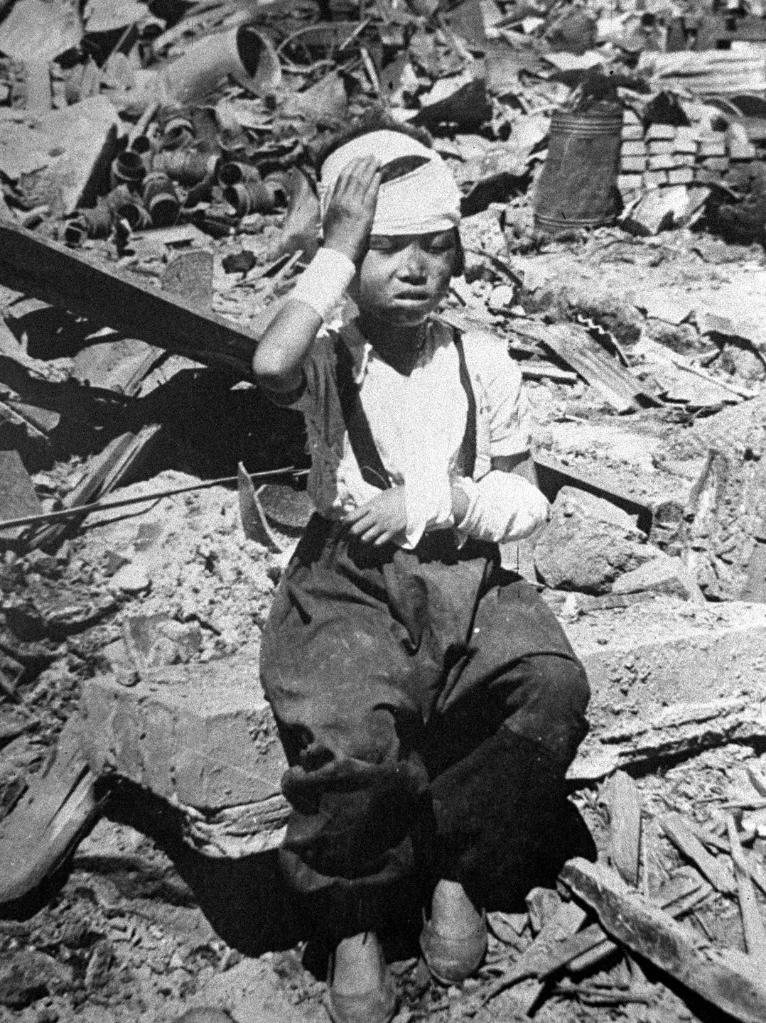
  This is a Korean child who was injured in the Korean War. Xinhua news agency

  Vietnam War

  Overview — — In 1955, Vietnam War broke out. During the war, the United States fostered the pro-American regime in South Vietnam against North Vietnam. On May 14th, 1961, American "Special Operations Forces" invaded South Vietnam. On April 30, 1975, the last US helicopter left Saigon.

  Loss — — The Vietnam War killed 2 million civilians and displaced more than 3 million refugees. The US military is throwing about 20 million gallons of defoliants (orange agent), resulting in 400,000 Vietnamese deaths and 2 million Vietnamese suffering from cancer or other diseases. The US military is still leaving behind about 350,000 tons of explosive bombs and mines, and it is estimated that it will still take 300 years to completely remove them.

  In March 1968, American soldiers slaughtered more than 500 people, including men, women and children, in Mylai village, Vietnam’s generalized province. This was the Mylai village massacre that shocked the world. According to the Los Angeles Times, in addition to the massacre in Mylai Village, there were at least 320 other incidents in which American troops massacred Vietnamese civilians during the Vietnam War, killing nearly 700 civilians.

  Voice — — Former US President Barack Obama said in a speech in front of the Vietnam War Memorial Wall in 2012 that the cost of war is huge, and it will cause serious casualties among innocent civilians. War itself is not glorious and should be rejected.

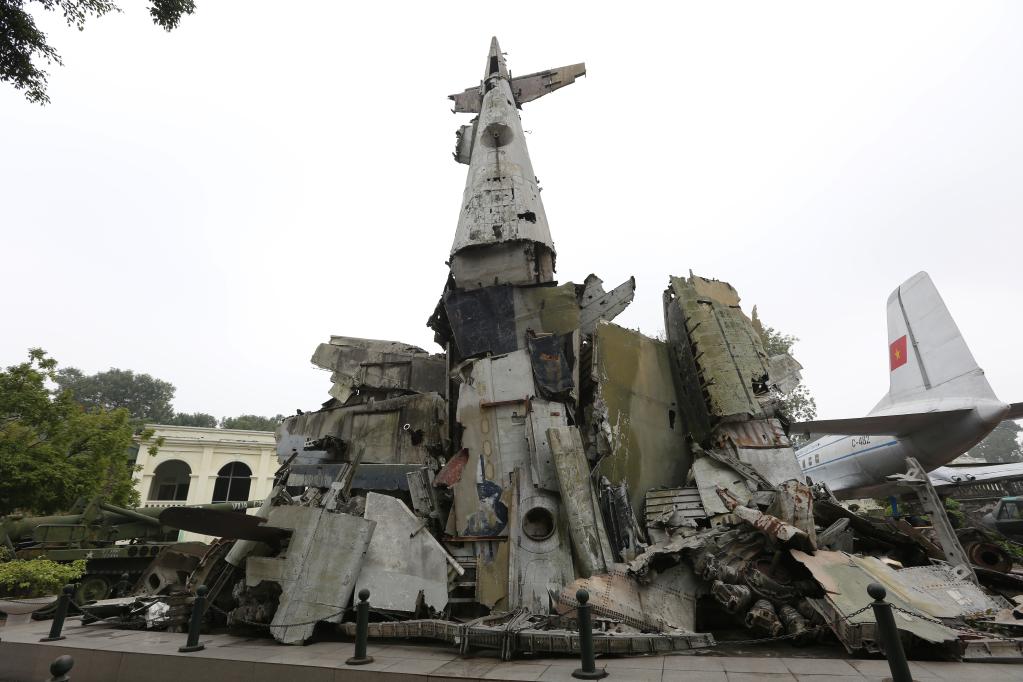
  This is the wreckage of the US B-52 bomber displayed at the Vietnam Military Museum in Hanoi, Vietnam. Xinhua News Agency (photo by Gao Mengjin)

  Kosovo War

  Overview — — On March 24, 1999, NATO, led by the United States, brazenly bombed Yugoslavia under the banner of "preventing the humanitarian crisis in Kosovo" without the authorization of the United Nations, and the Kosovo war broke out. In June, NATO signed an armistice agreement with Yugoslavia, and Kosovo was temporarily entrusted by the United Nations.

  Loss — — The war killed more than 2,000 innocent civilians, injured more than 6,000 people, displaced nearly 1 million people, and lost more than 2 million people’s livelihood, resulting in economic losses of more than 200 billion US dollars to Yugoslavia. According to statistics, NATO troops used at least 31,000 depleted uranium bombs, which led to a sharp increase in the incidence of cancer and leukemia in this region and had a long-term disastrous impact on the local and European ecological environment.

  Voice — — German writer Michael Luders once wrote in his book that after the Kosovo War in 1999, NATO went beyond the principle of collective self-defense and launched a military operation against Yugoslavia, which caused civilian casualties in the name of humanitarianism. This shows that in the eyes of the United States and the European Union, human rights are only a secondary concern, especially when human rights standards are only applied to non-allies.

  On February 19, 2008, in the center of Belgrade, the capital of Serbia, pedestrians walked past a building destroyed by air strikes during the Kosovo war. Xinhua News Agency reporter Wu Xiaoling photo

  Afghanistan War

  Overview — — After the September 11th terrorist attacks in 2001, the United States and its allies launched a military strike against Afghanistan in early October of that year on the grounds that the Taliban in Afghanistan refused to hand over Osama bin Laden, the leader of Al Qaeda, and quickly overthrew the Taliban regime and stationed troops for a long time. On August 30, 2021, local time, the last US military transport plane took off from Kabul International Airport. This "longest war in American history" ended in the sudden withdrawal of the US military.

  Loss — — According to statistics, 47,245 Afghan civilians and 66,000 to 69,000 Afghan soldiers and policemen unrelated to the September 11th incident were killed in the US military operations, and more than 10 million people were displaced. The United Nations World Food Program issued a warning in 2021 that about 98% of Afghans do not have enough food, and Afghanistan is facing "avalanche hunger and poverty".

  During the war, U.S. warplanes bloodbath Laccagni village in Panjiwai district of Kandahar province and launched air strikes against it, killing 63 villagers, including a family of 17 people, and injuring dozens. The day before the complete withdrawal from Afghanistan, the U.S. military fired missiles at a white car parked in the courtyard of a family in Kabul, killing a family of ten people, including seven children.

  Voice — — "The killing of civilians, including children, by the US military in air strikes has exposed the hypocrisy of the so-called human rights defenders in the United States. The international community should condemn the US for trampling on human rights and bring the criminals to justice." A villager in Laccagni village expressed such anger.

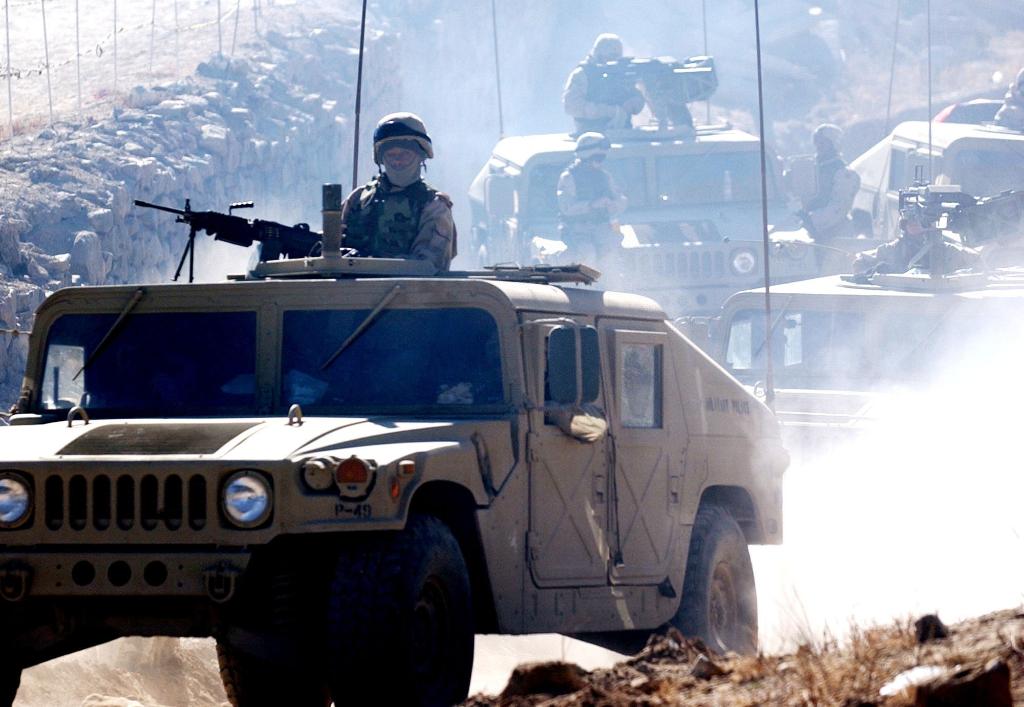
  On December 16, 2003, the US military patrolled Wardak province in central Afghanistan. The war in Afghanistan, which lasted for nearly 20 years, became the longest war in American history. Xinhua News Agency reporter Wang Lei photo

  Iraq war

  Overview — — In March 2003, the United States and its western allies bypassed the United Nations Security Council and invaded Iraq on the grounds that Iraq had weapons of mass destruction, despite the strong opposition of the international community. On August 18, 2010, the last US combat brigade left Iraq, marking the end of US military operations. On December 15, 2011, the United States officially announced the end of the US military mission in Iraq.

  Loss — — The war made the land that gave birth to the civilization of the two rivers riddled with holes, resulting in the death of about 200,000 to 250,000 civilians, of which more than 16,000 were directly killed by the US military. According to statistics, the total number of depleted uranium bombs exploded in Iraq exceeded 3,400 tons. Today, there are still about 25 million mines and other explosive remnants to be removed in Iraq. The Iraq war also broke the balance between the political forces in the Middle East after the Cold War, making the people’s livelihood in the region miserable and chaotic.

  In November 2003, the Iraqi citizen Ala Karim Ahmed was arrested and imprisoned by the US military. In prison, American soldiers used police dogs, whips and shackles to force him to confess. According to Alla Karim Ahmed, at that time, the prison was often attacked by mortars from anti-American armed men. The US military could hide in bunkers, and the detainees had to resign themselves to fate. A shell landed in the prison, killing 37 people and injuring 104 others. In 2004, the photos of American soldiers abusing prisoners in Abu Ghraib prison in Iraq were exposed, which shocked the world.

  Voice — — The website of Atlantic Monthly published an article: "Americans never really understand the cost of war, but they continue to fight. Only Iraqi civilians know the geometry of the cost of war."

  A citizen of Baghdad, the capital of Iraq, once said sadly: "The United States has set Iraq back for 100 years."

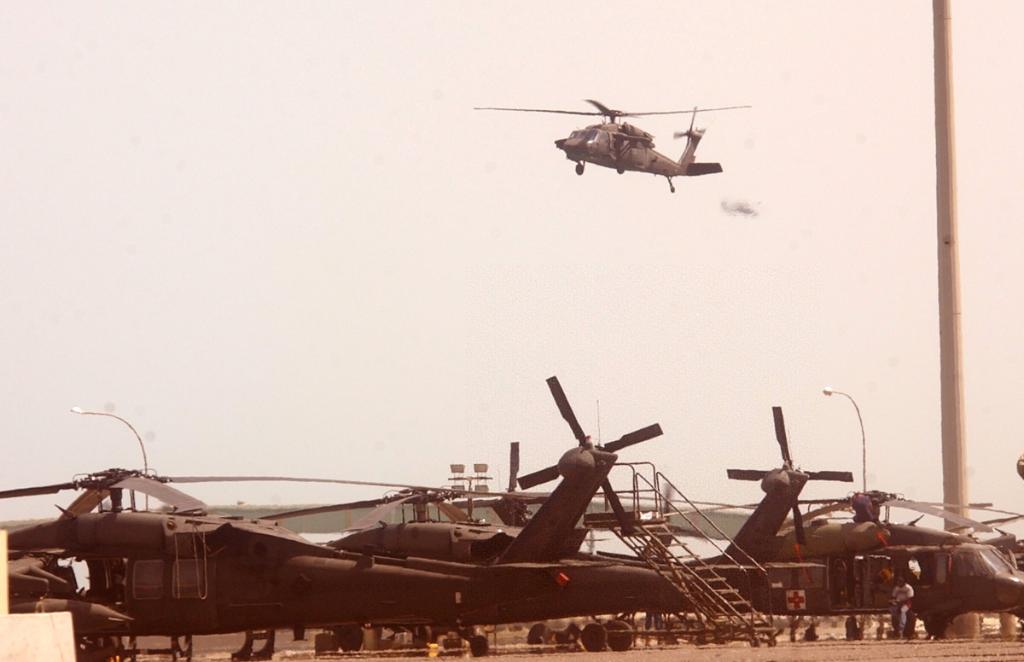
  On April 14th, 2003, dozens of American Black Hawk and Apache helicopter gunships arrived in Kuwait to take off from the port of Kuwait City to reinforce the Iraqi front. Xinhua News Agency reporter Li Xiaoguo photo

  [Syrian War]

  Overview — — When the Syrian civil war broke out in 2011, the United States and its western allies strongly supported the opposition armed forces and tried to overthrow the Syrian government. In September 2014, the United States initiated the formation of an international alliance to combat the extremist organization "Islamic State", expanded the scope of air strikes against the target of "Islamic State" from Iraq to Syria, and established several military bases in eastern Syria. Since 2017, the United States has launched an air strike against Syria on the grounds of "preventing the Syrian government from using chemical weapons."

  Loss — — From 2016 to 2019, Syria recorded 33,584 civilians who died in the war. Among them, 3833 people were directly killed by the bombing of the United States-led Coalition forces, half of whom were women and children. According to the American public television network, the so-called "most accurate air strike in history" launched by the US military alone killed 1,600 Syrian civilians. The war has caused the people’s livelihood in Syria to wither. According to a survey conducted by the World Food Program in April 2020, about one-third of Syrians do not have enough food, and 87% of them have no savings.

  Voice — — Wada Issa, a Syrian political activist, once said: "They (the United States) steal our resources here, create chaos and wreak havoc, and even have the nerve to call themselves suffering the Syrian people ‘ Savior ’ 。”

  On September 1, 2016, several Syrian children sat in front of the Harjele refugee camp in the southern suburbs of Damascus, the Syrian capital. Xinhua News Agency reporter Yang Yushe

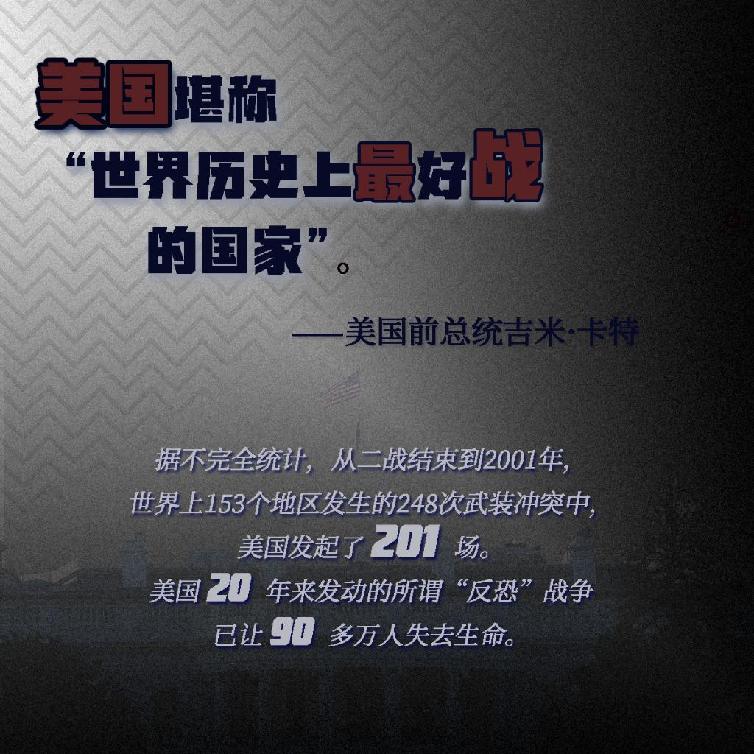
  According to the data of the "War Cost" project of Watson Institute of Brown University in the United States, the total number of military and civilian deaths caused by the war launched by the United States in the "post-9.11 era" is as high as 929,000, and at least 38 million people have been displaced, and this is only a "very conservative estimate", and the actual number may be between 49 million and 60 million.

  In addition to directly launching or participating in wars, the United States frequently interferes in other countries’ internal affairs by directly or indirectly supporting proxy war, inciting other countries’ civil wars, providing weapons and ammunition, and training anti-government armed forces, which seriously damages the social stability, public safety and healthy economic development of the countries concerned.

  "The biggest source of chaos in the world", the United States deserves its name!

  Reporter: Sun Nan.

  Editor: Liu Yuanyuan

The Academic Advisory Committee of China Institute of History was established, with Dai Yi, an expert in Qing history, as the director.

The China Institute of History of China Academy of Social Sciences, which was officially unveiled in January this year, has now set up an academic advisory committee, and 41 committee members from the national history circle have officially made public appearances.

In the 19th edition of People’s Daily published on September 24th, it was announced that "according to the establishment plan approved by the central authorities, the China Institute of History selected 41 experts and scholars from the national history circle to set up an academic advisory committee. Members of the Academic Advisory Committee of China Institute of History are now announced. "

According to the announcement, the director of the Academic Advisory Committee of China Institute of History is Dai Yi, director of the National Compilation Committee of Qing History and a first-class post professor at Renmin University of China.

According to public information, Dai Yi, male, born in September, 1926, is a native of Changshu, Jiangsu Province. His academic expertise is the modern history of China and the history of Qing Dynasty, and his representative works include Modern History of China. At present, Dai Yi is honorary director of the Institute of Qing History of China Renmin University, librarian of central research institute of culture and history, and curator of Beijing Literature and History Research Museum.

Dai Yi was admitted to Shanghai Jiaotong University in 1944. Two years later, he dropped out and transferred to Peking University History Department, where he studied under Hu Shi, Zheng Tianting, Zhu Guangqian, Xu Deheng, Xiang Da and Deng Guangming. In 1948, under the arrangement of the Party organization, Dai Yi left Peking University for the Liberated Area, entered North China University in the Liberated Area, and then stayed there to teach, initially engaged in the study of China’s revolutionary history and modern history.

In 1955, Dai Yi was promoted to associate professor, served as the academic secretary of Wu Yuzhang, then president of China Renmin University, and later served as the editorial board of China History Series edited by Wu Han. During the Cultural Revolution, Dai Yi was shocked and sent to Jiangxi’s May 7th cadre school for labor reform, and returned to Beijing in 1972.

Dai Yi devoted his life to the compilation of Qing history. In 1978, with the approval of the Ministry of Education, the Qing History Research Institute was formally established on the basis of the former Qing History Research Group. Dai Yi was in charge of the practical work, and for the purpose of compiling the Qing history, the academic research and personnel training of the Qing history were carried out in an all-round way. In 2002, the compilation plan of Qing history was approved by the state, and Dai Yi, who was over 70 years old, once again went into battle and became the director of the editorial board.

According to official website of Renmin University of China, "In the past ten years, under the overall framework of compiling the history of the Qing Dynasty as the main body and sorting out the documents and archives of the Qing Dynasty as the two wings, not only the main project of the history of the Qing Dynasty has been carried out smoothly, but also billions of words of archives and documents have been sorted out, and efforts have been made to save these cultural relics."

The Academic Advisory Committee of China Institute of History also set up two deputy directors, namely Jin Chongji, an expert on the history of the Communist Party of China and the modern history of China, and Wang Wei, an archaeologist.

According to the official resume, Jin Chongji, male, born in December 1930, Shanghainese, former executive deputy director and researcher of the Central Committee of the Communist Party of China Literature Research Office, whose academic expertise is the history of the Communist Party of China and the modern history of China, and his representative works include The Outline of China in the Twentieth Century. Wang Wei, male, born in May, 1954, is an adult in Shandong Province. He is a member of the Chinese Academy of Social Sciences, director of the Department of History, and a researcher at the Institute of Archaeology, China Institute of History. His academic expertise is in the study of the origin of Chinese civilization, archaeology from prehistoric times to Xia, Shang and Zhou dynasties, and archaeological research on ancient cultural exchanges in East Asia. His representative works include "Seeing the evil Matai country and the Japanese regime from China".

The remaining 38 members of the Academic Advisory Committee of China Institute of History announced in the announcement are:

Pei yu, male, born in May 1944, is from Fushan, Shandong. Researcher, Institute of World History, China Institute of History. Academic expertise is historical theory and history of historiography. His representative works include The History of Marxist Historiography (Editor-in-Chief).

Ma Min, male, born in June 1955, is from Fushun, Sichuan. Director and Professor, China Institute of Modern History, Huazhong Normal University. Academic expertise is the economic and social history of China, the history of exposition and the history of cultural exchange between China and the West. His representative works include between officials and businessmen: modern gentry and businessmen in social upheaval.

Ma Dazheng, male, born in August 1938, is from Shanghai. Researcher, China Frontier Research Institute, China Institute of History. His academic expertise is the history of China territory. His representative works include A Brief History of China’s Frontier (Editor-in-Chief) and so on.

Wang Xianming, male, born in February 1957, is from Changzhi, Shanxi. Professor, School of History, Nankai University. Academic expertise is the modern history and social history of China. His representative works include squire in the changing times-squire and the change of rural social structure (1901-1945) and so on.

Deng Xiaonan, female, born in June 1950, is from Linyi, Shandong. Professor, History Department, Peking University. Academic expertise is the history of Song Dynasty and the history of bureaucracy. Representative works include "The Law of Ancestors-A Brief Introduction to Politics in the Early Northern Song Dynasty" and so on.

Shi Jinbo, male, born in March 1940, is from Gaobeidian, Hebei. Member of Chinese Academy of Social Sciences, director of Xixia Cultural Research Center of China Academy of Social Sciences, and researcher of Institute of Ethnology and Anthropology of China Academy of Social Sciences. His academic expertise is China’s ethnic history, Xixia literature and history, and China’s ancient ethnic literature. His representative works include Research on Xixia Economic Documents, etc.

Feng Shi, male, born in October 1958, is from Beijing. Member of Chinese Academy of Social Sciences, researcher of Archaeology Institute of China Institute of History. Academic expertise is ancient philology, astronomy and archaeology, pre-Qin history, historical philology, and the history of ancient thought. His representative works include Astronomy and Archaeology in China.

Liu Beicheng, male, born in August 1949, is from Beijing. Professor, History Department, Tsinghua University. Academic expertise is modern world history, western thought history and historical theory. Representative works include "Portrait of Foucault’s Thought" and so on.

Liu Qingzhu, male, born in August 1943, is from Nanle, Henan. Member of Chinese Academy of Social Sciences, researcher of Archaeology Institute of China Institute of History. His academic expertise includes archaeology of ancient capitals in China, archaeology of ancient imperial tombs and archaeology of Han and Tang Dynasties. Representative works include "The Ancient Capital Asked" and so on.

Li Jie, male, born in November 1954, is from Kunming, Yunnan. Researcher, Development Research Institute, Yunnan University. Academic expertise is historical theory. His representative works include Research on Early Marxist Historical Thought.

Li Jie, male, born in February 1955, is from Pingyin, Shandong. Former president and researcher of Qiushi magazine. His academic expertise includes the history of the Communist Party of China, the history of People’s Republic of China (PRC), Mao Zedong’s life and thoughts, Socialism with Chinese characteristics’s theoretical system and the China of Marxism. His representative works include Mao Zedong’s Historical Contribution to New China.

Li Boqian, male, born in February 1937, is from Zhengzhou, Henan. Professor, Peking University Institute of Archaeology and Culture. Academic expertise is archaeology in China. His representative works include The Origin of Civilization and Collection of Three Generations of Archaeology.

Yang Gongle, male, born in April 1962, is from Zhuji, Zhejiang. Dean and Professor, School of History, Beijing Normal University. Academic expertise is the comparison of Chinese and foreign ancient history, ancient Roman history, etc. His representative works include A Probe into the Early Silk Road and so on.

Yang Guozhen, male, born in March 1940, is from Longyan, Fujian. Professor, History Department, Xiamen University. Academic expertise is social and economic history and marine history of China. His representative works include Research on Land Contract Documents in Ming and Qing Dynasties.

Wu Enyuan, male, born in April 1948, is from Chongqing. Researcher, Russian Institute of Eastern Europe and Central Asia, China Academy of Social Sciences. Academic expertise is world history, Russian history and the history of international communist movement. His representative works include The History of the Soviet Union.

He Yimin, male, was born in June 1953 in Chengdu, Sichuan. Professor, School of History and Culture, Sichuan University. His academic expertise includes China city history, China modern history and regional cultural history. His representative works include General History of China City.

Sha Jiansun, male, born in February 1934, is from Yixing, Jiangsu. Former deputy director and professor of the Party History Research Office of the CPC Central Committee. His academic expertise is the history of the Communist Party of China and the modern history of China. His representative works include The Historical Road of China in the Twentieth Century —— Comments on Some Social Thoughts, etc.

Zhang Shujun, male, born in October 1957, is from Laiwu, Shandong. Former member (deputy minister level) and researcher of the Central Committee of the Communist Party of China Institute of Party History and Literature. Academic expertise is the history of the Communist Party of China. His representative works include The Great Turning Point-A Record of the Third Plenary Session of the Eleventh Central Committee of the Communist Party of China.

Zhang Haipeng, male, born in May 1939, is from Hanchuan, Hubei. Member of Chinese Academy of Social Sciences, researcher of Institute of Modern History, China Institute of History. Academic expertise is the modern history of China. His representative works include A Concise Reader of Modern History of China (co-author).

Chen Qingying, male, born in October 1941, is from Taishan, Guangdong. Researcher, China Tibetology Research Center. Academic expertise is Tibetan history books. His representative works include Eight Sibas, the Imperial Teacher of Yuan Dynasty, etc.

Chen Zuwu, male, born in October 1943, is from Guiyang, Guizhou. Member of the Chinese Academy of Social Sciences, researcher of the Institute of Ancient History, China Institute of History. Academic expertise is the ancient academic history of China. His representative works include History of Learning Cases in China.

Chen Jin, male, born in October 1958, is from Jianyang, Sichuan. Former member (deputy minister level) and researcher of the Central Committee of the Communist Party of China Institute of Party History and Literature. His academic expertise is Mao Zedong and the history of the CPC. His representative works include Mao Zedong’s Cultural Character and so on.

Chen Qianping, male, born in February 1955, is from Yangzhou, Jiangsu. Chairman and Professor, Academic Committee, Research Center for the History of the Republic of China, Nanjing University. Academic expertise is the history of the Republic of China. Representative works include "Negotiations between China, Britain and Xizang before and after the Anti-Japanese War (1935-1947)" and so on.

Miao Pusheng, male, born in November 1948, is from chiping, Shandong. Researcher, Academy of Social Sciences, Xinjiang Uygur Autonomous Region. Academic expertise is national history and local history of Xinjiang. Representative works include Outline of Xinjiang History (co-editor) and so on.

Lin Wenxun, male, born in March 1966, is from Qujing, Yunnan. Party secretary and professor of Yunnan University. Academic expertise includes Chinese economic history, China rural social history and Chinese frontier studies. His representative works include Outline of Social Change in Tang and Song Dynasties.

Zhou Weizhou, male, born in February 1940, Kaiping, Guangdong. Professor, China Western Frontier Research Institute, Shaanxi Normal University. His academic expertise is the national history of China. His representative works include "A Study of Ethnic Relations in the Middle Northwest of China" and so on.

Zheng Shiqu, male, born in August 1946, is from Fuzhou, Fujian. Professor, School of History, Beijing Normal University. Academic expertise is China’s modern history, modern ideological and cultural history. His representative works include "A Study on the Cultural Thought of the quintessence School in the Late Qing Dynasty" and so on.

Hu Dekun, male, born in March 1946, is from Suizhou, Hubei. Chairman, chief expert and professor of China Institute of Border and Ocean Studies, Wuhan University. Academic expertise is the history of World War II, the history of borders and oceans. His representative works include China and World Studies during the World Anti-Fascist War (Editor-in-Chief).

Hou Jianxin, male, born in Tianjin in October 1950. Deputy Director of Academic Committee of Tianjin Normal University, Dean and Professor of European Civilization Research Institute. Academic expertise is world history. His representative works include Western Europe and China in the Period of Social Transformation.

Geng Yunzhi, male, born in December 1938, is from Haicheng, Liaoning. Member of Chinese Academy of Social Sciences, researcher of Institute of Modern History, China Institute of History. His academic expertise is in the history of modern thought, culture and politics in China. His representative works include Introduction to the Study of Cultural Transformation in Modern China: Cultural Transformation and so on.

Xu Lan, female, born in November 1947, is from Beijing. Director and Professor, Center for International Relations Studies, School of History, Capital Normal University. Academic expertise is world history, modern world history and the history of international relations. His representative works include Britain and the Sino-Japanese War (1931-1941).

Gao Xing, male, born in February 1962, is from Kuandian Manchu Autonomous County, Liaoning Province. Director and researcher of Zhoukoudian International Paleoanthropology Research Center of China Academy of Sciences, and director of Paleolithic Professional Committee of China Archaeological Society. Academic expertise is prehistoric archaeology, human origin and evolution. His representative works include Shuidonggou: Archaeological Excavation and Research Report from 2003 to 2007, etc.

Ge Jianxiong, male, born in December 1945, is from Shaoxing, Zhejiang. Professor, China Institute of Historical Geography, Fudan University. Academic expertise is historical geography, population history, immigration history and cultural history. His representative works include History of Chinese Immigrants (editor-in-chief, author of the first and second volumes).

Jiao Nanfeng, male, born in January 1954, is from Yijun, Shaanxi. Researcher, Shaanxi Institute of Archaeology. His academic expertise is archaeology in Qin and Han Dynasties and the study of the ancient mausoleum system in China. His representative works include The Mausoleum of Emperor Han Jingdi and so on.

Xiong Yuezhi, male, born in December 1949, is from Huaiyin, Jiangsu. Researcher, Shanghai Academy of Social Sciences. Academic expertise is the modern history of China. His representative works include "The Spread of Western Learning to the East and the Society in the Late Qing Dynasty".

Wei Jian, male, born in December 1955, is from Hohhot, Inner Mongolia. Professor and Director of Northern Institute of Ethnic Archaeology, Renmin University of China. Academic expertise for the northern ethnic archaeology, Mongolian archaeology. His representative works include On the Capital of the Yuan Dynasty.

Wei Cuncheng, male, born in October 1945, is from Pingxiang, Hebei. Professor, School of Archaeology, Jilin University. His academic expertise is Koguryo’s archaeology and history in Bohai Sea, and archaeology in the Three Kingdoms, Jin, Southern and Northern Dynasties, Sui and Tang Dynasties. His representative works include Archaeology of Bohai Sea.

Qu Lindong, male, born in December 1937, is from Feidong, Anhui. Professor, School of History, Beijing Normal University. Academic expertise is historical theory and the history of Chinese historiography. His representative works include Collected Works of Qu Lindong.

School begins! What should children put in their schoolbags on their first day of primary school?

  Business daily reporter

  Qin Jian

  It is getting closer and closer to the start of school. What stationery do freshmen need to prepare for admission? Yesterday, the teachers of Bashu Primary School prepared a detailed list of essential stationery to help the first-grade children better adapt to the new study life.

  1 pencil case

  ◆ Choose a pencil case for your child, please remember that "no gaudiness, simplicity is better". Those with fancy colors and pop-up functions will affect children’s concentration in class.

  ◆ The material can be made of plastic or cloth. First, it is light in weight. Second, the sound of falling in class will not be very loud.

  2 pencils

  ◆ Children who have just entered school are always a little forgetful, so it’s always right to prepare more pencils (5-10), cut them in advance and cover the caps.

  ◆ It is recommended to buy HB pencils, which are heavy in color and clear to write.

  3 rubber

  ◆ Rubber is also based on the principle of simplicity, and it should be carefully selected with fragrance. Cartoon-shaped erasers are not practical, so it’s better to choose drawing erasers and 4B erasers, which are easy and clean to wipe.

  4 ruler

  ◆ The length is preferably 10-15cm, which can adapt to most pencil cases.

  ◆ Simple and transparent models will do, and the style with straight edges and wavy lines is the most practical.

  5 watercolor pen

  ◆ It is recommended to buy a small suitcase with a brush for children, which is convenient, light and easy to carry.

  ◆ On each pen, you can put a sticker with your child’s name or unique pattern to prevent it from being lost.

  6 Bao Shu paper

  ◆ It is recommended to buy transparent Bao Shu paper, which is easy to operate and easy to use.

  ◆ Use the calendar at home or kraft paper to make Bao Shu green and environmentally friendly. The Bao Shu process allows children to participate together.

  7 art design supplies

  ◆ Art classes and daily paintings need to be cut and pasted, so some art supplies, such as safety scissors and oil pastels, should be prepared for children.

  ◆ It is best for children to use glue sticks, and they will not get glue everywhere. Scissors should be bought for children with round heads, and it is better to have a cover.

  8 pencil sharpener

  ◆ You can buy a regular pencil sharpener instead of an electric pencil sharpener or a crank.

  ◆ When parents teach their children to use a pencil sharpener, by the way, remind them to clean up the pencil scraps in time and be a hygienic pupil.

  9 pad board

  ◆ Prepare two plastic pads, A5 and A4 respectively, aiming at different specifications of exercise books and notebooks.

  schoolbag

  ◆ The most important thing is that the schoolbag is comfortable to carry. Take your child with you when you buy, and try it on your back. The specifications of schoolbags are based on the maximum book size.

  ◆ luggage case’s schoolbag is carefully chosen, and there are steps on the way to and from school, including school, so it is not easy to use.

How to continue to write the business legend of "creating a generation" in the intergenerational inheritance of private enterprises

  On March 1st, there was a heavy news from Country Garden, a leading real estate enterprise: Yang Guoqiang, the chairman and executive director of the company’s board of directors, resigned due to his age, and was replaced by his daughter and co-chairman, Yang Huiyan, with effect from March 1st, 2023.

  In this regard, Yan Yuejin, research director of Yiju Research Institute, told the Securities Daily reporter that the resignation event was generally in line with expectations. At present, private enterprises are experiencing an intensive period of replacement of old and new, and some founders of enterprises will indeed enter the stage of resignation because of their age, so it is also a normal adjustment in itself. At the same time, the growth of Country Garden is closely related to the rapid development of urbanization in China. It is precisely because it has seized this dividend and its business scale has expanded rapidly. It is an outstanding representative of the rise of housing enterprises under the background of urbanization. At present, the replacement of old and new, how to seek new space on the basis of a new round of urbanization, this is also the content that investors pay more attention to.

  Yang Guoqiang is 69 years old. As one of the earliest real estate entrepreneurs in China, he founded Country Garden in the early 1990s, and its famous super-market model well stepped on the rhythm of China’s new urbanization construction and achieved rapid success. In 2017, Country Garden became the first real estate enterprise to break through the threshold of 500 billion yuan and remained at the top of the country at the end of the year. Also in the same year, Country Garden ranked among the Fortune 500 for the first time, ranking 467th. By 2022, its ranking has climbed to 138th.

  In 2022, when the real estate industry in China suffered from extreme cold, its scale shrank, the loan stopped and spread, and the news of thunder storm broke out from time to time. Country Garden’s business and sales maintained a rare stability, and there was no delay in paying the principal and interest due to breach of contract, and it became a model private real estate enterprise with benchmark significance, showing sufficient resilience.

  At present, the real estate industry in China has just passed through the cold winter and is gradually showing a good trend. Under such a special background, Yang Huiyan took over Country Garden, which has also become an observation model for China’s modern private economy to do a good job in enterprise inheritance. After taking over the real estate aircraft carrier, can Yang Huiyan successfully carry on the business mission? Under the leadership of a new generation of successors, where will Country Garden go?

  Expected succession

  China’s reform and opening up has been promoted for more than 40 years. Over the past 40 years, the earliest batch of private entrepreneurs in China have created unprecedented wealth through hard exploration in the wave of reform dividend and urbanization. Forty years later, most of these entrepreneurs are over 60 years old, and they are beginning to face a new challenge-corporate inheritance.

  Yang Huiyan was born in 1981, the second daughter of Yang Guoqiang. As early as the eve of Country Garden’s listing in 2007, when Yang Guoqiang transferred all the shares of the company worth tens of billions of yuan to Yang Huiyan, she had stepped into the public eye and attracted much attention.

  "The inheritance of an enterprise is still a realistic development trend in the China real estate market in the next decade, whether from the traditional concept of" inheriting the father’s business "in China or from the transformation and upgrading process of the enterprise itself. Because blood is the best contract. " Gao Xianlin, vice president and senior partner of Hanjia Real Estate Consulting Co., Ltd., has quite representative views. In fact, among private entrepreneurs in the United States, Europe, Japan and Southeast Asia, there have been many classic examples of the inheritance of family businesses, and it is not uncommon to see the legend of family fortune that lasted for more than one or two hundred years. Of course, this traditional way of inheritance also has potential risks, such as whether the quality of the successor can meet the requirements and take charge of the enterprise well after inheritance.

  Yang Guoqiang’s train of thought about children is very similar to Li Ka-shing’s. Like Li Zeju and Li Zekai, Yang Huiyan and his sister had the opportunity to sit in on the work assigned by their father at the board meeting at an early age.

  Since joining Country Garden in 2005, she has worked in important business departments such as investment planning center, purchasing department, human resource management center and digital management center and held major management positions. In 2012, she became the vice chairman of the board of directors of the group, and in 2018, she was transferred to be the co-chairman of the board of directors. It has been 18 years since it successfully led the listing of Country Garden education sector and the spin-off listing of property sector. In fact, the industry had long expected Yang Huiyan to take over Country Garden.

  According to insiders of the company, during his term as co-chairman, he has jointly managed the daily work of the Group with Yang Guoqiang, and was responsible for the strategic investment and new business development of the Group, and his working ability has been highly recognized by the board of directors. Yang Guoqiang’s efforts to cultivate Yang Huiyan can be described as foresight and careful layout, and it has also laid a thick enough safety mat for the long-term stable operation of enterprises.

  The successor’s new topic

  The market also gave positive feedback to Country Garden’s takeover. On March 1, Country Garden’s share price closed up 8.33%.

  The inheritance of successors is not a stick-in-the-stick in the traditional sense. At present, the real estate market in China is in transition to a new development mode. How to adapt to the changing times and maintain the development competitiveness under the new situation is not only a new challenge and a new topic, but also provides a new stage for successors to show their talents.

  Still taking Country Garden as an example, in recent years, Country Garden has strategically laid out new businesses such as construction robots and modern agriculture, which have achieved initial results, and construction robots have made a series of major breakthroughs. As of January, 2023, Guangdong Bozhilin Robot Company, a subsidiary of Country Garden, has put 33 construction robots into commercial application, with a cumulative application construction area of over 10 million square meters. In addition, Country Garden has also set up a Science and Technology Building Group, focusing on the promotion and application of the smart construction system of science and technology, which integrates advanced technologies such as construction robots, BIM digitalization and new prefabricated buildings.

  Some insiders pointed out that smart construction is expected to bring a new look to the traditional construction industry, and it is also a great weapon for the real estate industry to cope with the new cycle, which will surely win more development space for the enterprises themselves and even the whole industry. In the exploration of new technologies and new business models, a new generation of entrepreneurs may have natural advantages. From this perspective, it may be just the right time for Yang Huiyan to take over Country Garden at such a special moment.

In 2025, Spring Festival travel rush’s total travel volume and single-day peak value from January 14 to February 22 may hit a record high.

  On December 27th, it was learned from the press conference of the State Council Office that in 2025, Spring Festival travel rush will last for 40 days from January 14th to February 22nd. The Ministry of Transport predicts that with the release of policies by all parties, the demand for travel in Spring Festival travel rush will be stronger in 2025, and the total amount of travel and the peak value of a single day may reach a record high. To this end, the Ministry of Transport has taken the lead in setting up a special class for comprehensive transportation in Spring Festival travel rush, striving to achieve the goal of "Safe Spring Festival travel rush, Warm Spring Festival travel rush and Convenient Spring Festival travel rush".

  At the same time, at the end of the year and the beginning of the year, Li Yang, vice minister of the Ministry of Transport, also published the report card of traffic work in 2024, expressing that he was "very proud, excited and full of confidence" in his achievements.

  Talking about the source of confidence in the development of the transportation industry, Li Yang pointed out that one of them stems from the endogenous power generated by huge demand. Looking back at Spring Festival travel rush in 2024, the cross-regional mobility reached 8.4 billion person-times. The number of people traveling in the 7 days of the National Day holiday reached 2 billion, especially on the first day of the National Day holiday, the travel data reached a new high: the total number of people traveling reached a peak of 330 million on October 1; Railway passenger traffic reached 21.44 million passengers, a single-day high; The traffic volume of expressways reached 68.41 million, of which new energy vehicles accounted for 15.9%. The strong travel demand injected strong impetus into traffic development.

  The second is a stronger foundation for development. China’s comprehensive three-dimensional transportation network has reached a new level, with a mileage of 6 million kilometers. Major projects such as the Shenzhen-China Passage are completed and put into operation. Civil aviation is expected to add five certified civil transport airports, with a railway mileage exceeding 160,000 kilometers, including 46,000 kilometers for high-speed railways, about 50,000 kilometers for new highways and 8,000 kilometers for newly rebuilt and expanded expressways. There has also been a major breakthrough in international transportation channels, such as trans-Caspian transportation corridor, direct highway transportation and the opening of Qiankai Port in Peru, opening up new routes for China-Europe and China-Latin America trade.

  The third is full of development potential. A series of economic incremental policies have continuously released the traffic dividend, and the policies of "duality" and "two innovations" have continued to be effective. In November, the growth rate of freight volume and port cargo throughput increased, accelerating by 4.2% and 3.7% respectively year-on-year, which has saved enough stamina for subsequent development and continuously promoted the steady progress of the transportation industry.

  Looking forward to 2025, Li Yang believes that there are challenges and opportunities, and the opportunities outweigh the challenges. On the one hand, hold the policy "baton" and promote the construction of major projects. The list of major projects in 2025 has been drawn up, and the Pinglu Canal under construction, Shanghai Port Xiaoyangshan North Container Terminal, Shanghai-Chongqing-Rongjiang high-speed railway and other projects are speeding up the weaving of the national comprehensive three-dimensional transportation network.

  Furthermore, give full play to the advantages of comprehensive transportation to help reduce costs and increase efficiency. It is estimated that in 2025, it is expected to reduce the logistics cost of the whole society by 300 billion yuan, providing solid support for the real economy, especially the manufacturing industry. It will also deepen the reform of the comprehensive transportation system, promote the reform of the railway system, accelerate the development of general aviation and low-altitude economy, and release the vitality of development through reform.

  In addition, pay close attention to safety production and let people travel with peace of mind. In 2025, Spring Festival travel rush will carry out two nationwide investigations and rectification of potential safety hazards before and after May Day. For the Spring Festival, May Day and National Day holidays, "30 hard measures" were adopted to improve holiday safety with stricter standards. (Wu Na)

It’s all coke: the glass bottle is cool, but the plastic bottle is so bad.

There is not a summer that can be saved without iced coke.

It's all coke: the glass bottle is cool, but the plastic bottle is so bad.

On the small problem of "drinking coke", many people have their own habits. For example, some people only prefer a certain fixed brand (the battle between red and blue), while others are particularly picky about the containers of coke and are unwilling to drink coke in plastic bottles.

It’s easy to understand the brand of coke, but what about the container of coke?

It turns out that,Many people think that the taste of cola in different packages is different, and the taste of cola in plastic bottles is not as good as that in glass bottles.

It's all coke: the glass bottle is cool, but the plastic bottle is so bad.

How does packaging affect the taste?

Why does the same cola taste different in different packages? Is there a difference in the composition of cola in different packages?

In fact, there is no such thing. A large coke company is aiming at the questions of coke lovers.Deliberately explained the taste of cola. No matter whether it is in glass bottles, plastic bottles or cans, all cokes are the same, and there is no difference in formula and production technology.

It's all coke: the glass bottle is cool, but the plastic bottle is so bad.
Officials claim that there is no difference between different packages of cola. Image from coca-cola.co.uk.

However, the company also admits that the taste of cola is influenced by many factors, such as temperature and packaging.

I don’t know if you’ve noticed,Iced coke is more full of gas! Carbon dioxide, the soul of cola, will dissolve in water to form carbonic acid (H2CO3). When the temperature is lowered, the solubility of carbon dioxide will increase, which will fully stimulate the taste receptors, make it more irritating to drink, and the tip of the tongue will have a sweet and numb wonderful experience.

Packaging may affect the taste because the degree of air leakage of different packaging is different.

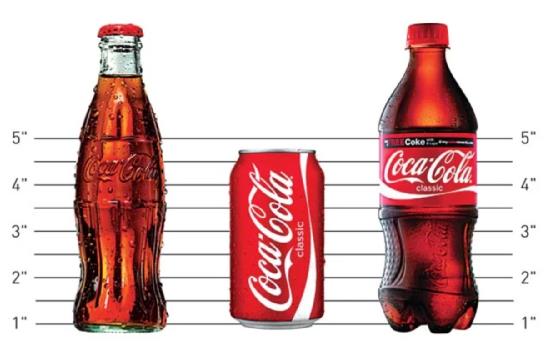
At present, there are three kinds of common cokes in the market: plastic bottles, cans and glass bottles.

It's all coke: the glass bottle is cool, but the plastic bottle is so bad.

Coke in different packages, image source popsci

1. The glass bottle has good air tightness and sufficient carbon dioxide.

The earliest cola was produced in glass bottles. The main component of glass is silicon dioxide, which is very stable in chemical properties and hardly reacts with the substances contained. Moreover, the air tightness of the glass bottle is very good, and the carbon dioxide filled in it is not easy to escape.

Therefore, when you drink coke in a glass bottle, especially when you swallow a mouthful of iced coke suddenly, the happiness of rich carbon dioxide gas running through your mouth is incomparable to other drinks. This is the refreshing experience that only enough gas can create.

It's all coke: the glass bottle is cool, but the plastic bottle is so bad.
Glass bottles for coke, image source: coca-colacompany.

2. The coating of cans affects the taste.

At present, coke in cans and plastic bottles is more common than coke in glass bottles. The materials used to make cans are mostly aluminum, which is a relatively active metal with unstable chemical properties.

In order to prevent it from reacting with the ingredients in cola, there will be a special coating (epoxy resin) on the inner wall of the can, which is very stable and can separate the metal from cola, and at the same time prevent oxygen from entering the can and affecting the beverage ingredients.

3. Plastic bottles are not airtight enough, and carbon dioxide is easy to be lost.

As for the plastic bottle that is often rejected, its main component is polyethylene terephthalate, which is the famous PET.

The disadvantages and advantages of plastic bottles are very prominent. On the one hand, it is light and not easy to be damaged. On the other hand, its air tightness is not as good as that of cans and glassware, especially when the temperature is high or the sun shines directly, the loss of carbon dioxide in the bottle will increase obviously.

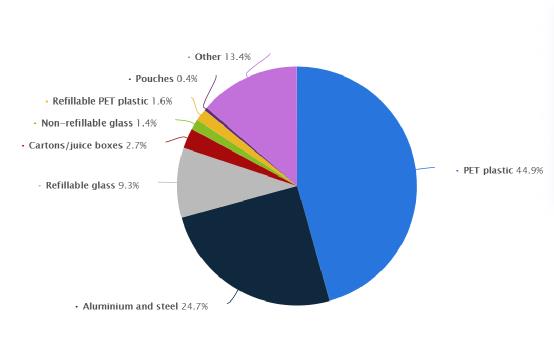
At present, plastic bottles are more and more widely used. Take Coca-Cola Company as an example. The selection of PET materials for the outer packaging of its products accounts for almost 45%. It is no wonder that most coke in supermarkets is bottled in plastic.

It's all coke: the glass bottle is cool, but the plastic bottle is so bad.
About 45% of Coca-Cola’s packaging uses PET material, and the picture is from statista.

How can I drink the "most authentic" cola?

Like most people think, coke in glass bottles is least affected by the outer packaging and can best maintain its original flavor.

However, considering that transparent glass bottles are poor in light protection, it is best to drink coke bought in glass bottles as soon as possible or keep it away from light.

Coke in cans tastes good, too. Compared with glass bottles, cans have good light-proof performance, and they can be cooled quickly in the refrigerator, so that iced coke can be obtained quickly.

As for some people who think that coke in cans has a metallic taste, it is probably because these people are particularly sensitive to metals. When drinking coke in cans, they first came into contact with the metal packaging, so they tasted the metallic taste.

If you want to choose coke in plastic bottles, you should choose the latest production date and drink it as soon as possible. In particular, we must be careful in choosing large-package cola, because if we can’t drink it all at once, the carbon dioxide in it will soon be lost, and the taste of cola will be greatly reduced. In addition, leaving it for a long time after opening the lid will also bring microbial reproduction and affect our health.

In addition, do you remember that someone commented that McDonald’s cola is the best?This is because the cola in the fast food restaurant is drunk and played now, and the carbon dioxide in the cola is also charged now, without loss, and the taste is naturally better.

Although many people with sensitive taste can taste the difference between different packages of cola, more people actually don’t care about this small difference.

After all, compared with the taste of death and curiosity introduced by various coke brands (such as cherry coke of Coca-Cola Company), the difference in taste caused by different packaging is really minimal.

It's all coke: the glass bottle is cool, but the plastic bottle is so bad.
Cherry cola

It's all coke: the glass bottle is cool, but the plastic bottle is so bad.
Cherry cola? Don’t I deserve a name? Image source wikipedia

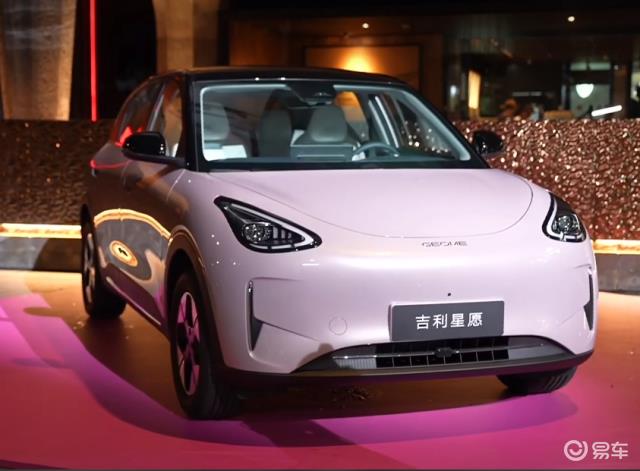
Geely Star Wish is newly released, with a beautiful shape and a Meizu car machine

On September 3, Geely brand’s new A0 pure electric sedan – Geely ushered in its world debut at Shanghai 1933 Laochangfang, becoming the focus with its unique shape and intelligent technology.

Geely Star Wish’s exterior design subverts the market aesthetic of traditional A0-class pure electric cars. It adopts an original design to achieve a golden body coordination ratio comparable to Porsche, and the front face is designed with a "smile" as the design concept to create a pleasant visual experience. The brightness can reach a maximum of 200LX, and the low-light irradiation distance is ≥ 150m, and the high-light irradiation distance is ≥ 170m, ensuring the safety of driving at night. In addition, 16-inch four-leaf clover wheels not only have low wind resistance but also add light emotional value.

Geely Star Wish has a leading 85% "house acquisition rate" in the same class. The rear legroom reaches 890mm, which is better than the competitors in the same class, and even some B-class cars. The 36 storage spaces in the whole car are cleverly designed, including 70L oversized front trunk, 10L passenger drawer and 28L rear bottom storage space, which greatly enhances practicality and convenience.

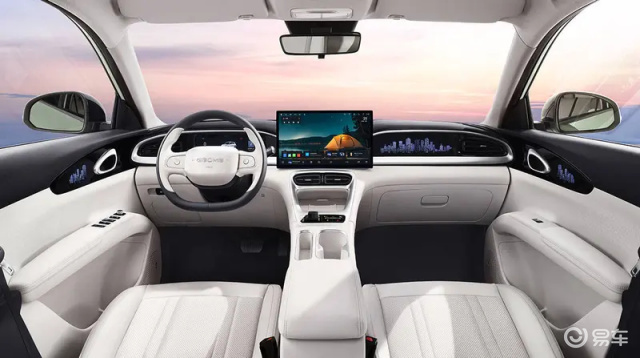
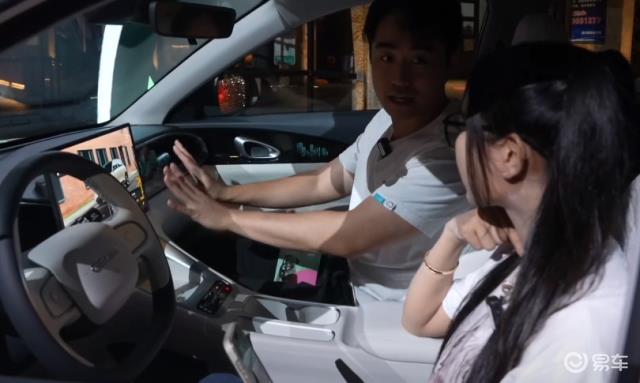
The smart cockpit is also a highlight of Geely’s Star Wish. For the first time, it is equipped with the Flyme Auto smart cockpit system, which is jointly built by Geely Automobile and Xingji Meizu. It provides intelligent voice interaction functions that can be seen in the whole scene, as well as rich ecological extension. Equipped with an 8.8-inch LCD instrument panel and a 14.6-inch high definition screen, it brings a good operation experience and visual enjoyment.

The release of Geely Star Wish is not only an important layout for Geely Automobile in the field of new energy, but also an innovation for the existing A0 pure electric car market. Friends who are interested in this model can continue to follow the official news.

Changzhou Maybach S-class price reduction news, special offer 1.458 million! Quantity is limited

Welcome to the Autohome Changzhou Promotion Channel to bring you the latest breaking news! At present, the high-profile luxury car is launching a grand promotion within the city. This distinguished model is deeply loved by consumers for its excellent quality and unparalleled driving experience. What is exciting is that you can now enjoy a cash discount of up to 10,000 yuan for car purchases, which further narrows the original starting price 1.458 million RMB, bringing real benefits to consumers. If you have been excited about the Maybach S-Class for a long time, now is the time to seize the opportunity and click "Check Car Price" in the quotation form. Let’s explore this rare car purchase opportunity together and strive for more generous preferential conditions.

常州迈巴赫S级降价消息,特价145.8万!数量有限

The Maybach S-Class presents an unparalleled exterior design with its luxurious and noble temperament. On the front face, it uses a delicate chrome grille with elegant lines to convey a low-key sense of luxury. In overall style, the Maybach S-Class combines classic and modern, streamlined body design and meticulous carving of details to create a visual effect that coexists with dignity and technology. Every detail reflects Maybach’s insistence on quality and precise grasp of user requests.

常州迈巴赫S级降价消息,特价145.8万!数量有限

With its elegant and unique side design, the Maybach S-Class presents an ultimate luxury temperament. The body size reaches 5470mm x 1921mm x 1510mm, and the wheelbase reaches a spacious 3396mm, resulting in a sense of space and comfort. The front and rear wheel tracks are 1655mm and 1683mm respectively, ensuring driving stability. The tire size is 255/45 R19, which not only matches the dynamic performance of the vehicle, but also presents an elegant rim style, further strengthening the identity of its luxury car series. Every detail reflects the rigorous pursuit of craftsmanship and design of the Maybach S-Class.

常州迈巴赫S级降价消息,特价145.8万!数量有限

The interior design of Maybach S-Class is luxurious and exquisite, and it creates a luxurious atmosphere with exquisite materials and craftsmanship. The steering wheel is made of genuine leather, which is simple in design and comfortable in grip. It supports electric up and down + front and rear adjustment, so that the driver can adjust the best driving position according to personal needs. The 12.8-inch central control screen stands on the dashboard, and the clear display content and advanced automatic speech recognition control system can easily control functions such as multimedia, navigation and phone, bringing convenient and intelligent experience to the driver.

In terms of seats, the Maybach S-Class is made of high-grade leather to provide a comfortable ride experience. The front seats not only have 4-way adjustment functions, including front and rear, backrest, height and waist support, but also are equipped with heating and ventilation functions to ensure passengers’ comfortable ride in any weather. The power seat memory function can be set for the driver and co-pilot’s memory, and the rear seats also support front and rear adjustment and leg support, providing passengers with all-round luxury enjoyment. The overall interior design cleverly blends functionality and luxury, highlighting the unique charm of the Maybach S-Class as a luxury sedan.

常州迈巴赫S级降价消息,特价145.8万!数量有限

The Maybach S-Class is equipped with a powerful 3.0T engine with a maximum power of 280 kW and a peak torque of 500 Nm, releasing 380 horsepower. This engine, combined with a sophisticated 9-speed automatic transmission, provides a smooth and efficient driving experience, ensuring the vehicle’s outstanding performance in various road conditions.

Summarizing the views of the owner of the Autohome, he deeply felt that the exterior design of the Maybach S-Class is full of domineering and business atmosphere. The unique chrome-plated and pie wheel hub design, as well as the luminous Maybach logo, are undoubtedly a symbol of identity and status. Although the new model has replaced the Maybach logo with a Mercedes-Benz logo, this does not seem to weaken the owner’s understanding and appreciation of the essence of the Maybach brand. He expressed the owner’s unique emotion for this luxury car with the sentence "Maybach L is not a logo, but a waist that has not been straightened for so many years".