Ministry of Finance: Impose a 10% consumption tax on ultra-luxury cars in retail.
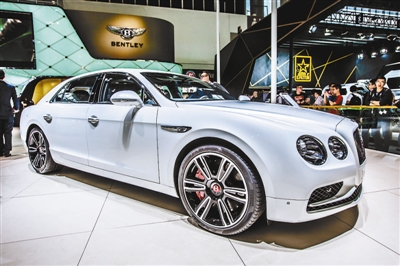
  The industry believes that a consumption tax on luxury cars in the retail sector will not only reasonably guide consumption, but also increase fiscal revenue.

  The Ministry of Finance and the State Administration of Taxation issued a notice yesterday, saying that in order to guide rational consumption and promote energy conservation and emission reduction, with the approval of the State Council, consumption tax will be imposed on ultra-luxury cars. This regulation will be implemented as of December 1, 2016.

  Tax will be increased by 10% on the sales of ultra-luxury cars.

  The notice pointed out that the sub-tax item of "super luxury cars" will be added under the tax item of "cars". The scope of collection is passenger cars and light commercial buses with a retail price of 1.3 million yuan (excluding value-added tax) and above, that is, ultra-luxury cars in the sub-tax items of passenger cars and light commercial buses. For ultra-luxury cars, on the basis of the consumption tax levied at the current tax rate in the production (import) link, the consumption tax is levied at the retail link, and the tax rate is 10%. The notice makes it clear that the units and individuals that sell ultra-luxury cars to consumers are taxpayers in the retail link of ultra-luxury cars.

  10% consumption tax will not be levied on the sold vehicles for filing within 5 days.

  For distribution channels, will the vehicles that have signed automobile sales contracts before November 30 be affected by the adjustment of the consumption tax on ultra-luxury cars? It is understood that for ultra-luxury cars that have signed automobile sales contracts before November 30 (inclusive), but have not delivered the real thing, taxpayers will file the signed automobile sales contracts with their competent tax authorities within 5 working days from December 1 (inclusive). According to the notice information, the retail consumption tax with the tax rate of 10% will not be levied for those who are filed according to the regulations, and the retail consumption tax will be levied if they are not filed and not filed within the prescribed time limit.

  It is difficult to manage the tax after tax collection.

  According to the information, when the consumption tax was implemented in 1994, it included automobile tax items. In the consumption tax reform in 2006, the automobile consumption tax was adjusted. It is understood that the current car tax items are divided into two categories: passenger cars and medium and light commercial buses. Among them, the larger the cylinder capacity of passenger cars, the higher the tax rate of consumption tax, and the tax rate ranges from 1% to 40%. Passenger cars with a cylinder capacity of more than 4 liters will be subject to a consumption tax rate of up to 40%. The consumption tax rate of 5% is applicable to medium and light commercial buses. The taxation link is in the production and import links.

  According to industry analysts, a consumption tax will be levied on luxury cars in the retail sector, with the aim of reasonably guiding consumption and increasing fiscal revenue.

  "The consumption tax collection link is changed to the retail link. The advantage is that the final selling price of goods can be taxed, and the tax base is obviously expanded, which can increase fiscal revenue and reasonably guide consumption, but the challenge is that the collection and management are difficult." The above analysis pointed out that the relevant departments took luxury cars as a breakthrough and imposed a consumption tax on the retail sector, which is also based on the fact that there are not many 4S retail stores in China compared with retail stores such as tobacco and alcohol, and it is relatively easy to control. This will provide experience for the next stage of other tax items to move back.

  Text/reporter Ren Xiaoyuan

  affect

  The actual impact on car buyers will not be great.

  At present, the models with more than 1.3 million yuan are basically ultra-luxury car brands such as Bentley, Maserati and Porsche. In addition, some brands such as BMW X6, BMW 7 Series, Mercedes-Benz GL Series and Audi A8 have reached this level. Therefore, the influence of the new consumption tax policy is relatively small and fixed. But at present, it should not have much impact on the sales in this market.

  China’s automobile consumption tax was established in 1994, and the latest automobile consumption tax reform was in 2008. The tax rate for passenge cars with displacement of 3.0L to 4.0L is raise from 15% to 25%, and that for passenger cars with displacement of 4.0L is raised to 40%. Reduce the consumption tax rate of small-displacement passenger cars, and reduce the tax rate from 3% to 1% for passenger cars with displacement below 1.0L This time, the tax rate will be increased by 10% for ultra-luxury cars with a price of more than 1.3 million yuan. This adjustment mainly affects the sales of imported vehicles.

  According to the previous consumption tax policy, the tax rate of ultra-luxury cars is basically 40% high-end. Compared with the consumption tax of 40%, the current 25% tariff and 17% value-added tax have become small heads, so for luxury cars with a price of several million yuan, the consumption tax itself is an important factor to increase the difference between domestic and foreign car prices. Judging from the new policy introduced this time, an additional 10% consumption tax will be imposed on ultra-luxury cars with a price of more than 1.3 million yuan, which will not have a great impact on car buyers. In fact, many 4S shops will basically increase the price of ultra-luxury cars by 100 thousand to several hundred thousand yuan above the manufacturer’s guide price before they can pick up the car, and most car buyers also acquiesce to this.

  Text/reporter zhangqin

  extend

  Whether the purchase tax on small-displacement vehicles will continue to be halved is inconclusive.

  In fact, in the automobile consumption, there is also an essential expenditure, which is the purchase tax. China’s automobile purchase tax rate is set at 10%, which accounts for a large proportion in the cost of car purchase. However, at present, China has adopted a preferential policy of halving the purchase tax for small-displacement vehicles of 1.6 liters or less, that is, it is levied at 5% of the vehicle price, which has played a significant role in promoting the consumption of small-displacement vehicles.

  The preferential policy of halving the purchase tax on small-displacement vehicles has been implemented since October 1, 2015. According to the plan at that time, the policy will expire on December 31, 2016, which means that there is still a whole month left. Up to now, there is no official explanation on whether the preferential policy of halving the purchase tax will continue, and more is speculation from outside. It is also reported that various departments at the government level have different opinions on whether to continue this policy. Earlier, some media reported that on November 1, the National Development and Reform Commission, the Ministry of Communications, the Ministry of Finance and other ministries and commissions held departmental meetings to study whether to continue this policy, but no news came out since then.

  The data shows that the prices of 1.6-liter and below displacement models are mostly concentrated below 200,000 yuan. According to the current preferential policies, the purchase tax for bicycles ranges from 3,000 to 10,000 yuan. Once this policy is cancelled next year, it is likely to drive the sales ratio of models above 1.6 liters to increase in a short time. According to the data of China Automobile Association, in 2015, the sales of passenger cars of 1.6 liters and below reached 14,508,600, an increase of 10.38% over the same period of last year, which was higher than the overall growth rate of passenger cars and accounted for 68.6% of the sales of passenger cars.

  Text/reporter zhangqin for the picture/vision china

Who will bear the responsibility when skiing accidents occur frequently in ski resorts?

  It is freezing in the cold, and it is the peak season of skiing. Many skiers gather in the ski resort to experience the excitement and freshness brought by skiing. However, skiing is also a sport with frequent accidents. It is frustrating to take part in ice and snow events with great joy but have an accident, whether you are injured yourself or others. How to avoid injuries is a problem that skiers and ski resort operators should consider.

  Recently, the Fangshan District People’s Court in Beijing, after investigating relevant cases, combined with three specific cases, reminded skiers and ski resort operators to put safety awareness in the first place in ice and snow entertainment activities. Operators should do safety tips and protective assistance. Skiers should look ahead and look behind, be cautious and do what they can, and it is best to buy an accidental injury insurance before exercise.

  Keep an eye on the surroundings and don’t take it lightly.

  Taking care of children is the most important thing.

  One winter, Ms. Liu took her two-year-old granddaughter to ski in a ski resort in Fangshan District. At 3 o’clock in the afternoon, when Ms. Liu was standing in the ski resort, she was suddenly knocked down by the ski ring that Mr. Zhang and her daughter were riding. Suddenly, Mr. Zhang quickly took Ms. Liu to the hospital for treatment. After diagnosis, Ms. Liu’s right little finger soft tissue injury, multiple rib fractures and left rotator cuff injury. Mr. Zhang paid all the inspection fees and medical expenses of Ms. Liu that day. Later, because the injury was not completely cured, Ms. Liu went to the hospital for re-examination many times. At this time, Mr. Zhang was unwilling to pay Ms. Liu’s related medical expenses and other losses. In desperation, Ms. Liu took Mr. Zhang to court.

  During the trial, Mr. Zhang said that he believed that Ms. Liu was conducting unnecessary review in the follow-up, and these expenses should no longer be borne by him. However, Mr. Zhang did not submit sufficient evidence to prove his claim.

  After the trial, the court held that according to the provisions of China’s Tort Liability Law, if personal injury is caused by infringement on others, reasonable expenses such as medical expenses, nursing expenses and transportation expenses should be compensated, as well as the income reduced due to missed work; If the disability is caused, it shall also compensate the living AIDS for the disability and the disability compensation; If death is caused, funeral expenses and death compensation shall also be paid. In this case, Mr. Zhang knocked down Ms. Liu during skiing, causing personal injury to Ms. Liu, and should compensate Ms. Liu for her reasonable expenses. Based on this, the court ordered Mr. Zhang to compensate Ms. Liu for various reasonable losses of more than 10,000 yuan.

  The judge reminded that in the process of skiing, we should not only pay attention to our own safety, but also pay attention to whether there are others on the snowy road, pay more attention to observation and avoid it in time to avoid causing danger to others. Skiers should slow down or stop skiing where the snowy road is crowded, the terrain is undulating or the line of sight is not good or even blocked. At the same time, it is necessary to obey the instructions of the staff of the ski resort, and in case of emergency, ask the staff or nearby tourists for help in time.

  It is worth noting that in this case, both Ms. Liu and Mr. Zhang took their children to the ski resort. In this regard, the judge reminded that minors should carry out sports suitable for their age and ability under the care of guardians. As guardians of minor children, they should always pay attention to the safety of children and avoid accidents; Older people should not experience intense sports such as ice sports and snow sports.

  Insurance liability should be fully purchased.

  Accidental retention of certificate

  In 2018, Ms. Song and her friends went skiing in a ski resort in Fangshan District through the website registration. The registration fee was 250 yuan, including a national compulsory insurance, and the insurance amount was 2,000 yuan. When she arrived at the ski resort, Ms. Song, who had rich skiing experience, changed her ski suit, and began to slide down from the senior track. When she turned to the middle track, she suddenly fell and was injured. After that, she was taken to the hospital. After diagnosis, Ms. Song suffered from anterior cruciate fracture of her right knee, partial injury of medial collateral ligament and tibial fracture, and she underwent two operations. After leaving the hospital, the insurance company paid Ms. Song 2000 yuan, which was far lower than the actual cost of Ms. Song. Ms. Song believes that because there is ice slag on the slide of the ski resort, don’t hit your snowboard on the hard ice slag when you hit it to the left, causing yourself to fall down and land on your knees. The ski resort should be responsible for this, and accordingly the ski resort operator will be sued to the court for compensation.

  For the statement that there is ice slag on the snowy road, the travel company does not recognize it, and thinks that the reason for Ms. Song’s fall injury is her own lack of skiing knowledge and self-protection awareness. After the trial, the court held that the ski resort has the obligation to ensure the safety of tourists within reasonable limits, and the slide of the ski resort provided by it has been confirmed by witnesses to be frozen, which can prove that the ski resort has not fulfilled its reasonable safety guarantee obligation, so it should bear the corresponding liability for compensation for the consequences of Ms. Song’s injury. As a skier, Ms. Song didn’t know the safety situation of the ski slopes in detail, that is, she slipped blindly, causing her to fall and get injured, so she should also bear the corresponding responsibility. On this basis, the court ruled that the travel company should bear 90% of the compensation liability for Ms. Song’s injury, and Ms. Song should bear 10% of the liability.

  The judge reminded that skiing is a sport with a high risk factor. If the ticket does not include insurance, it is recommended that skiers buy accident insurance for skiing. For example, Ms. Song in this case bought compulsory insurance. After the injury, the insurance company also paid part of the expenses. However, at the same time, it can be seen that the risk of loss cannot be effectively reduced because of the low insurance coverage. Therefore, it is suggested that skiers should buy commercial insurance with higher insurance coverage according to the situation. In addition to covering their own accidental injury compensation, insurance liability should also include personal liability, that is, the liability for compensation for injuries or damage caused by themselves to others or things, such as the insurance company’s compensation when they need to be responsible for hitting people or damaging other people’s property in the snow field.

  It should be noted that, compared with ordinary personal accident insurance, high-risk sports insurance has extended the guarantee responsibility, but it has not extended to the guarantee responsibility of sports events. Therefore, when skiers decide to participate in a certain skiing competition, they need to buy "event insurance" separately.

  The judge reminded that after the accident, skiers should keep good evidence, especially the evidence at the scene of the accident, and should take photos at the first time. In addition, it is necessary to keep tickets, admission tickets and other evidence. Of course, in addition to the skiers’ duty of care, operators should provide safe ski resorts and clean up the ice residue on the ski slopes in time to avoid situations that directly affect safety, such as unqualified snow quality, icy ski slopes, potholes and serious dead ends.

  Do what you can and do the right thing.

  Protection and safety are indispensable.

  Previously, Yu Xiansheng and his friends went skiing, which coincided with Mr. Liu’s visit to the same ski resort. At noon that day, Yu Xiansheng and Mr. Liu were both skiing on the middle and high-grade snowy road, while Yu Xiansheng was skiing on an S-shaped route with a single board and Mr. Liu was skiing on a straight line with a double board. Unexpectedly, the two sides collided near the end of the snowy road, causing Yu Xiansheng to knock out seven teeth and was unconscious on the spot. He was rushed to the hospital by the ski resort staff for emergency treatment. After leaving the hospital, Yu Xiansheng sued Mr. Liu and a tourist company, the operator of the ski resort, to the court, claiming 224,000 yuan for various losses.

  During the trial, Mr. Liu said that veneer is an extreme sport, which requires a high degree of attention to the surrounding things, so Yu Xiansheng should bear more responsibility for the accident.

  During the trial, the court found that Mr. Liu was behind Mr. Wang when skiing, and he did not wear snow goggles and protective gear. The court held that Mr. Liu did not take into account the priority of the skier in front and injured Yu Xiansheng, the skier in front, so Mr. Liu should bear the main responsibility for the accident. Yu Xiansheng didn’t do his duty of care when he used a single board to slide obliquely on the middle and high-grade snow trail, especially when the skiers gathered near the end of the slide, so he had some fault in the accident, so he should bear secondary responsibility. Although the tourist company, the operator of the ski resort, erected warning signs in the ski resort, circulated relevant safety tips and equipped staff to patrol, it did not provide necessary safety protection tools for skiers entering the middle and high-level ski slopes, and did not set security officers to prevent skiers without protective gear from entering the middle and high-level ski slopes. Therefore, the managers of the ski resort failed to fulfill their due safety guarantee obligations and should bear corresponding supplementary responsibilities.

  Accordingly, the court ordered Mr. Liu to compensate Yu Xiansheng for medical expenses, disability compensation, etc. totaling 156,000 yuan. When Mr. Liu fails to perform the compensation obligation according to the previous judgment, the travel company shall bear the supplementary compensation liability not exceeding 10% of the total amount of the previous judgment.

  Through this case, the judge reminded that skiers should be familiar with the environment, understand the distribution of facilities, and the height, slope, length, width and surrounding conditions of the ski resort when they first arrive at the ski resort, and strictly abide by the relevant safety management regulations of the ski resort. Skiers should be equipped with formal ski equipment, wear ski clothes and protective gear. Beginners should first learn the necessary skiing skills and common sense, and hire coaches if necessary. For beginners and those who haven’t been engaged in skiing for a long time, they should avoid blindly going to the middle and advanced ski slopes. It should be noted that when skiing on the snowy road, the skiers in front have priority, and the skiers in the rear should choose a route that will not cause danger to the front and actively keep a safe distance between the two sides.

  For ski resort operators, warning signs and warm tips should be set up in places where there may be dangers, and hardware facilities should be standardized to ensure that safety barriers and other facilities meet the relevant national safety standards and inform skiers of the precautions of risks; Should be equipped with safety inspectors, regular training for safety inspectors, emergency response measures for the emergence of a comprehensive training. At the same time, an infirmary should be set up to help in time after the accident.