The national premiere and press conference of the film "Watching Acacia" is being held.

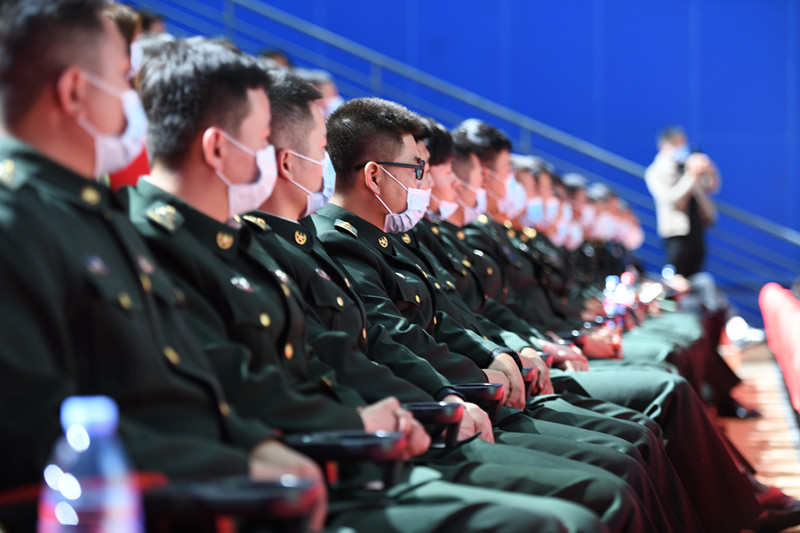
  On November 7th, the premiere and press conference of the frontier defense army love movie "Watching Acacia Tree" based on the true story of Acacia Tree that happened at the Triangle Mountain Post in Inner Mongolia was held in science and technology hall Giant Screen Cinema, Inner Mongolia Autonomous Region.
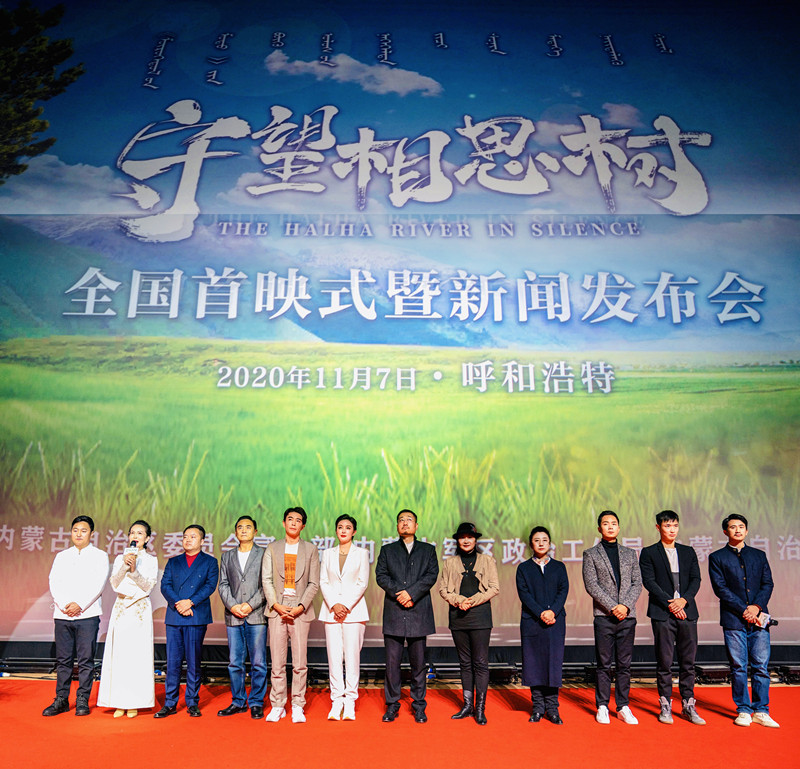
  The national premiere and press conference of the film "Watching Acacia"

  In the 1980s, Li Xiangen, the company commander of the Triangle Mountain Frontier Defense Company, led a patrol when he was caught in a flood. Li Xiangen was swept away by the rushing river to save his comrades. His wife, Guo Fengrong, rushed to the army with her 2-year-old son, and waited in the place where her husband disappeared. She cried for 3 days and 3 nights without waiting for her husband to return. So she planted a Pinus sylvestris var. mongolica next to the post where her husband was stationed to mourn and raise her young son to grow up alone. In 2010, Guo Fengrong was seriously ill. Before she died, she told her son, "After I die, please scatter my ashes in the Haraha River. I want to be with him forever." In accordance with her last wish, her ashes were scattered into the Haraha River where her husband died, and she stayed with her husband at the border forever. The story of "acacia tree" touched the military families and all walks of life. The film "Watching Acacia" was carefully created under this background. It is a military love feature film that reflects the feelings of the border guards and their love for life and death, with a time span of nearly 40 years.

  Our army is the people’s army and our national defense is the national defense of the whole people; The social status of the army and soldiers will have a profound impact on the army, the country and the nation. "Watching Acacia Tree" closely integrates the two themes of soldiers’ feelings about home and country and faithful love, and is slowly unfolding and interlocking in the way of military wives’ dialogues in different times, eulogizing the noble sentiments of generations of border guards’ selfless dedication and defending the country, so that people can see the greatness of military wives, understand the hardships of military wives, and understand that behind the peaceful country and the people, the years are quiet, it is the hard commitment and selfless dedication of countless military families. The film is touching and touching. "Watching Acacia Tree" sounded the assembly number of caring for national defense, advocating soldiers and respecting military wives in the whole society, played an active role in promoting the mainstream value of admiring heroes and creating a spiritual highland of pursuing dedication, and injected strong impetus and strong warmth into reforming and strengthening the army. After the film was released, it was accompanied by the overall improvement of the sense of responsibility and mission of the soldiers, which was a big country’s army. Member of the All-China Youth Federation, film producer and chief producer warmly said: "Respect is a heartfelt respect, which depends on the individual’s value recognition and the atmosphere of the whole society. In fact, the military professional honor is never just a matter for the army, it is jointly constructed by the state, society, family and individuals ‘ Great Wall of Spirit ’ . To consolidate the Great Wall of China, we must consolidate the worship of the army and the martial arts in the whole nation and society ‘ Spiritual foundation ’ . Happily,Paying attention to national defense, caring for soldiers and caring for military families has increasingly become a social consciousness. What we want to express through the film is the maintenance of military honor, the praise of military value and the affirmation of military dedication. Facing the call of the new era, let’s work together to create the scenery of the times that respects military personnel and their families. "
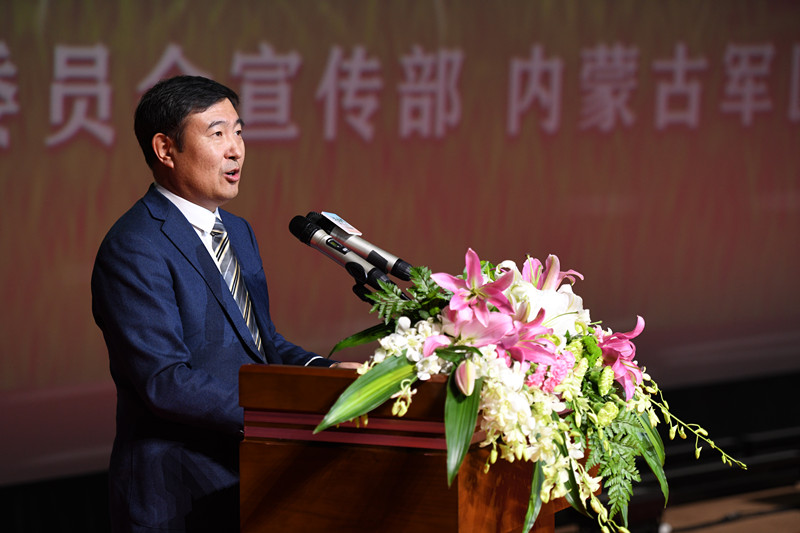
  Wu Enqi, Deputy Director of Propaganda Department of Inner Mongolia Autonomous Region Party Committee and Director of Film Bureau, delivered a speech at the premiere.

  Shooting a film with the theme of "defending the country and defending the border" is ideological, significant and politically demanding. Thankfully, "Watching Acacia Tree" shows the initial mission and thoughts and sentiments of border guards in defending sovereignty, performing their duties, and selfless dedication with vivid film language, and achieves the effect of rather critical. For example, when Zhang Zhongliang led a patrol, his subordinates advised him not to cross the river because of the water, but he said firmly, "The situation at the border is more complicated. You and Lao Qiu are both recruits and have little experience. Batu and I will explore first, and you will wait. " These details not only show the awe and responsibility of the soldiers on the frontier for every inch of land, but also show the fine tradition of unity, unity and friendship among the officers and men of the People’s Army. After Nuolili was pregnant and gave birth, Zhang Zhongliang’s father complained that "Zhongliang was so outrageous that Lili and her children waited for a full year and didn’t come back", and his father-in-law explained for his son-in-law that "Zhongliang is defending the country, and the border guards are particularly important in this peacetime", which reflected the military families’ concern for national security and their understanding and support for the soldiers guarding the border. Hu Jinlan, the screenwriter of the film, said: "It is difficult to make a good film with the main theme and positive energy theme, especially those with correct political orientation, far-reaching ideological value and strong artistic appeal. What we have to do is to start with the means of artistic expression, abandon indoctrination and preaching, mechanical story expression, and facial hero creation, and pay attention to the spirit of nuance.Let the audience observe the connotation of the film between touching stories and words. "Although there is not too much rendering, the small and simple lens has the power to reach the soul. In addition, the release of the film coincides with the national commemoration of the 70th anniversary of Chinese people’s Volunteer Army’s going abroad to fight, and it is of great significance to carry forward and extend the patriotic and heroic spirit of revolutionary soldiers.

  Watching Acacia Tree is adapted and created according to the true story of Acacia Tree, which happened in Sanjiaoshan post in Inner Mongolia.

  Watching the Acacia Tree tells the true story, expresses the true feelings, and the word "true" beats all over the film. In the simplicity, there is truth everywhere, filled with true feelings, reflecting the sincerity and shining with true knowledge. From script writing, director shooting, actor performance and editing, the film always runs through the whole process with truthfulness, sincerity and true feelings, which is not only the highlight of the film, but also the tears. Yinnan Ding, director and chief producer of the national biographical film, said that the whole film creation lasted nearly two years. In order to restore the real characters, scenes and context of the story of Acacia Tree, it took more than half a year to polish the script, and it was revised more than 50 times from the beginning of creation to the completion of shooting. There was also a sudden car accident during the filming, which forced the creative staff to make a big adjustment to the script two days before the filming, and told the story in the way of "Hongyan passing the book" instead. At the same time, the later stage of the film can be described as a "frame", including special effects production and music creation, all of which strive to restore the real details, which I believe will bring the audience a high degree of visual and auditory recognition. After watching the movie, the reporter felt that the film used prose-poetry-style biographies to express itself, such as flowing water, showing the spirit of sacrifice and dedication of Chinese border guards and their families freely, which made people unconsciously wet their eyes and let more people see that on the long border of China,Generations of simple and lovely border guards stuck there like nails, and they fulfilled their firm vows of defending the country and defending the border with their youth and life. The heroine Nolili’s sentence, "Everyone has an acacia tree in his heart. What about yours?" It is a direct hit to the heart and makes people cry.
  Watching Acacia Tree was listed as a key gift film to celebrate the centenary of the founding of the Party by the Political Work Department of the Central Military Commission and as a key film project of the year (2019-2022) by the Propaganda Department of the Inner Mongolia Autonomous Region Party Committee.

  Watching Acacia Tree was co-produced by the Propaganda Department of the Inner Mongolia Autonomous Region Party Committee, planned and directed by the Military Culture College of National Defense University. The producer and chief producer were warm, directed by Ding Zhen and Wen Xin, screenwriter Hu Jinlan, chief producer Yinnan Ding and Chen Dongdong, producer Niu Xiuquan, starring young actors Zhu Yan, Huailong Li and Husileng, and co-starred by many famous performing artists such as Song Chunli, Xinyun Zhu, Zhao Xiaoming and Han Yueqiao. The premiere was hosted by the Propaganda Department of the Party Committee of Inner Mongolia Autonomous Region, the Political Work Bureau of Inner Mongolia Military Region and the National Defense Education Office of Inner Mongolia Autonomous Region. At the event, the main film creators and cast members appeared in unison. Ma Qinglei, commander of the Inner Mongolia Military Region, Bai Yugang, member of the Standing Committee of the Party Committee of the Autonomous Region and Minister of Propaganda Department, and other relevant leaders of the Inner Mongolia military region and representatives of the military and civilians gathered in Shengyi.

  It is reported that the film will be released on November 20 th, and it is planned to designate a special event to invite military personnel (including retired military personnel) and military wives to watch it for free.

The Academic Advisory Committee of China Institute of History was established, with Dai Yi, an expert in Qing history, as the director.

The China Institute of History of China Academy of Social Sciences, which was officially unveiled in January this year, has now set up an academic advisory committee, and 41 committee members from the national history circle have officially made public appearances.

In the 19th edition of People’s Daily published on September 24th, it was announced that "according to the establishment plan approved by the central authorities, the China Institute of History selected 41 experts and scholars from the national history circle to set up an academic advisory committee. Members of the Academic Advisory Committee of China Institute of History are now announced. "

According to the announcement, the director of the Academic Advisory Committee of China Institute of History is Dai Yi, director of the National Compilation Committee of Qing History and a first-class post professor at Renmin University of China.

According to public information, Dai Yi, male, born in September, 1926, is a native of Changshu, Jiangsu Province. His academic expertise is the modern history of China and the history of Qing Dynasty, and his representative works include Modern History of China. At present, Dai Yi is honorary director of the Institute of Qing History of China Renmin University, librarian of central research institute of culture and history, and curator of Beijing Literature and History Research Museum.

Dai Yi was admitted to Shanghai Jiaotong University in 1944. Two years later, he dropped out and transferred to Peking University History Department, where he studied under Hu Shi, Zheng Tianting, Zhu Guangqian, Xu Deheng, Xiang Da and Deng Guangming. In 1948, under the arrangement of the Party organization, Dai Yi left Peking University for the Liberated Area, entered North China University in the Liberated Area, and then stayed there to teach, initially engaged in the study of China’s revolutionary history and modern history.

In 1955, Dai Yi was promoted to associate professor, served as the academic secretary of Wu Yuzhang, then president of China Renmin University, and later served as the editorial board of China History Series edited by Wu Han. During the Cultural Revolution, Dai Yi was shocked and sent to Jiangxi’s May 7th cadre school for labor reform, and returned to Beijing in 1972.

Dai Yi devoted his life to the compilation of Qing history. In 1978, with the approval of the Ministry of Education, the Qing History Research Institute was formally established on the basis of the former Qing History Research Group. Dai Yi was in charge of the practical work, and for the purpose of compiling the Qing history, the academic research and personnel training of the Qing history were carried out in an all-round way. In 2002, the compilation plan of Qing history was approved by the state, and Dai Yi, who was over 70 years old, once again went into battle and became the director of the editorial board.

According to official website of Renmin University of China, "In the past ten years, under the overall framework of compiling the history of the Qing Dynasty as the main body and sorting out the documents and archives of the Qing Dynasty as the two wings, not only the main project of the history of the Qing Dynasty has been carried out smoothly, but also billions of words of archives and documents have been sorted out, and efforts have been made to save these cultural relics."

The Academic Advisory Committee of China Institute of History also set up two deputy directors, namely Jin Chongji, an expert on the history of the Communist Party of China and the modern history of China, and Wang Wei, an archaeologist.

According to the official resume, Jin Chongji, male, born in December 1930, Shanghainese, former executive deputy director and researcher of the Central Committee of the Communist Party of China Literature Research Office, whose academic expertise is the history of the Communist Party of China and the modern history of China, and his representative works include The Outline of China in the Twentieth Century. Wang Wei, male, born in May, 1954, is an adult in Shandong Province. He is a member of the Chinese Academy of Social Sciences, director of the Department of History, and a researcher at the Institute of Archaeology, China Institute of History. His academic expertise is in the study of the origin of Chinese civilization, archaeology from prehistoric times to Xia, Shang and Zhou dynasties, and archaeological research on ancient cultural exchanges in East Asia. His representative works include "Seeing the evil Matai country and the Japanese regime from China".

The remaining 38 members of the Academic Advisory Committee of China Institute of History announced in the announcement are:

Pei yu, male, born in May 1944, is from Fushan, Shandong. Researcher, Institute of World History, China Institute of History. Academic expertise is historical theory and history of historiography. His representative works include The History of Marxist Historiography (Editor-in-Chief).

Ma Min, male, born in June 1955, is from Fushun, Sichuan. Director and Professor, China Institute of Modern History, Huazhong Normal University. Academic expertise is the economic and social history of China, the history of exposition and the history of cultural exchange between China and the West. His representative works include between officials and businessmen: modern gentry and businessmen in social upheaval.

Ma Dazheng, male, born in August 1938, is from Shanghai. Researcher, China Frontier Research Institute, China Institute of History. His academic expertise is the history of China territory. His representative works include A Brief History of China’s Frontier (Editor-in-Chief) and so on.

Wang Xianming, male, born in February 1957, is from Changzhi, Shanxi. Professor, School of History, Nankai University. Academic expertise is the modern history and social history of China. His representative works include squire in the changing times-squire and the change of rural social structure (1901-1945) and so on.

Deng Xiaonan, female, born in June 1950, is from Linyi, Shandong. Professor, History Department, Peking University. Academic expertise is the history of Song Dynasty and the history of bureaucracy. Representative works include "The Law of Ancestors-A Brief Introduction to Politics in the Early Northern Song Dynasty" and so on.

Shi Jinbo, male, born in March 1940, is from Gaobeidian, Hebei. Member of Chinese Academy of Social Sciences, director of Xixia Cultural Research Center of China Academy of Social Sciences, and researcher of Institute of Ethnology and Anthropology of China Academy of Social Sciences. His academic expertise is China’s ethnic history, Xixia literature and history, and China’s ancient ethnic literature. His representative works include Research on Xixia Economic Documents, etc.

Feng Shi, male, born in October 1958, is from Beijing. Member of Chinese Academy of Social Sciences, researcher of Archaeology Institute of China Institute of History. Academic expertise is ancient philology, astronomy and archaeology, pre-Qin history, historical philology, and the history of ancient thought. His representative works include Astronomy and Archaeology in China.

Liu Beicheng, male, born in August 1949, is from Beijing. Professor, History Department, Tsinghua University. Academic expertise is modern world history, western thought history and historical theory. Representative works include "Portrait of Foucault’s Thought" and so on.

Liu Qingzhu, male, born in August 1943, is from Nanle, Henan. Member of Chinese Academy of Social Sciences, researcher of Archaeology Institute of China Institute of History. His academic expertise includes archaeology of ancient capitals in China, archaeology of ancient imperial tombs and archaeology of Han and Tang Dynasties. Representative works include "The Ancient Capital Asked" and so on.

Li Jie, male, born in November 1954, is from Kunming, Yunnan. Researcher, Development Research Institute, Yunnan University. Academic expertise is historical theory. His representative works include Research on Early Marxist Historical Thought.

Li Jie, male, born in February 1955, is from Pingyin, Shandong. Former president and researcher of Qiushi magazine. His academic expertise includes the history of the Communist Party of China, the history of People’s Republic of China (PRC), Mao Zedong’s life and thoughts, Socialism with Chinese characteristics’s theoretical system and the China of Marxism. His representative works include Mao Zedong’s Historical Contribution to New China.

Li Boqian, male, born in February 1937, is from Zhengzhou, Henan. Professor, Peking University Institute of Archaeology and Culture. Academic expertise is archaeology in China. His representative works include The Origin of Civilization and Collection of Three Generations of Archaeology.

Yang Gongle, male, born in April 1962, is from Zhuji, Zhejiang. Dean and Professor, School of History, Beijing Normal University. Academic expertise is the comparison of Chinese and foreign ancient history, ancient Roman history, etc. His representative works include A Probe into the Early Silk Road and so on.

Yang Guozhen, male, born in March 1940, is from Longyan, Fujian. Professor, History Department, Xiamen University. Academic expertise is social and economic history and marine history of China. His representative works include Research on Land Contract Documents in Ming and Qing Dynasties.

Wu Enyuan, male, born in April 1948, is from Chongqing. Researcher, Russian Institute of Eastern Europe and Central Asia, China Academy of Social Sciences. Academic expertise is world history, Russian history and the history of international communist movement. His representative works include The History of the Soviet Union.

He Yimin, male, was born in June 1953 in Chengdu, Sichuan. Professor, School of History and Culture, Sichuan University. His academic expertise includes China city history, China modern history and regional cultural history. His representative works include General History of China City.

Sha Jiansun, male, born in February 1934, is from Yixing, Jiangsu. Former deputy director and professor of the Party History Research Office of the CPC Central Committee. His academic expertise is the history of the Communist Party of China and the modern history of China. His representative works include The Historical Road of China in the Twentieth Century —— Comments on Some Social Thoughts, etc.

Zhang Shujun, male, born in October 1957, is from Laiwu, Shandong. Former member (deputy minister level) and researcher of the Central Committee of the Communist Party of China Institute of Party History and Literature. Academic expertise is the history of the Communist Party of China. His representative works include The Great Turning Point-A Record of the Third Plenary Session of the Eleventh Central Committee of the Communist Party of China.

Zhang Haipeng, male, born in May 1939, is from Hanchuan, Hubei. Member of Chinese Academy of Social Sciences, researcher of Institute of Modern History, China Institute of History. Academic expertise is the modern history of China. His representative works include A Concise Reader of Modern History of China (co-author).

Chen Qingying, male, born in October 1941, is from Taishan, Guangdong. Researcher, China Tibetology Research Center. Academic expertise is Tibetan history books. His representative works include Eight Sibas, the Imperial Teacher of Yuan Dynasty, etc.

Chen Zuwu, male, born in October 1943, is from Guiyang, Guizhou. Member of the Chinese Academy of Social Sciences, researcher of the Institute of Ancient History, China Institute of History. Academic expertise is the ancient academic history of China. His representative works include History of Learning Cases in China.

Chen Jin, male, born in October 1958, is from Jianyang, Sichuan. Former member (deputy minister level) and researcher of the Central Committee of the Communist Party of China Institute of Party History and Literature. His academic expertise is Mao Zedong and the history of the CPC. His representative works include Mao Zedong’s Cultural Character and so on.

Chen Qianping, male, born in February 1955, is from Yangzhou, Jiangsu. Chairman and Professor, Academic Committee, Research Center for the History of the Republic of China, Nanjing University. Academic expertise is the history of the Republic of China. Representative works include "Negotiations between China, Britain and Xizang before and after the Anti-Japanese War (1935-1947)" and so on.

Miao Pusheng, male, born in November 1948, is from chiping, Shandong. Researcher, Academy of Social Sciences, Xinjiang Uygur Autonomous Region. Academic expertise is national history and local history of Xinjiang. Representative works include Outline of Xinjiang History (co-editor) and so on.

Lin Wenxun, male, born in March 1966, is from Qujing, Yunnan. Party secretary and professor of Yunnan University. Academic expertise includes Chinese economic history, China rural social history and Chinese frontier studies. His representative works include Outline of Social Change in Tang and Song Dynasties.

Zhou Weizhou, male, born in February 1940, Kaiping, Guangdong. Professor, China Western Frontier Research Institute, Shaanxi Normal University. His academic expertise is the national history of China. His representative works include "A Study of Ethnic Relations in the Middle Northwest of China" and so on.

Zheng Shiqu, male, born in August 1946, is from Fuzhou, Fujian. Professor, School of History, Beijing Normal University. Academic expertise is China’s modern history, modern ideological and cultural history. His representative works include "A Study on the Cultural Thought of the quintessence School in the Late Qing Dynasty" and so on.

Hu Dekun, male, born in March 1946, is from Suizhou, Hubei. Chairman, chief expert and professor of China Institute of Border and Ocean Studies, Wuhan University. Academic expertise is the history of World War II, the history of borders and oceans. His representative works include China and World Studies during the World Anti-Fascist War (Editor-in-Chief).

Hou Jianxin, male, born in Tianjin in October 1950. Deputy Director of Academic Committee of Tianjin Normal University, Dean and Professor of European Civilization Research Institute. Academic expertise is world history. His representative works include Western Europe and China in the Period of Social Transformation.

Geng Yunzhi, male, born in December 1938, is from Haicheng, Liaoning. Member of Chinese Academy of Social Sciences, researcher of Institute of Modern History, China Institute of History. His academic expertise is in the history of modern thought, culture and politics in China. His representative works include Introduction to the Study of Cultural Transformation in Modern China: Cultural Transformation and so on.

Xu Lan, female, born in November 1947, is from Beijing. Director and Professor, Center for International Relations Studies, School of History, Capital Normal University. Academic expertise is world history, modern world history and the history of international relations. His representative works include Britain and the Sino-Japanese War (1931-1941).

Gao Xing, male, born in February 1962, is from Kuandian Manchu Autonomous County, Liaoning Province. Director and researcher of Zhoukoudian International Paleoanthropology Research Center of China Academy of Sciences, and director of Paleolithic Professional Committee of China Archaeological Society. Academic expertise is prehistoric archaeology, human origin and evolution. His representative works include Shuidonggou: Archaeological Excavation and Research Report from 2003 to 2007, etc.

Ge Jianxiong, male, born in December 1945, is from Shaoxing, Zhejiang. Professor, China Institute of Historical Geography, Fudan University. Academic expertise is historical geography, population history, immigration history and cultural history. His representative works include History of Chinese Immigrants (editor-in-chief, author of the first and second volumes).

Jiao Nanfeng, male, born in January 1954, is from Yijun, Shaanxi. Researcher, Shaanxi Institute of Archaeology. His academic expertise is archaeology in Qin and Han Dynasties and the study of the ancient mausoleum system in China. His representative works include The Mausoleum of Emperor Han Jingdi and so on.

Xiong Yuezhi, male, born in December 1949, is from Huaiyin, Jiangsu. Researcher, Shanghai Academy of Social Sciences. Academic expertise is the modern history of China. His representative works include "The Spread of Western Learning to the East and the Society in the Late Qing Dynasty".

Wei Jian, male, born in December 1955, is from Hohhot, Inner Mongolia. Professor and Director of Northern Institute of Ethnic Archaeology, Renmin University of China. Academic expertise for the northern ethnic archaeology, Mongolian archaeology. His representative works include On the Capital of the Yuan Dynasty.

Wei Cuncheng, male, born in October 1945, is from Pingxiang, Hebei. Professor, School of Archaeology, Jilin University. His academic expertise is Koguryo’s archaeology and history in Bohai Sea, and archaeology in the Three Kingdoms, Jin, Southern and Northern Dynasties, Sui and Tang Dynasties. His representative works include Archaeology of Bohai Sea.

Qu Lindong, male, born in December 1937, is from Feidong, Anhui. Professor, School of History, Beijing Normal University. Academic expertise is historical theory and the history of Chinese historiography. His representative works include Collected Works of Qu Lindong.

In the next five years, there will be six major changes in social security, income distribution and pension.

  Xinhua News Agency, Beijing, July 12th Question: In the next five years, social security, income distribution and pension will usher in six major changes.

  Xinhua News Agency "Xinhua Viewpoint" reporter Jiang Lin

  Ministry of Human Resources and Social Security recently published the 14th Five-Year Plan for the Development of Human Resources and Social Security on its website. The plan has made all-round arrangements for improving the social security system and deepening the reform of the income distribution system of enterprises and institutions. There are many policy breakthroughs, and a series of changes will take place in social security, pensions and wage income in the next five years.

  [Change 1] Social security: The level of treatment will be steadily improved.

  Social security benefits are linked to people’s life-saving money and pension money. The plan sets "steadily improving the level of social security benefits" as one of the main goals during the 14 th Five-Year Plan period.

  Clear planning, promote the linkage adjustment of social insurance benefits and economic and social development, comprehensively consider factors such as price changes, average wage growth of employees, fund affordability and financial situation, improve the adjustment mechanism of employees’ basic old-age insurance and work-related injury insurance benefits, and improve the linkage mechanism of unemployment insurance protection standards and price increases.

  According to the data of the Ministry of Human Resources and Social Security, from 2012 to 2020, the monthly per capita pension of enterprise employees increased from 1,686 yuan to about 2,900 yuan, and the national average monthly unemployment insurance premium level increased from 686 yuan to 1,506 yuan. This year, the basic pension for employees has achieved "17 consecutive rises", and the rising benefits have been paid in place recently, and it is expected to continue to rise in the future according to the planning requirements.

  The plan also proposes to fully implement the basic old-age insurance benefits for urban and rural residents and the normal adjustment mechanism for basic pensions, gradually raise the basic pension standards for urban and rural residents, increase the coverage rate of enterprise annuities, and promote the development of individual pensions.

  A series of new measures will continue to improve the "gold content" of social security and make the bottom line of people’s livelihood security more secure.

  [Change 2] Income distribution: "Lowering and expanding" to narrow the gap.

  Focusing on the requirement of more actively promoting common prosperity during the 14 th Five-Year Plan period, we plan to make a package of policy arrangements according to different categories and circumstances.

  For example, focus on non-public enterprises, improve the effectiveness of collective wage negotiation, and strive to increase the labor remuneration of front-line workers; Strengthen the prior guidance on the salary distribution of different industries and groups, and explore the release of salary distribution guidelines that reflect the characteristics of different industries and groups.

  Institutions gradually realize the normal adjustment of the total performance pay, implement the separate performance pay for high-level talents, explore the incentive and restraint mechanism of income distribution for major leaders, deepen the reform of the salary system in public hospitals, promote the reform of the salary system in universities and research institutes, and improve the salary and welfare policies for firefighters.

  State-owned enterprises generally implement full performance management, establish a salary system for core key talents with market competitive advantages, and promote the distribution to talents who have made outstanding contributions and front-line key positions.

  The plan also plans to continuously increase the proportion of middle-income groups, focusing on graduates from universities and vocational colleges, skilled workers, small and micro entrepreneurs, and migrant workers.

  Experts said that these arrangements reflect a general trend, that is, in the next few years, the government will strengthen the regulation and guidance of wage income distribution in enterprises and institutions, and narrow the income gap by "lowering the income and expanding the income" to make more ordinary people’s "money bags" bulge.

  [Change 3] Pension: gradually increase the minimum payment period.

  According to the Social Insurance Law, individuals who participate in the basic old-age insurance will receive the basic old-age pension on a monthly basis if they have accumulated contributions for fifteen years when they reach the statutory retirement age. However, with the deepening of population aging, this provision will be adjusted during the 14 th Five-Year Plan period.

  The plan proposes to gradually increase the minimum payment period for receiving basic old-age pension and revise the number of months for calculating individual accounts for basic old-age insurance for employees.

  "These are all made by the state to ensure the balance of pensions ‘ Combination boxing ’ It is an inevitable measure in the context of China’s aging. " Zheng Bingwen, director of the World Social Security Research Center of China Academy of Social Sciences, said.

  According to Ministry of Human Resources and Social Security’s estimation, the number of new retirees will exceed 40 million during the Tenth Five-Year Plan period, and the working-age population will decrease by 35 million.

  Zheng Bingwen said that appropriately increasing the minimum payment period, paying more and getting more pensions will be beneficial to improving the replacement rate of individual pensions and the sustainability of the system.

  Experts said that the increase in the minimum payment period has little impact on employees of enterprises and institutions, mainly affecting flexible employees. The latter is completely paid by itself, and it is common to pay according to the minimum age. The final increase of several years needs to be determined according to the average employment years of Chinese workers.

  [Change 4] Work-related injury insurance for flexible employees: Take-away riders will no longer be "streaking"

  Authoritative data show that the number of flexible employees in China has reached 200 million, and the number of workers in new employment forms has increased significantly in recent years. In 2020, the number of people providing services in the sharing economy will be about 84 million. However, according to the current regulations, the relationship between flexible employees and employees is unstable, and it is impossible to obtain institutional guarantees such as work injury insurance and unemployment insurance.

  In view of these pain points and difficult problems, the plan proposes to establish and improve the labor rights protection mechanism for workers in new employment forms; Formulate pilot measures for occupational injury protection and promote the pilot of occupational injury protection for flexible employees on the platform; Release the household registration restrictions for flexible employees to participate in social insurance in their places of employment.

  "Filling in the shortcomings of security in time and improving the systems of employment, labor remuneration, social insurance and skills training will not only help safeguard the labor rights and interests of workers in new employment forms, but also help promote flexible employment and increase jobs and people’s income." Zhang Chenggang, director of the New Employment Form Research Center in China, capital university of economics and business, said.

  According to the deployment of relevant departments, the next step will be to clarify the responsibility of Internet platform enterprises to protect the rights and interests of workers, and provide fair protection for flexible employees on the platform that is generally consistent with the treatment of work-related injury insurance, so that take-away riders will no longer be "streaking".

  [Change 5] Work-related injury insurance for civil servants and public employees: to achieve wide coverage and full inclusion.

  It is another new requirement of this plan to realize the wide coverage of industrial injury insurance policy to professional workers and bring all civil servants and staff of organs (units) managed according to the civil service law into the industrial injury insurance system.

  It is understood that China’s industrial injury insurance system was gradually established on the basis of the "Trial Measures for Industrial Injury Insurance for Enterprise Employees" in the 1990 s. Civil servants and public employees were not included in it at first. If they were injured due to work reasons, they were mainly given pensions and preferential treatment by the civil affairs departments with reference to the corresponding regulations.

  However, the coverage of pension and preferential treatment is narrower than that of industrial injury protection. Civil servants and public employees who encounter traffic accidents that are not their main responsibility on their way to and from work, sudden death at work or occupational diseases may not be effectively guaranteed.

  In order to promote civil servants to participate in social insurance according to law and enjoy insurance benefits in accordance with state regulations, in recent years, the Ministry of Human Resources and Social Security has actively supported and encouraged all localities to include civil servants in the scope of industrial injury insurance. Up to now, more than 20 provinces in China have incorporated civil servants into the industrial injury insurance system as a whole, and some cities in other provinces have also carried out pilot work of civil servants participating in industrial injury insurance.

  According to the plan, in addition to achieving full coverage of civil servants and public employees, China will also study and improve the relevant systems and supporting measures for industrial injury insurance, focusing on high-risk industries, and continue to expand the coverage of industrial injury insurance, so that the number of people participating in industrial injury insurance will increase from 268 million at the end of 2020 to 280 million in 2025.

  [Change 6] Protection of workers’ rest rights and interests: improve the system of working hours, rest and vacation.

  In view of the problems of enterprises working overtime and forced work in bad weather, the plan responds to social concerns, proposes to improve the working hours, rest and vacation system, and specially deploys and carries out the management of outstanding employment problems in key industries.

  "With the increasing number of non-standard labor relations, it is urgent to make more careful and scientific arrangements for the working hours of workers in new employment forms to safeguard the rights and interests of workers." Su Hainan, a special researcher in china association for labour studies, said.

  Many experts believe that Internet platform enterprises should be urged to reasonably determine the longest online hours or working hours per day and arrange breaks. At the same time, strengthen labor supervision and law enforcement to provide basic rights and interests protection for workers with flexible employment and new employment forms.

  Recently, the Ministry of Transport and other departments jointly issued the "Opinions on Doing a Good Job in Protecting the Legal Rights and Interests of Courier Groups", explicitly requiring relevant parties to study and formulate the labor quota standards for couriers, determine the minimum labor remuneration standards for couriers and the annual labor remuneration increase, and implement the paid vacation system for courier companies.

In February, the consumption of new energy vehicles picked up quickly, and the momentum of "going out to sea" was strong

  Xinhua News Agency, Beijing, March 11 th: Consumption is picking up quickly, and the momentum of "going out to sea" is booming — — Observation on the development of new energy automobile industry in February

  Xinhua news agency reporter

  Production and sales increased by 48.8% and 55.9% year-on-year, 30% and 28.7% quarter-on-quarter, and exports increased by 79.5% year-on-year & hellip; … According to the data released by China Automobile Industry Association on the 10th, the production and sales of new energy vehicles in China maintained a steady growth trend in February, and the export also showed a strong momentum, which continued to be a bright spot in the development of the automobile industry.

  According to Chen Shihua, Deputy Secretary General of China Automobile Industry Association, the production and sales of new energy vehicles in China reached 552,000 and 525,000 respectively in February, with a market share of 26.6%. From January to February this year, the production and sales of new energy vehicles in China reached 977,000 and 933,000, up by 18.1% and 20.8% respectively, with a market share of 25.7%.

  On the weekend, Zhou Lei, a citizen of Hefei, was experiencing the Weilai ET5 model in Weilai Center of China Resources Vientiane City in Shushan District, Hefei. "Compared with fuel vehicles, new energy vehicles are generally smarter and have lower use costs." He said that different brands of new energy vehicles are being compared recently, and the experience is not bad.

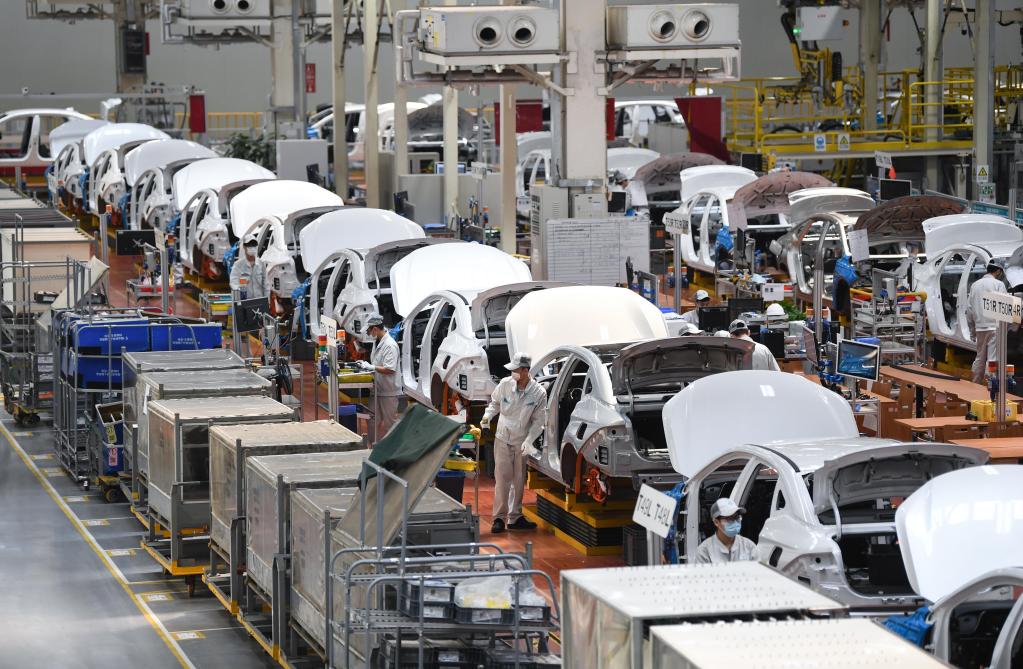
  In a new energy automobile production enterprise in Hefei Economic and Technological Development Zone, workers work on the whole vehicle production line. Xinhua News Agency (photo by Xie Chen)

  In February, the new energy vehicle market picked up steadily. Among them, BYD’s sales of new energy vehicles reached 193,655, a year-on-year increase of 112.6%; Weilai Automobile delivered 12,157 new cars, a year-on-year increase of 98.3%; LI delivered 16,620 new cars, a year-on-year increase of 97.5%; The sales volume of GAC Ai ‘an reached 30,086 vehicles, up 252.9% year-on-year.

  "We are optimistic about the annual sales growth." Li Bin, founder of Weilai Automobile, said that Weilai’s overall sales have made remarkable progress. Recently, its market share of high-end pure electricity with a price of over 300,000 yuan has been continuously improved. By the end of February, the sales volume of ET5 in Jiangsu, Zhejiang and Shanghai had surpassed that of the same-file hot-selling joint venture vehicle for 10 consecutive weeks.

  The sustained growth of the new energy vehicle market has benefited from the continuous efforts of policies supporting and encouraging the development of the new energy vehicle industry and automobile consumption in many parts of the country since the beginning of this year, and escorting enterprises to innovate and develop and open up markets.

  Guangdong Province proposes that qualified cities can introduce policies to support new energy vehicles going to the countryside and organize the activities of "benefiting the people" for new energy vehicles going to the countryside; Shanghai continues to implement subsidies for replacement of new energy vehicles and continues to be exempt from vehicle purchase tax; Anhui Province indicated that it will speed up the popularization and application of new energy vehicles in the public domain, promote the construction of charging infrastructure and enrich the automobile financial service … …

  The picture shows the assembly line of Guangzhou Automobile Aian New Energy Automobile Co., Ltd. in Panyu District, Guangzhou. Xinhua News Agency reporter Deng Hua photo

  Chen Shihua believes that at present, China’s new energy vehicles have gradually entered a period of comprehensive market expansion. Continued efforts of policies will help the industry to overcome the influence of multiple factors, maintain a steady development momentum and consolidate its dominant position.

  Automobile export is becoming an important engine to promote the rapid development of automobile industry. In February, China’s automobile exports continued a good trend, including 87,000 new energy vehicles, up 79.5% year-on-year. BYD exported 17,000 vehicles, a year-on-year increase of 12 times.

  Yin Tongyue, chairman of Chery Automobile Co., Ltd., said that China’s automobile industry is experiencing a key transformation from "big to strong": on the one hand, it must do a deep job in "internal strength" such as quality and safety, technological innovation and system construction, and constantly lay a solid industrial foundation; On the other hand, it is necessary to accelerate the development of digitalization and globalization, participate in global competition at a higher level, and constantly climb to the high end of the industrial value chain.

  Technological innovation is the core driving force for China to move from "automobile power" to "automobile power". New energy automobile enterprises constantly improve their brand and product competitiveness through technological innovation, and consumers’ recognition will be higher and higher.

  "Our production and sales volume went from the 1 ST to the 1 millionth, which took 13 years; From 1 million to 2 million vehicles, it only took one year; It took only half a year from 2 million to 3 million. " The relevant person in charge of BYD Group said that the rapid development of BYD’s new energy vehicles benefited from the company’s emphasis on independent innovation and mastery of core technologies.

  "The Ministry of Industry and Information Technology will work with relevant departments to study and clarify the continuation policies such as tax reduction and exemption for new energy vehicles as soon as possible, and revise and release ‘ Double integral ’ Management measures to further increase the promotion and application of new energy vehicles. " Xin Guobin, vice minister of the Ministry of Industry and Information Technology, said recently that China’s new energy automobile industry will continue to maintain a good development trend this year. (Reporter Wu Huijun, Gao Kang, Wu Tao, Sun Fei)

Is the blind road smooth all the way now? The reporter’s field visit found that ……

Original Chinese people’s political consultative conference newspaper

In 1991, China’s first blind road was built and used in Beijing Haidian Landian Factory.

More than 30 years have passed, and on September 1, the barrier-free environment construction law was formally implemented. Is the blind road smooth all the way now? What are the remaining problems? What improvements are needed? Our reporter conducted a field visit and found that the situation is not optimistic.

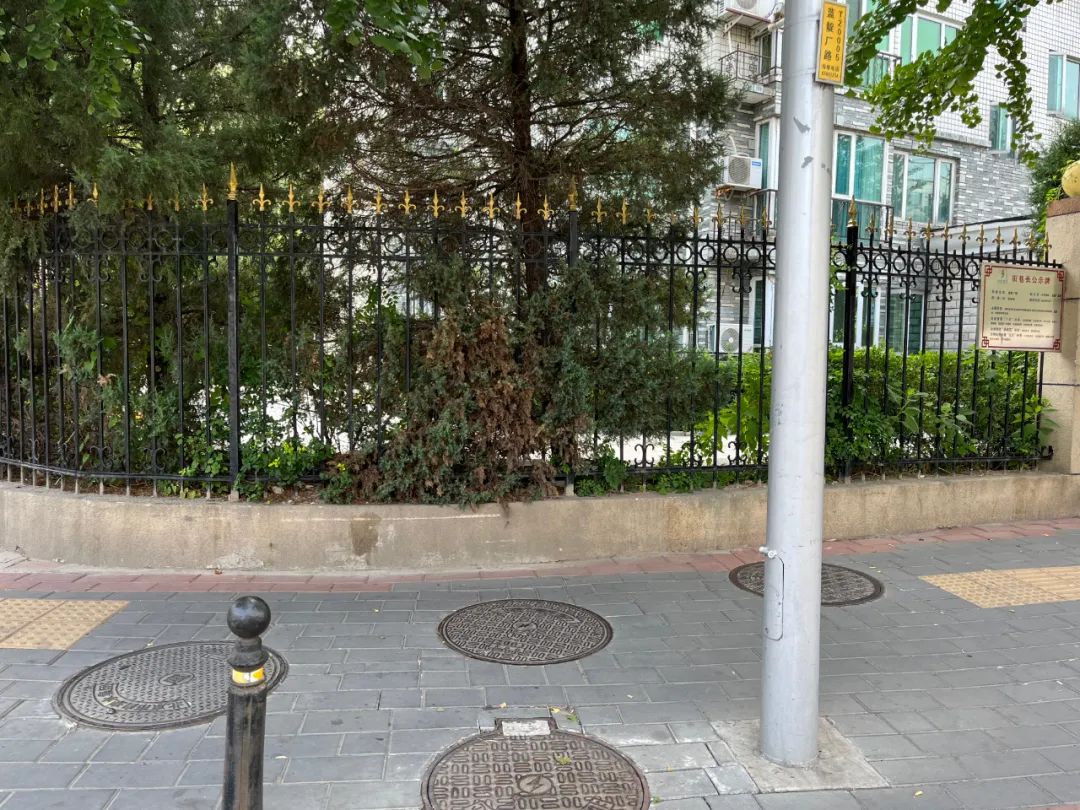
In the North Road of Landianchang, Haidian District, Beijing, the reporter saw that a blind road set at the corner of the intersection was separated by four manhole covers by more than 3 meters. For a healthy person, it takes only a few steps to walk, but if you are in the dark, every step will be trembling.

Although the cut-off place is paved with a dot reminder brick, it is not easy for the visually impaired to find the starting point of the next section. The reporter blindfolded and tried many times to find the next blind road, all of which ended in failure.

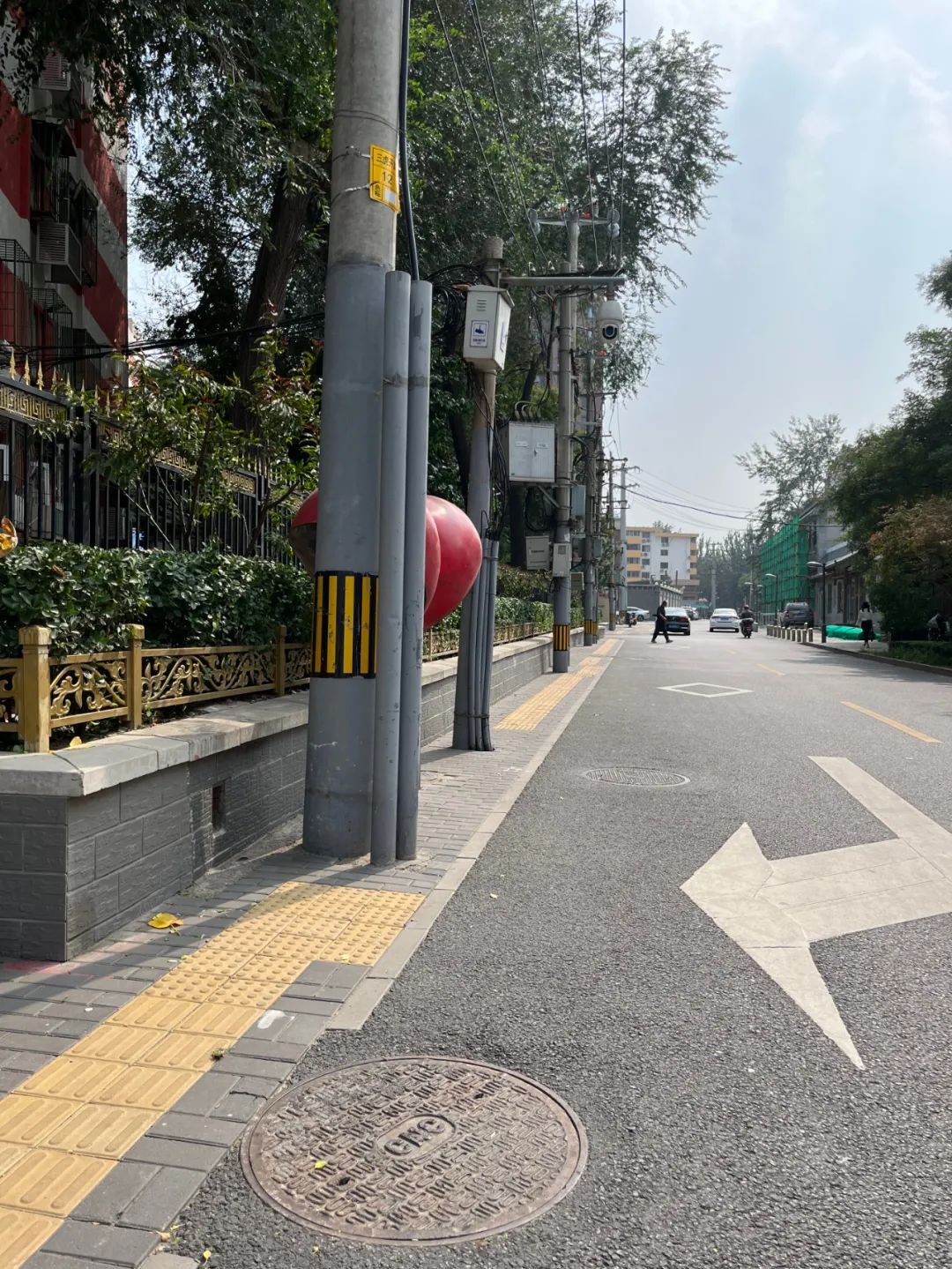
In Sanhuqiao North Road, Haidian District, there is also a truncated blind road, between which there are two telephone poles and a telephone booth. At the entrance of a residential area on the south side of the driveway ditch of Zizhuyuan Road, the iron gate of the residential area directly crosses the middle of the blind road like a roadblock.

During the visit, the reporter also found that with the increase of bike-sharing and electric bicycles, it is not uncommon for blind roads to be occupied.

At the exits of Baishiqiao South Station and Erligou Station of the subway, the dense bike-sharing surrounded the blind road into a "maze". Due to the limited space, more than ten electric vehicles parked directly along the blind road. Not only that, the reporter saw many private cars and engineering vehicles crossing the blind road along the way, which was worrying.

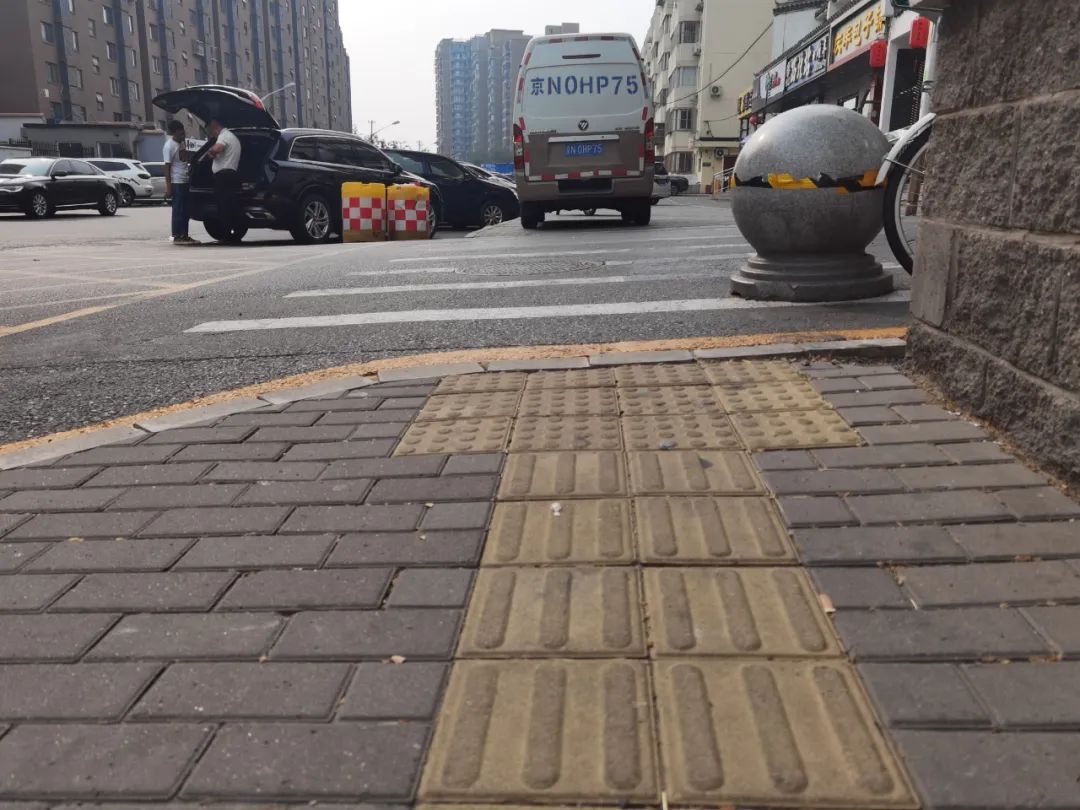
The same situation is not uncommon. At the northeast exit of Yangzhuang subway in Shijingshan District, the blind road directly became the parking lot for electric bicycles, and several rows of electric vehicles were parked. In a section of Haidian District, the reporter saw several blind roads interrupted for various reasons on the sidewalk less than 500 meters short. There is even a situation where a high platform suddenly appears on the blind road. If the blind people pass through this section, they have to go up four or five steps and then down four or five steps before they can find a new blind road. What’s more, the blind road suddenly disappeared on the road, and at the end of the blind road, it was actually a spherical marble isolation pier nearly 1 meter high. When the blind people walked here, they were easily tripped. Moving on, the reporter found that electric vehicles occupied blind roads everywhere. In the west section of this road, because there was a big tree in the middle of the sidewalk, the blind road disappeared after turning right, but just where the blind road disappeared, it was full of bicycles, cars and trolleys of surrounding merchants.

The reporter also observed that the blind roads in some sections have collapsed, damaged and loosened to varying degrees, and the connection between the sidewalk blind roads and bus stations, subway stations and other municipal facilities is insufficient.

Mr. Jia, the supervisor of barrier-free environment construction in Beijing, told the reporter that he had persistently reported all kinds of "chaos" on this blind road to relevant departments through various channels, but "the effect was not great". Mr. Jia said that the formal implementation of the regulations is a good start, and I hope that it can be truly implemented step by step in the future to make our society truly barrier-free.

In addition, our reporter randomly visited on the way of business trip and found that there was a blind road at the departure floor of terminal T2 of Changsha Huanghua Airport, which extended to the vicinity of the check-in area. However, after the security inspection area and the security inspection passage, there is no blind road on the ground of the waiting area of the whole terminal.

On the grounds that relatives of blind people at home need to go out by plane, the reporter consulted the relevant staff, and replied that they could contact the airline in advance to handle the unaccompanied service, which would be sent to the designated place by relatives and friends, signed by the staff and sent to the plane. Upon arrival, there are also special staff to pick up the plane.

It is worth mentioning that on the way to the boarding gate, the reporter found that there are two eye-catching devices providing self-help wheelchairs in the distance of two or three hundred meters.

"Nowadays, the barrier-free environment has been greatly improved, but there are still some details to be improved. I hope that the setting of blind roads can be more humanized." Liang Jiangbo, a visually impaired person, told reporters that barrier-free facilities "are not available, but useful".

During the interview, many CPPCC members also believed that only with "heart and love" can accessibility be truly realized.

With the formal implementation of the barrier-free environment construction law, strengthening the supervision of blind roads has become increasingly prominent. Jiang Xinlu, a member of the Political Consultative Conference of Ningxia Hui Autonomous Region who submitted the Proposal on Strengthening Supervision of Blind Roads this year, called for the cooperation of the Disabled Persons’ Federation, transportation, sanitation, telecommunications, electric power and other departments in the construction, maintenance and supervision of blind roads. He suggested that in daily work, the responsibilities related to the construction, maintenance and supervision of blind roads within the management scope of departments should be implemented, and the supervision and prevention work should be strengthened so that barrier-free facilities such as blind roads can really play their due roles.

"Accessibility is not a form, but a way of life." After more than 10 years of concern and advice on barrier-free environment construction, Zhong Qian, a member of Jinan CPPCC, Shandong Province, felt most deeply that the implementation of legislation is only the first step in barrier-free environment construction. How to implement it exactly and accurately is the key, and more patience and continuous improvement are needed. Everyone is a participant, beneficiary and promoter.

The formal implementation of the barrier-free environment construction law can guarantee the disabled and other people to participate in social life independently, safely and conveniently with a higher standard. During a recent visit, the reporter found that only blind roads, a barrier-free facility, have many problems, such as missing blind roads, being occupied by non-motor vehicles, unscientific design and so on. The road to barrier-free travel for the disabled and the elderly still has a long way to go.

Original title: "Is the blind road all the way today? The reporter’s field visit found that … "

Read the original text

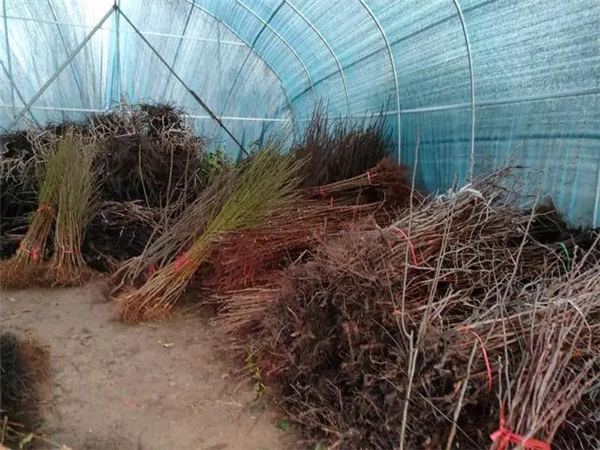
Revealing the trap of "Suqian fake seedlings": merchants created their own "imported flowers of four seasons" and turned them into "universal charges"

Zhonghongwang Jiangsu April 20th Recently, the chaos in the flower seedling market in Shuyang, Suqian, the hometown of flowers and trees, was exposed by the media: shoddy, fake, fictional goods, and wrong goods … In this regard, some netizens joked: "The earliest blind box egg on the Internet may be to buy seedlings." After the buyer is fooled, safeguarding rights is even more difficult. On April 18th, Shuyang County launched the "Spring Thunder Action" to rectify the market chaos in spring.

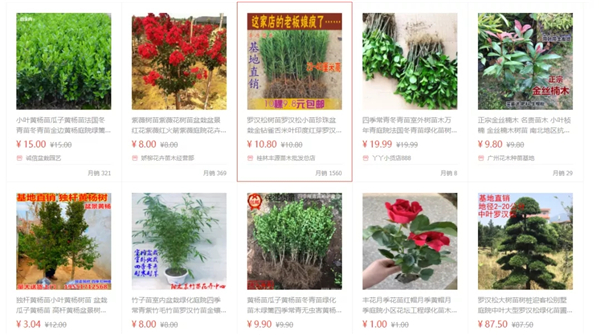
E-commerce platform nursery stock products Source: Taobao platform

Many netizens posted posts to expose

Online shopping "Suqian Shenmiao" is tricky

Shuyang County, Suqian City, Jiangsu Province is a well-known "hometown of flowers and trees" in China. Many local sellers of flowers and trees agricultural products open their own online stores.

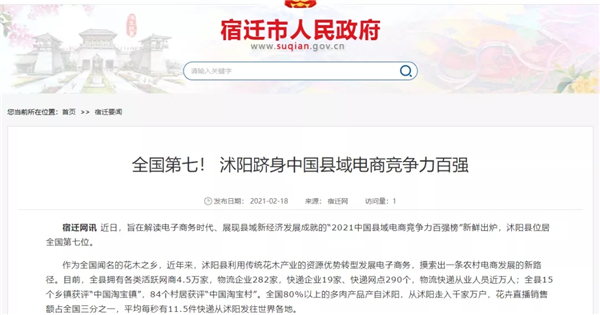
According to the website of Suqian Municipal People’s Government, at present, Shuyang County has 45,000 active online merchants, 282 logistics enterprises, 19 express delivery enterprises, 290 express delivery outlets and nearly 10,000 logistics express employees. Fifteen townships in the county were awarded "Taobao Town, China" and 84 villages were awarded "Taobao Village, China".

Source: Suqian Municipal People’s Government website

According to media reports, more than 80% of the succulent products in the country are produced in Shuyang, and the direct sales of e-commerce flowers in Suqian Shuyang account for one-third of the country. Suqian Shuyang’s online sales of flowers and trees agricultural products ranked first in the country for many years, with an average of 11.5 pieces of express delivery from Shuyang to all parts of the world every second. About 40% of the sales of flower seedlings on an e-commerce platform are concentrated in Suqian Shuyang, which means that for every two or three flowers and trees purchased online from this platform, one comes from Suqian Shuyang.

However, in the circle of gardening enthusiasts, some flower seedlings sold by Suqian merchants are called "Suqian Shenmiao": they create their own "new" plant names, and the pictures are all "created" by PS software; The purchase price of Ophiopogon japonicus in 10 yuan can earn 10,000 yuan; A large number of online stores are playing "blitzkrieg". After 20 days of operation, even if the online store is blocked, it will make money. If one store is closed, it will become a problem for buyers to defend their rights.

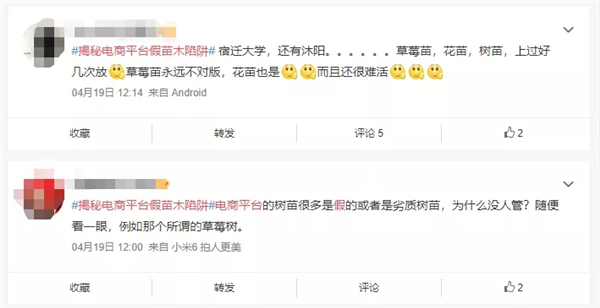
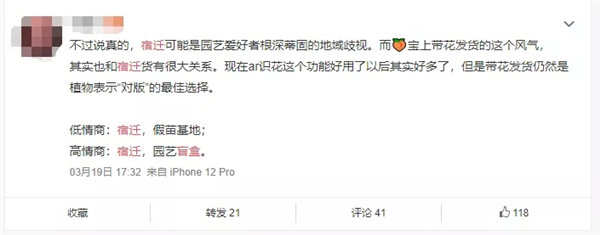
Many netizens posted on the Internet to expose their experiences of being cheated by online shopping for seedlings: the goods are not right, fake and shoddy, and there is no door after sale … Some gardening enthusiasts even nicknamed these businesses "Suqian University", which means that gardening "Xiaobai" people are easily deceived.

Source: Sina Weibo

Source: Sina Weibo

Source: Sina Weibo

Merchants create their own "mosquito repellent flowers" and "peanut trees"

Stir-fried seeds before delivery.

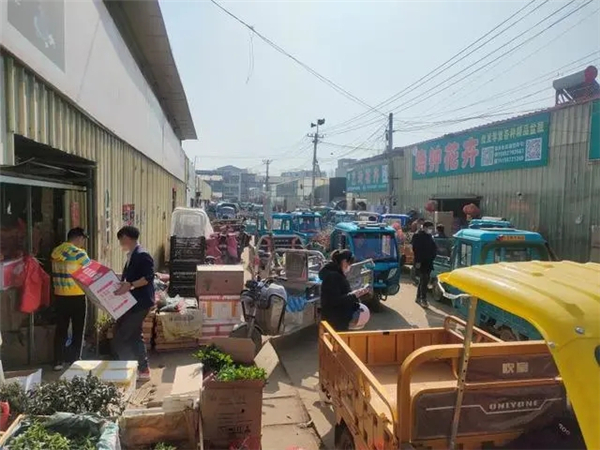
At present, it is in the peak season of flower seedling sales. Recently, it has been exposed by the media. On the e-commerce platform, many online stores whose coordinates are Suqian Shuyang claim to have their own seedling bases with complete varieties and beautiful pictures, which can stimulate customers’ interest. However, after visiting and investigating, it is known that the sources of these online stores are actually local wholesale markets, and most of the pictures displayed are downloaded from the Internet.

Shuyang Flower Gardening Taobao City Source: Sina Weibo

A number of merchants engaged in the seedling wholesale industry revealed that only landscape seedlings such as holly and boxwood were cultivated locally in Shuyang, Suqian, and fruit seedlings, flowers and green plants were purchased from other places. After the wholesaler purchases, it will be distributed to the online shop owner through the local market.

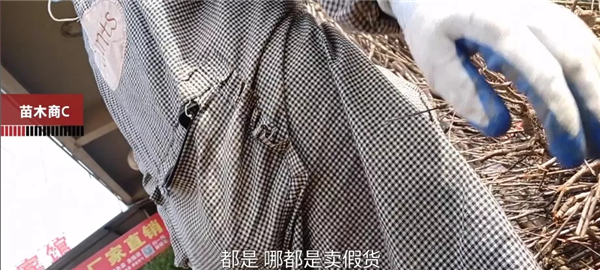
Some merchants also said that in the process of on-site purchase, customers can compare and check the physical objects and select them, and it is difficult for physical stores to "shoddy". However, after the rise of online shopping platform, many merchants saw "business opportunities" from it, purchasing cheap ordinary seedlings from the market and packaging them into rare varieties for sale at high prices.

"Begonia can be sold as an apple tree or as a peach tree, as long as it is a fruit tree."

"Wild rose is very cheap, only a few cents per tree, but it is an artifact, which can be sold as a rose, and can also be sold as a passion fruit seedling, which is also a’ universal charge’."

According to relevant media reports, many local online shop owners love some low-priced seedlings, which are indistinguishable from many varieties of seedlings, and send them to buyers as other more expensive seedlings. Locals vividly call it "universal charge".

Seedlings in wholesale merchants’ homes Source: Sina Weibo

According to local merchants, among the routines selling fake seedlings, the fastest way to make money is the self-innovation variety. "That is to say, there is no such variety, so we create one ourselves and then make it an explosion." Self-made new varieties are easy to sell, and it is also difficult for consumers to identify them as fakes.

For example, roses in nature cannot grow blue petals. The popular "blue enchantress" in the market is actually made by dipping white roses with special dye solution, but the price and sales volume are very considerable. There are more than ten varieties of roses on the shelves of online stores, including blue roses. No matter what kind of roses are placed, buyers receive ordinary old roots of roses, which will not grow or bloom.

A "new variety" of flowers with gorgeous colors and strange shapes. Source: Taobao platform

A "new variety" of flowers with gorgeous colors and strange shapes. Source: Taobao platform

A "new variety" of flowers with gorgeous colors and strange shapes. Source: Taobao platform

There are also the so-called exotic and eye-catching imported flowers, mosquito repellent flowers, peanut trees and watermelon trees on Taobao … all of them are fictional plant "new varieties", and the actual delivery is replaced by other cheap varieties, which are difficult to distinguish because consumers are not familiar with flower seedlings and plants have a long growth cycle.

In order to increase sales, online shop owners are also racking their brains: prepare in advance before the peak season of flower seedlings. Re-apply for the online store, brush the bill, brush the praise, and wait until the sales season comes, then invest money to promote it on the e-commerce platform. Cut off the flower arrows of ball flowers, fry the seeds and sell them to buyers. If the plants can’t grow and bloom, buyers won’t notice that they have bought fakes.

Source: Sina Weibo

If the store is seized by complaints, it will be replaced by a standby online store that has been prepared before to "fight guerrilla warfare" and re-operate. Or move the delivery place to a distant town, or even to the surrounding counties and cities to avoid the investigation by the regulatory authorities.

Due to the low capital threshold of registered online stores and the high profit of selling fake seedlings, it is difficult for stores that sell real goods in a down-to-earth manner to compete with them, forming a situation that "bad money drives out good money".

Shuyang County launches "Spring Thunder Action"

Special rectification of chaos in flower and plant seedling market

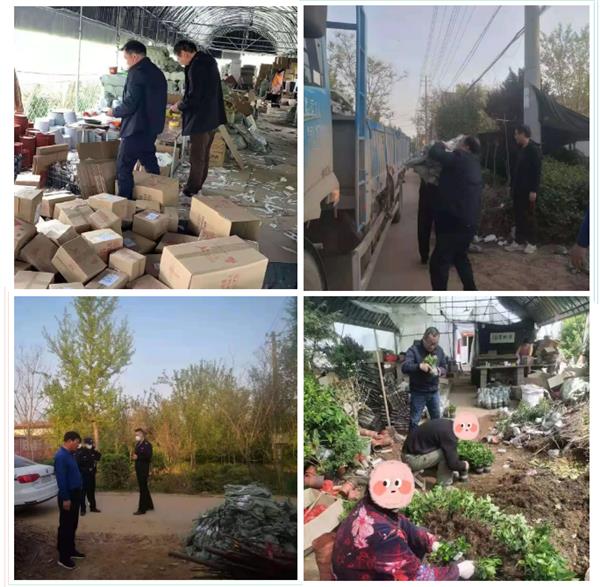
According to the website of the Natural Resources and Planning Bureau of Shuyang County, on April 17th, Shuyang County held a special rectification deployment meeting for the flower and tree seedling market, and decided to launch the "Spring Thunder Action" for the special rectification of the flower and tree seedling market in spring, and set up a leading group for the special rectification of the flower and tree seedling market, with four law enforcement inspection teams and one publicity and reporting team. It is required to solve the problem with the case, clear the way with the case, and eliminate the law with the case, and fully crack down on the illegal activities in the flower and tree seedling market and polish the golden signboard of Shuyang flower and tree industry.

Source: Website of Shuyang County Natural Resources and Planning Bureau

On April 18th, the law enforcement inspection team of "Spring Thunder Action", a special rectification of the flower and tree seedling market of Shuyang County Natural Resources and Planning Bureau, went to various villages in xinhe town, Shuyang County to carry out law enforcement inspection.

In Zhouquan Village, xinhe town, the law enforcement inspection team seized 455 express parcels from unlicensed operators and business operators suspected of selling fake seedlings; Joint law enforcement will be carried out with the public security department for illegal acts involving a large amount, and then the case will be transferred to the public security department for legal treatment. (ZhongHongWang Jiangsu comprehensive finishing from Sina Weibo, Taobao platform, Suqian Municipal People’s government website, etc.)

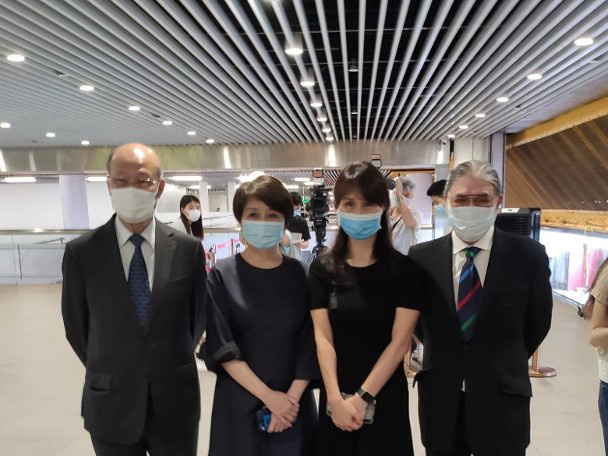
He Chaofeng and Liang Anqi held a general meeting of shareholders to observe a minute’s silence for the gambling king.

Su Shuhui, Liang Anqi, He Chaofeng, Huo Zhenting

Su Shuhui, Liang Anqi, He Chaofeng, Huo Zhenting

     According to Hong Kong media reports, SJM Holdings held its annual general meeting on Tuesday (9th). It is reported that there was a minute’s silence for the founder "Gambling King" Stanley Ho, but it did not accept any questions from shareholders. After the meeting, the management met with the media, and the impact of Ho’s death on the company became the focus of questioning.

  He Chaofeng, the second daughter of Hejia Fannie and Freddie and the chairman of the company, has repeatedly stressed that everyone is reluctant to part with his father’s death, but he quit the management of the company as early as 2018, and the current management has been satisfied with the operation. When asked about the results of the re-election of the company’s directors, she pointed out that the votes were still being counted, but she believed that herself, co-chairman Huo Zhenting, Si Tai Liang Anqi and vice chairman Su Shuhui would remain in office, and that there would be no major changes in the board of directors.

  In fact, SJM announced that Chairman He Chaofeng was appointed as the authorized representative of the company, effective from June 10th. In addition, the company also announced that Wu Zhicheng was transferred from an executive director to a non-executive director and retired as the operating president and authorized representative, which also took effect on June 10. The company also announced the voting results of the annual general meeting of shareholders, and all resolutions were passed. Including the re-election of He Chaofeng, Huo Zhenting, Liang Anqi and Su Shuhui as executive directors, were all passed by more than 96% of the votes.

  Asked why the executive director "San Tai" Chen Wanzhen was not present today? He Chaofeng said: "Dr. Chen (Chen Wanzhen) can’t come today."

  As for the death of the gambling king, will the company apply to the government to postpone the renewal of gambling cards? She said that whether the application for gambling cards should be delayed depends on the arrangement of the Macao government, and the company will cooperate.

  In addition, the media are also concerned about the operation of Macao’s gambling industry this year. Su Shuhui said that "everyone lost money in the first half of the year", and now it is the worst. In the second half of the year, I hope that Macao’s customs clearance will restore business. He bluntly said, "This year is not very optimistic, and I hope there will be a rebound next year." The turnover so far this year is equal to 1/10 of last year. He Chaofeng added that at present, the number of tables returning to work is half.

  In addition, when will the company’s new project be opened in Portugal? He Chaofeng said that the project has been completed, but the company did not stop applying for the required business license despite the epidemic, so the leading power lies with the Macao government. She hopes that the project can be opened after the travel restrictions are relaxed.

  Liang Anqi added that the recruitment of this project has been in progress. This includes recruiting new graduates.

  Regarding the arrangement of the company’s satellite casino, He Chaofeng said that there is no conflict between the satellite casino and the new project, and it should continue to follow the previous practice.

Super online celebrity "Brother Donkey" fans 5 million: get rich overnight and frankly have no confidence.

  The number of fans is 5 million. Brother Donkey is under great pressure after getting rich overnight.

  Claiming to have no face value and no culture, understanding the real circle of friends through the network.

  In the webcast room, fans called him "Brother Donkey". At 9 o’clock every night, tens of thousands of fans have been "in place" on time, waiting for his appearance. In the online world, no one cares about his real name.

  "Brother Donkey" is actually only 28 years old this year, and looks a little vicissitudes. In his own words, "people in their twenties look like they are almost forty years old". However, it doesn’t matter. Anyway, he didn’t take the common route of sucking powder by facial value at all. A year ago, he began to put some self-made hilarious ultra-short films on a video App, usually for more than ten seconds. Unexpectedly, it became popular overnight, and the number of fans soared from tens of thousands to more than five million now, making it the top three fans in this video App, online celebrity.

  A year ago, he was only the owner of a small tobacco hotel in Shijiazhuang. A year later, when he came to Guangzhou, his life was undergoing earth-shaking changes.

  Text, map/Guangzhou Daily reporter Du Anna

  In a large building on the edge of Guangzhou, the reporter found such a super online celebrity who would get lost in his own community.

  I have just moved to the community for almost two months, and Brother Donkey usually just stays at home. At the appointed time of the interview, he was driving around the community in his own sports car with more than one million yuan, and he still couldn’t find the appointed place.

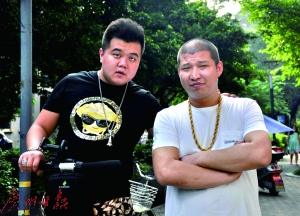
  Brother Donkey is 1.85 meters tall, with a white T-shirt and a pair of blue shorts. He dresses casually. Brother Donkey’s signature dress is a gold chain thicker than his fingers. He said that he didn’t buy it after online celebrity developed. "We’ll just show how much money we have at home.".

  A year ago: urban "Jianghu" youth

  No one saw that Brother Donkey would be where he is today, including himself.

  Brother Donkey used to be a small owner of a tobacco hotel in Shijiazhuang, and the actual investor of this store was his father. In Brother Donkey’s eyes, Dad is a thoughtful businessman, from greenhouse cultivation in the countryside of Mudanjiang in Northeast China to vegetable trade, and then to running a restaurant in Shijiazhuang, step by step, making him a "rich second generation" — — Brother donkey

  Speaking of his past life, he described himself as a playboy who was born in the countryside and had a primary school education, and became a city youth and wandered on the edge of mainstream culture.

  Xiao Pang, his friend for many years and now his partner, thinks that Brother Donkey was famous in the local area before he became a super online celebrity, and his status in the Jianghu should not be underestimated. Xiao Pang used to be a waiter in the restaurant of Brother Donkey’s father. He was attracted by Brother Donkey’s personal charm and stopped working as a waiter. Every day, he was inseparable from him.

  Three-person "donkey family class"

  Brother Donkey’s current creative team also has a core member named Jia Erchang. The trio formed the present "Donkey Family Class". Jia Er is often a wise man in the eyes of Brother Donkey. He is thoughtful and far-sighted. "When he saw that I was going to be popular, he quickly went to my restaurant and invited me to dinner. Finally, the three of them stuck together."

  Brother donkey, it’s purely fun to go online and become popular. Two years ago, someone told him that there was a fun video software that was especially suitable for him. Brother donkey’s eyes shine, and he is like a duck to water for a person who usually takes "amusing" as his hobby.

  In the original Caotai team, Brother Donkey’s wife was a photographer, Brother Donkey was the protagonist, and almost all the chefs, waiters and logistics staff in his father’s restaurant made guest appearances in his hilarious jokes.

  In order to attract attention, Brother Donkey has taken great pains. He scoured the Internet for props, bought a giant deck of playing cards, recorded several jokes, simulated several "landlords" games, and satirized how the "two-short" players turned their excellent cards into bad cards in the poker field.

  The video broadcast effect was somewhat unexpected. One of the videos reached several million hits, and the fans of Brother Donkey rose by 30,000 to 40,000.

  A year later: a fire broke out.

  Brother donkey was very excited after a good game. Brother donkey said that the original works now seem to be the most satisfactory. He said that even if he looked back now, he would still laugh.

  In the more than 200 works of "Donkey Family Class", most of the contents are from their original works, and some of them are remakes. Brother Donkey mainly creates hilarious short videos of more than ten seconds, while Jia Erchang writes "feature films" of about two minutes. Over the past two years, they have formed a tacit understanding.

  The soaring number of fans

  My brother remembers the excitement of tens of thousands of fans for the first time. At that time, he answered questions from fans. Every time the powder rises, he is even too happy to sleep.

  Now, "a little numb", rising powder has become a burden. During the interview, he took out his mobile phone and took a look. In just one hour, on the video playback platform, it has already increased by 1,263. According to the statistics of Brother Donkey, the speed of his powder increase is almost 10,000 people a day.

  The comments and private messages on the video playback platform are basically too busy for Brother Donkey.

  In addition, hundreds of people request to add his WeChat friends every day. My brother didn’t look at his mobile phone for a few minutes, and the invitation to add WeChat friends has already been arranged in a "long queue". And most of the requests, the final result is ignored. Only some fans who brush their screens and "give gifts" frequently during his live broadcast may be added as WeChat friends by him.

  Seeing that Brother Donkey is on fire, there are also many platforms to ask him to "move". He found that his "charm" is not infinite, the number of fans can’t come up, and the number of viewers during live broadcast is not as good as that of the existing platform.

  I once thought about giving up.

  In a year, Brother Donkey has gone from a small owner of a tobacco hotel to a super online celebrity now. The income has gone from 1.2 million yuan a year to 700,000 yuan a month now. He himself said that it was almost a rich man overnight.

  "However, everyone only sees the scenery of success, but can’t see our sadness and suffering." Brother Donkey has refused to place advertisements when recording hilarious short films since he became online celebrity. Because of this, fans will look down on us.

  But this principle has also been broken. That difficult time almost ruined Brother Donkey’s road to super online celebrity. Brother Donkey said that in fact, the monthly income of 700,000 to 800,000 yuan is only this year. For a long time, they not only earned nothing, but also posted it upside down.

  However, what hit them hard was not the investment. "After all, the cost is not high, just a few people eat and some props", but the people around them don’t understand. "Jia Erchang’s parents saw their son with me, making jokes in the Woods all day. They are almost thirty, and they can’t earn a penny. Like a fool, they are anxious."

  Brother donkey said, "My wife is also anxious. Is it silly to say that you pat all day?"

  Dialogue with Brother Donkey: "I am a very wonderful online celebrity"

  Guangzhou Daily: Did you ever think that you would become online celebrity?

  Donkey: I didn’t expect that. I thought about 110 thousand ways to get rich, but I didn’t expect this one.

  Guangzhou Daily: What’s your income now?

  Brother Donkey: The monthly income is about 700,000 to 800,000 yuan. Most of the money was sent by fans in the webcast room. A live broadcast usually earns about 50 thousand yuan.

  Guangzhou Daily: How many "zombie fans" do you think are among your fans?

  Brother Donkey: There must be, because some people don’t interact with each other, and it won’t be long before they go offline. But each paragraph is played more than 2 million times a day. There should be no moisture in this.

  "I don’t want to go too high, I don’t have great ability."

  Guangzhou Daily: Are you satisfied with your work?

  Brother donkey: I think the early works are better. I found the previous jokes interesting myself, but the current ones are just so-so. Jiang Lang is at his wit’s end.

  Guangzhou Daily: What is your dream?

  Brother donkey: I hope that one day a famous director will take a fancy to us and be able to make a movie. So we don’t play junk advertisements, but also for this dream.

  Guangzhou Daily: Is there a great director looking for you now?

  Donkey: No. But there are too many people looking for us to make micro-movies. We need to watch the script.

  Guangzhou Daily: Do you still want to make a film by a famous director?

  Donkey: I don’t want to. Now we know that the entertainment circle is not what we think. People like us can just make a big online movie. It’s better to be a chicken head than a phoenix tail. I don’t want to go too high, I feel that I don’t have that great ability, and I feel that I have reached the bottleneck.

  Guangzhou Daily: Will you be anxious now?

  Brother Donkey: Actually, I’m a little depressed after a long time. Since I came to Guangzhou, I only slept a few hours a day. I often shut myself in my room, watch WeChat, Weibo’s public platforms, find some meaningful jokes, and some popular content on the platforms. I feel too tired, just look at the car, and I can’t stop thinking for a moment. At present, the whole operation team has nearly 20 people, including shooting, editing, chef, logistics and bodyguards. The salary of each person is 10 thousand yuan a month, which is not a small expense.

  "Second-and third-tier stars are no match for me."

  Guangzhou Daily: Why did you come to Guangzhou?

  Brother Donkey: In the past, during the live broadcast, it was a clothing factory in Guangzhou that provided me with clothes for free. Later, I came to this boss and felt that Guangzhou was very developed, and I picked up money casually. I cooperate with this clothing factory and act as their agent. I only say it once a day in the live broadcast room, and my micro-signal is filled up. Hundreds of people are designated customers. I sell clothes for a clothing factory and often run out of stock as soon as I sell them. I have used several micro-signals. Before, someone put my WeChat on the homepage of the video playback platform, and it was added to 5000 people at once. The WeChat card could not be opened and had to be invalidated. I have five or six micro-signals now, each of which is thousands of people.
  Guangzhou Daily: Are you satisfied with the current situation?

  Brother Donkey: oh, let a man of spirit venture where he pleases. If it doesn’t work right now, I’m happy, too. I’ve already enjoyed this process, which is quite exciting. I have reached such a "stage". Now that my fame has spread, people will not forget me for at least two or three years. For example, I can make movies. I still have some brand shares, and I will definitely not return to my original position.

  Guangzhou Daily: Everything has a life cycle. How do you plan your future?

  Brother Donkey: I can accept my disciples now and throw my popularity at them. Besides, I can invest in making movies.

  Guangzhou Daily: Are you a little different from ordinary online celebrity?

  Brother Donkey: Yes, I am a very wonderful one. To face value without face value, to culture without culture, to talent without talent, primary school culture.

  Guangzhou Daily: Where are your fans mainly concentrated? Who are they?

  Brother Donkey: It’s all over the country. If you travel all over the country, you just need to fill up your car and get fans everywhere. Just let me know when you broadcast live. There are fans in all fields, including business owners, social workers and public officials.

  Guangzhou Daily: You look like a movie star now?

  Brother Donkey: Second-and third-tier stars can’t compete with me. I think it’s almost 1.5 lines now.

  "The Internet has made me see the reality clearly"

  Guangzhou Daily: What’s your daily routine?

  Brother Donkey: I sleep at dawn, get up in the afternoon and work at night almost every day.

  Guangzhou Daily: What is the content of the live broadcast?

  Brother Donkey: When fans ask me questions, I say what I think, which is very straightforward. I don’t hide, I don’t lie. Because telling a lie requires hundreds of lies to make up for it.

  Guangzhou Daily: How will you relieve stress?

  Brother Donkey: I’m going to open a martial arts school. You can vent when you have time.

  Guangzhou Daily: What’s your biggest feeling after you became online celebrity?

  Brother donkey: the internet is a magnifying glass in reality, which makes me see many people clearly. For example, the brothers who used to play together, when they saw that I was popular, came to me and said that they would kick my current partner out. I certainly wouldn’t. They called names behind their backs and said everything.

  When I first started filming, I asked some friends for help. They not only didn’t help but also laughed at me. Now that I am popular, they all come back to me.

  Reporter’s notes

  He lives in a "parallel world"

  After listening to Brother Donkey’s story, many people expressed their sighs. Is the Internet a world parallel to reality? Why is he popular?

  During the interview, the performance of this super online celebrity made people feel extremely fickle. In the early communication, half of the people were "missing", and the interview site was temporarily changed. It was extremely unpunctual when the interview time came.

  After a great test of patience, a guy who is 1.85 meters tall, with a thick gold finger chain and driving an Audi R8 sports car appeared in front of the reporter.

  This has 5 million fans, and the super internet celebrity is full of apologies. It turns out that he just moved here not long ago, and his long-term day-and-night work and rest, coupled with the living habits of the super house, have never wandered around the community. So I drove around the community for several times and still couldn’t find the agreed place.

  Brother donkey’s characteristic is to constantly subvert your inherent idea of online celebrities.

  Finally, the interview had to be conducted on the side street of a stuffy and humbled shop. He parked his luxury car on the side of the road and walked into the roadside shop without hesitation. While not forgetting to joke, he said that he was originally a peasant, and he felt very adapted to this environment.

  In the whole interview, he did not shy away from talking about the dilemma he faced, and reached a bottleneck in his creation. Although his income has reached a new peak, the higher he stands, the more lonely he feels, even if he has millions of fans.

  He has no pushers or advisers, so he can only think for himself. He looks heroic, but in the face of his future, he looks conservative and worried. He doesn’t like some online celebrity, keen to expand the scale. He is satisfied with the flexible and free creative team at present.

  After the tornado in Jiangsu, he took 30,000 yuan and drove from Guangzhou at 2 o’clock in the middle of the night, driving for more than 20 hours, and went to the hospital in the disaster area to give money to the victims. He didn’t record any video because he was afraid of being said to be a show, and he didn’t mention anything on the webcast platform. That’s what he wants.

  In the end, he said frankly that it was not that he didn’t care about the media interviews, but that he felt as if he had nothing to talk about and was very unconfident, so he had to keep running away.

  It is such a contradictory but true young man who becomes a super red man in another parallel world.

National Bureau of Statistics: In the first half of 2018, China’s GDP increased by 6.8% year-on-year

  International Online Report: According to the website of the National Bureau of Statistics, the gross domestic product in the first half of the year was 41,896.1 billion yuan, up 6.8% year-on-year at comparable prices. Quarterly, it increased by 6.8% in the first quarter and 6.7% in the second quarter, and remained in the range of 6.7%-6.9% for 12 consecutive quarters. In terms of industries, the added value of the primary industry was 2,208.7 billion yuan, a year-on-year increase of 3.2%; The added value of the secondary industry was 16,929.9 billion yuan, an increase of 6.1%; The added value of the tertiary industry was 22,757.6 billion yuan, an increase of 7.6%.

  First, the agricultural planting structure is optimized and the production situation is better.

  With the adjustment of grain planting structure, the national summer grain harvest is expected to be good. The structural reform of agricultural supply side deepened, and the planting area of cotton and soybean increased. Animal husbandry production is stable. In the first half of the year, the output of pig, cattle, sheep and poultry meat was 39.95 million tons, up 0.9% year-on-year; Among them, the output of pork was 26.14 million tons, an increase of 1.4%. The number of live pigs was 409.04 million, a year-on-year decrease of 1.8%; 334.22 million pigs were slaughtered, an increase of 1.2%.

  II. Industrial growth was generally stable and the structure continued to be optimized.

  In the first half of the year, the added value of industrial enterprises above designated size actually increased by 6.7% year-on-year, and the growth rate dropped by 0.1 percentage point compared with the first quarter. In terms of economic types, the added value of state-owned holding enterprises increased by 7.6% year-on-year, collective enterprises decreased by 1.9%, joint-stock enterprises increased by 6.7%, and foreign-invested enterprises from Hong Kong, Macao and Taiwan increased by 6.2%. In terms of three categories, the added value of the mining industry increased by 1.6% year-on-year, the manufacturing industry increased by 6.9%, and the electricity, heat, gas and water production and supply industries increased by 10.5%. The added value of high-tech industries and equipment manufacturing increased by 11.6% and 9.2% respectively, which was 4.9 and 2.5 percentage points faster than that of industries above designated size. In June, the added value of industrial enterprises above designated size increased by 6.0% year on year. From January to May, the total profits of industrial enterprises above designated size nationwide reached 2,729.8 billion yuan, a year-on-year increase of 16.5%; The profit rate of main business income of industrial enterprises above designated size was 6.36%, an increase of 0.35 percentage points over the same period of last year.

  Third, the service industry grew rapidly, and emerging service industries flourished.

  In the first half of the year, the national service industry production index increased by 8.0% year-on-year, and the growth rate dropped by 0.1 percentage point compared with the first quarter, maintaining a relatively fast growth rate. Among them, information transmission, software and information technology services, leasing and business services maintained rapid growth. In June, the national service industry production index increased by 8.0% year-on-year. From January to May, the operating income of service enterprises above designated size increased by 13.3% year-on-year, 0.2 percentage points faster than the same period of last year; Among them, the operating income of strategic emerging service industry, science and technology service industry and high-tech service industry increased by 18.1%, 17.5% and 15.4% respectively, which were 2.4, 5.0 and 4.5 percentage points higher than the same period of last year.

  Four, residents’ consumption and market sales increased steadily, and consumption upgraded goods grew rapidly.

  In the first half of the year, the per capita consumption expenditure of the national residents was 9,609 yuan, a nominal increase of 8.8% year-on-year, 1.2 percentage points faster than that in the first quarter, and a real increase of 6.7% after deducting the price factor, 1.3 percentage points faster. Among them, the per capita consumption expenditure of urban residents increased by 6.8% in nominal terms, accelerating by 1.1 percentage points; The per capita consumption expenditure of rural residents increased by 12.2% in nominal terms, accelerating by 1.2 percentage points. In the first half of the year, the total retail sales of social consumer goods was 180018 billion yuan, up 9.4% year-on-year, and the growth rate dropped by 0.4 percentage points compared with the first quarter. According to the location of business units, the retail sales of urban consumer goods reached 15,409.1 billion yuan, an increase of 9.2%; The retail sales of rural consumer goods reached 2,592.7 billion yuan, up by 10.5%. According to consumption types, catering revenue was 1,945.7 billion yuan, an increase of 9.9%; Retail sales of commodities reached 16,056.1 billion yuan, an increase of 9.3%. The sales of consumption-upgrading commodities grew rapidly, with household appliances and audio-visual equipment, communication equipment and cosmetics of units above designated size increasing by 10.6%, 10.6% and 14.2% respectively, 0.2, 0.5 and 2.9 percentage points higher than the same period of last year. In June, the total retail sales of social consumer goods increased by 9.0% year-on-year, 0.5 percentage points faster than last month.

  5. Investment in fixed assets grew steadily, while private investment and manufacturing investment rebounded.

  In the first half of the year, China’s investment in fixed assets (excluding farmers) was 29,731.6 billion yuan, up 6.0% year-on-year, and the growth rate was 1.5 percentage points lower than that in the first quarter. Among them, private investment was 18,453.9 billion yuan, up 8.4% year-on-year, 1.2 percentage points faster than the same period of last year. In terms of industries, investment in the primary industry increased by 13.5%; Investment in the secondary industry increased by 3.8%, of which manufacturing investment increased by 6.8%, and the growth rate rebounded for three consecutive months, 3.0 percentage points faster than that in the first quarter and 1.3 percentage points faster than that in the same period of last year; Investment in the tertiary industry increased by 6.8%, of which investment in infrastructure increased by 7.3%. Investment in high-tech manufacturing increased by 13.1% year-on-year, and the growth rate was 7.1 percentage points faster than the total investment. In the first half of the year, the national investment in real estate development was 5,553.1 billion yuan, a year-on-year increase of 9.7%. The national commercial housing sales area was 771.43 million square meters, up by 3.3%. The national sales of commercial housing reached 6,694.5 billion yuan, up by 13.2%.

  6. The surplus of import and export of goods narrowed and the trade structure continued to improve.

  In the first half of the year, the total import and export volume of goods was 14,122.7 billion yuan, a year-on-year increase of 7.9%. Among them, exports reached 7,512 billion yuan, up 4.9%; Imports reached 6,610.7 billion yuan, an increase of 11.5%. Imports and exports offset each other, with a surplus of 901.3 billion yuan, a decrease of 26.7% over the same period of last year. The trade structure was further optimized, and the import and export of general trade increased by 12.2%, accounting for 59% of the total import and export, an increase of 2.3 percentage points over the same period of last year. The export of mechanical and electrical products increased by 7%, accounting for 58.6% of the total export. Imports and exports to the top three trading partners maintained growth. China’s imports and exports to the European Union, the United States and ASEAN increased by 5.3%, 5.2% and 11% respectively, accounting for 41% of China’s total imports and exports. In the same period, China’s import and export to 16 countries in Central and Eastern Europe increased by 14.7%, which was 6.8 percentage points higher than the growth rate of total import and export of goods. In June, the total import and export volume was 2,493.6 billion yuan, a year-on-year increase of 4.3%. Among them, exports were 1,377.7 billion yuan, an increase of 3.1%; Imports reached 1,115.8 billion yuan, up 6.0%. In the first half of the year, industrial enterprises above designated size achieved a export delivery value of 5,716.2 billion yuan, a year-on-year increase of 5.7%. In June, industrial enterprises above designated size realized export delivery value of 1,054.7 billion yuan, an increase of 2.8%.

  Seven, residents’ income grew steadily, and the employment situation was stable and positive.

  In the first half of the year, the per capita disposable income of the national residents was 14,063 yuan, a nominal increase of 8.7% year-on-year, and a real increase of 6.6% after deducting the price factor. According to the place of permanent residence, the per capita disposable income of urban residents was 19,770 yuan, a nominal increase of 7.9% year-on-year, and a real increase of 5.8% after deducting the price factor; The per capita disposable income of rural residents was 7142 yuan, a nominal increase of 8.8% year-on-year, and a real increase of 6.8% after deducting the price factor. The per capita income difference between urban and rural residents was 2.77, 0.02 less than the same period of last year. The median per capita disposable income of the national residents was 12,186 yuan, a nominal increase of 8.4% year-on-year. In June, the national urban survey unemployment rate was 4.8%, which was the same as last month and decreased by 0.1 percentage point over the same month of last year. The survey unemployment rate in 31 big cities and towns was 4.7%, which was the same as last month and decreased by 0.2 percentage points over the same month of last year. At the end of the second quarter, the total number of rural laborers who went out to work was 180.22 million, an increase of 1.49 million or 0.8% over the same period of last year. The average monthly income of migrant workers was 3,661 yuan, a year-on-year increase of 7.5%.

  Eight, consumer prices rose moderately, and industrial prices rose steadily.

  In the first half of the year, the national consumer price rose by 2.0% year-on-year, which was 0.1 percentage point lower than that in the first quarter. By category, the prices of food, tobacco and alcohol rose by 1.4%, clothing by 1.1%, housing by 2.3%, daily necessities and services by 1.6%, transportation and communication by 1.2%, education, culture and entertainment by 2.1%, medical care by 5.5% and other goods and services by 1.1%. In June, the national consumer price rose by 1.9% year-on-year, an increase of 0.1 percentage point over the previous month and a decrease of 0.1% from the previous month. In the first half of the year, the ex-factory price of industrial producers nationwide rose by 3.9% year-on-year, an increase of 0.2 percentage points over the first quarter; The purchase price of industrial producers nationwide rose by 4.4% year-on-year. In June, the ex-factory price of industrial producers nationwide rose by 4.7% year-on-year, with an increase of 0.6 percentage points from the previous month and 0.3% from the previous month. The purchase price of industrial producers nationwide rose by 5.1% year-on-year and 0.4% quarter-on-quarter.

  Nine, the transformation and upgrading have achieved remarkable results, and new kinetic energy has accelerated growth.

  The economic structure continued to be optimized. From the perspective of industrial structure, the growth rate of added value of the tertiary industry in the first half of the year was 1.5 percentage points faster than that of the secondary industry; The proportion of GDP was 54.3%, 0.3 percentage points higher than that of the same period of last year and 13.9 percentage points higher than that of the secondary industry. From the perspective of demand structure, the contribution rate of final consumption expenditure to economic growth is 78.5%, which is 47.1 percentage points higher than the total capital formation. New industries and new products are growing rapidly. From the perspective of industrial structure, the added value of strategic emerging industries in the first half of the year increased by 8.7% year-on-year, 2.0 percentage points faster than that of industries above designated size. The output of new energy vehicles increased by 88.1%, industrial robots by 23.9% and integrated circuits by 15.0%. New consumption is booming. From the perspective of trade structure, the national online retail sales in the first half of the year was 4,081 billion yuan, a year-on-year increase of 30.1%. Among them, the online retail sales of physical goods was 3,127.7 billion yuan, up by 29.8%, accounting for 17.4% of the total retail sales of social consumer goods, up by 3.6 percentage points year-on-year; The online retail sales of non-physical goods reached 953.3 billion yuan, an increase of 30.9%. Green development has progressed steadily. From the perspective of energy conservation and emission reduction, the energy consumption per unit of GDP decreased by 3.2% in the first half of the year.

  X. The structural reform of the supply side has been further promoted, and the market expectation is generally good.

  Structural de-capacity continued to deepen. In the first half of the year, the utilization rate of industrial capacity in China was 76.7%, 0.2 percentage points higher than that in the first quarter and 0.3 percentage points higher than that in the same period of last year. The effect of destocking is outstanding. At the end of June, the area of commercial housing for sale nationwide decreased by 14.7% year-on-year. The leverage ratio and cost of enterprises continue to decline. At the end of May, the asset-liability ratio of industrial enterprises above designated size was 56.6%, down 0.6 percentage points year-on-year. From January to May, the cost per 100 yuan of main business income of industrial enterprises above designated size was 84.49 yuan, a year-on-year decrease of 0.31 yuan. Investment in the short-board sector has grown rapidly. In the first half of the year, the investment in ecological protection and environmental management and agriculture increased by 35.4% and 15.4% respectively, which was 29.4 and 9.4 percentage points faster than the total investment. The market is expected to remain prosperous. In June, the comprehensive PMI output index was 54.4%, the manufacturing purchasing manager index was 51.5%, and the non-manufacturing business activity index was 55.0%, which continued to run in the expansion range.

  Generally speaking, in the first half of the year, the national economy continued to develop steadily and steadily, and the favorable conditions for supporting the economy to move towards high-quality development increased, laying a good foundation for achieving the main economic and social development goals for the whole year. However, we should also see that the uncertainty of the external environment has increased, and the domestic structural adjustment is in the critical period. We must adhere to the general tone of striving for progress while maintaining stability, maintain strategic strength, adhere to the supply-side structural reform as the main line, continue to expand effective demand, focus on revitalizing the real economy, actively respond to external challenges, prevent and resolve potential risks, guide and stabilize social expectations, and scientifically and comprehensively promote steady growth, promote reform, adjust structure, benefit people’s livelihood, and prevent risks to ensure stable and healthy economic operation.

Focus Interview: Rebuilding the "Golden Passage"

  CCTV News (Focus Interview): Taking the expressway has become one of the main ways for everyone to travel. 307.07 million vehicles, this figure is the cumulative traffic volume of the national expressway network in the past May Day holiday, with an average of more than 61 million vehicles driving on the expressway every day. This figure is nearly 20% higher than the May Day holiday in 2019 before the epidemic. At present, in view of the huge demand and road pressure, there are about 5,000 kilometers of expressway sections in the national expressway network, including the Hubei section of Beijing-Hong Kong-Macao Expressway, which has been in operation for more than 20 years.

  The upgrading and reconstruction project of Hanjiang Bridge was completed five months ahead of schedule. Before the May Day holiday, the Hubei section of Beijing-Hong Kong-Macao Expressway resumed truck traffic. In just a few days, the traffic volume rose rapidly. Throughout the May Day holiday, Beijing, Hong Kong and Macao — — The daily traffic volume of this busiest expressway in Hubei exceeds 260,000 vehicles, and nearly 70% of them are logistics freight vehicles from south to north.

  Wang Bo, instructor of the 2nd Squadron of Caidian Brigade, No.1 Team of Hubei High Police Corps: Dongxihu District of Wuhan City is equivalent to a transit point of national logistics. It is distributed from Dongxihu Lake of Wuhan City first, and then radiated to the periphery of the country, and began to deliver goods. We understand that the majority of freight car drivers are willing to take the old Beijing-Zhuhai Expressway. The so-called Beijing-Zhuhai Expressway is now called Beijing-Hong Kong-Macao Expressway, and they are willing to take this expressway.

  It starts in Beijing, with a total length of 2,285 kilometers, and passes through the North China Plain, Jianghan Plain, Central Hunan Plain, Nanling Plain and Pearl River Delta Plain, and finally reaches the ports of Hong Kong and Macao through eight provinces and cities such as Beijing, Hebei, Henan, Hubei, Hunan and Guangdong. The Beijing-Hong Kong-Macao Expressway, which was built in the 1980s, is one of the earliest traffic arteries running through the north and south in China, and it is also the "national comprehensive three-dimensional traffic network in 2035".

  Bin Fan, Deputy Director of Engineering Management Department of Highway Bureau of Ministry of Transport: The most impressive figure of the national comprehensive three-dimensional traffic network is a diamond-shaped map, which has four poles, namely, the northernmost part of Beijing-Tianjin-Hebei, the southernmost part of Guangdong-Hong Kong-Macao Greater Bay Area, the Yangtze River Delta in the east and Chengdu-Chongqing in the west. In the middle of these four poles, a diamond-shaped six-axis is constructed, and Beijing-Hong Kong-Macao is just within the main axis in the north-south direction. The Beijing-Hong Kong-Macao Expressway is the most important north-south passage in China.

  After more than 20 years of operation, the Beijing-Hong Kong-Macao Expressway has been extended all the way, supporting the coordinated development of Beijing-Tianjin-Hebei, the implementation of the Yangtze River Economic Belt and Guangdong-Hong Kong-Macao Greater Bay Area’s national strategy, and also driving and witnessing the rapid development of the areas along the route. Wuhan is the epitome of it. The thoroughfare of nine provinces and the Beijing-Hong Kong-Macao Expressway have made it one of the most developed cities in Central China in 20 years. Wuhan Dongxihu District, which is close to Beijing-Hong Kong-Macao Expressway, has become the most extensive logistics transit and distribution center in Central China.

  The Hubei section of Beijing-Hong Kong-Macao Expressway has a total length of more than 290 kilometers. When construction started in 1998, it was the first expressway with a design speed of 120 kilometers per hour in Hubei Province. The rapid economic growth has brought about a rapid increase in passenger and freight traffic, and the Hubei section of the Beijing-Hong Kong-Macao Expressway has long been unable to meet the demand. In China’s 177,000-kilometer expressway network, some expressways built earlier are facing similar problems more or less.

  Bin Fan: Especially in the central and eastern regions, some economically developed areas, the capacity of highways can no longer fully meet the travel needs of local people and the corresponding needs of passenger and freight transport. After the aorta is opened, the microcirculation is unblocked, and the aorta is opened, the vitality of the whole economy will be instantly driven.

  After the reconstruction and expansion projects of Hebei and Henan sections of Beijing-Hong Kong-Macao Expressway were completed successively, the reconstruction and expansion project of the northern section of Hubei Province was officially launched. Hubei’s plan is to upgrade and expand the original two-way four-lane old road into a two-way eight-lane new road by widening subgrade and bridge. 

  It doesn’t sound complicated. For Hubei, there are problems they must face. One of the challenges is that the whole reconstruction and expansion project must be carried out under the condition of ensuring the normal and safe passage of the whole road. Because the Beijing-Hong Kong-Macao Expressway is the north-south aorta, it cannot be cut off. This is the first time for Hubei.

  Shen Diandong, commander of the reconstruction and expansion headquarters of Jiaotou Beijing-Hong Kong-Macao Expressway in Hubei Province: Our first multi-party meeting involved 42 units, and it was difficult to coordinate. The 42 units coordinated and acted in unison. This difficulty can be imagined.

  The Hubei section of Beijing-Hong Kong Expressway is connected with many highways and railways, and dozens of related units need coordination. This is a test of the coordination of local departments. Two months ago, the reinforcement and upgrading of the Hanjiang Bridge on the Beijing-Hong Kong-Macao Expressway needed to be completed under the condition that half of the bridge deck was kept open. With the cooperation of traffic police, road administration, operating units and construction parties, the task of traffic guidance and reform was successfully and safely completed.

  Sean, Captain of the 3rd Brigade of Beijing-Zhuhai Detachment of Hubei Traffic Expressway: This reconstruction and expansion is the first time in Hubei Province to try to construct while opening to traffic, including management experience and pressure from the construction unit, which we have never seen before. When we first started construction, we said that we would go all out to support and unconditionally choose to complete the task with good quality and quantity.

  On the Hanjiang Bridge, half of the vehicles on the bridge deck pass normally in both directions, and the other half are under construction, which is rare in previous expressway construction. On the one hand, construction, on the other hand, freight and passenger vehicles whizzed past, which became a unique landscape in the reconstruction and expansion project of the northern section of Hubei Province of Beijing-Hong Kong-Macao Expressway.

  Hubei, where great rivers flow, is a province of thousands of lakes. The Beijing-Hong Kong-Macao Expressway passes through rivers, lakes and many wetlands here. These areas have soft soil and high water content. The existing highway subgrade has been stable since it was opened to traffic for more than 20 years. However, the settlement of the widened new subgrade needs to be controlled to avoid potential safety hazards, which is another difficult problem in the reconstruction and expansion of Hubei section of Beijing-Hong Kong-Macao Expressway. They need to find local solutions. In the reconstruction and expansion section of East and West Lake of Beijing-Hong Kong-Macao Expressway, precast piles with an average length of 40 meters are being hammered into soft soil one by one.

  Liu Baiping, Director of Wuhan Branch of the Beijing-Hong Kong-Macao Expressway Reconstruction and Expansion Headquarters in Jiaotou, Hubei Province: The technology of pre-cast piles is widely used in the building system, because the scope of building is relatively limited, but the highway is linear and occupies a wide range. The reason why we consider piling in this place is that the soft soil below is very thick, ranging from 10 to 20 meters thick to 40 to 50 meters thick.

  Under the 9-kilometer-long pavement, precast piles will be densely covered, and the new road will be built on the subgrade reinforced by precast piles. This is also the first attempt in Hubei.

  Liu Baiping: There is also a hat on the pile, which is equivalent to a stool. There are legs below, and a hat is worn on one leg. Most of the area is mainly stressed on the pile, forming a composite subgrade.

  In addition to the treatment of soft soil subgrade, there are many attempts to adapt to local conditions in the process of reconstruction and expansion. In the choice of bridge width, Hanjiang Bridge is a newly built twin-tower cable-stayed bridge in parallel with it, while Fulunhe Bridge is a newly built pile-column assembled bridge like building blocks in parallel with the old bridge.

  It is precisely because one needs to meet the navigation requirements of the Han River, and the other can save more time and construction cost, including the new use of construction waste, such as the waste asphalt mixture generated when milling and planing the road surface, which will be collected and reused. These practices are accumulating experience for more highway reconstruction and expansion in the future.

  Bin Fan: As far as we know, the total mileage of the expressway reconstruction and expansion project under implementation has exceeded 5,000 kilometers. The reconstruction and expansion will be carried out immediately, including the Leiyang-Yizhang section of Hunan Province, including the northern section of Beijing-Zhuhai, which is the northern section of Guangdong Province, including the Beijing-Hong Kong-Macao Expressway. The national expressway aorta has been gradually opened, especially in promoting regional coordination and high-quality development, which has played a more obvious role.

  In Hubei, the builders of the reconstruction and expansion of the Beijing-Hong Kong-Macao Expressway are still making a brand-new attempt. In the precast beam yard of Fulun River Bridge, the birth of each beam, from steel processing, concrete mixing, pouring and demoulding to steam curing of this beam before leaving the factory, has achieved digital control of the whole process. Before the appearance, each beam will be affixed with a QR code that belongs only to it. Like an ID card, it records all the information about this beam. And these information will also enter the building information model of Hubei section of Beijing-Hong Kong-Macao Expressway in the background. In reality, at the same time of reconstruction and expansion, a digital expressway is also being built simultaneously. This represents one of the most advanced management methods of expressway construction today.

  After driving the rapid development of the areas along the route for more than 20 years, it is a new vision of the old expressway of Beijing, Hong Kong and Macao to help China’s economy develop with high quality in the new era. Before the May Day holiday, Shen Diandong, commander of the reconstruction and expansion of the Beijing-Hong Kong-Macao Expressway in Jiaotou, Hubei Province, specially invited the commander and engineers who built the old Beijing-Zhuhai Expressway more than 20 years ago to the scene of the reconstruction and expansion. A Beijing-Hong Kong-Macao Expressway, known as the "First Road" at that time, was a monument in the hearts of a whole generation. Now, it will glow with new vitality under the feet of a new generation of road builders. In the evening, the logistics park started the busiest time of the day again. These goods, which are related to our food, clothing, housing and transportation, will run in our direction on the expressway and in Beijing, Hong Kong and Macao in the trucks of drivers.

  By the end of 2022, the total expressway scale in China has reached 177,000 kilometers, ranking first in the world. At the same time, the number of motor vehicles in China has also exceeded 400 million. In order to further open the highway aorta, it is estimated that 25 thousand kilometers of newly rebuilt expressway will be completed during the 14 th Five-Year Plan period. This will play an important role in supporting the national major strategy, improving the national comprehensive three-dimensional transportation network and promoting the high-quality development of transportation infrastructure. Smooth the aorta and help the great circulation. With the gradual progress of the project, everyone’s travel will be more convenient and smooth in the future.