Online Reading Club | The Construction and Rise and Fall of the Millennium Capital: Kyoto under the Historical Flood

How to write a frightening and thought-provoking mystery novel?

Time:July 30th (Friday) 20:00-21:00

Location:Litchi podcast

Guest:Zhuang Qin (thriller mystery novel writer) and Inspector Tie (manager of Sanhuqiao Detective Agency)

Litchi Podcast Suspense Live Week series activities, this field invited mystery novel writer Zhuang Qin to talk with Inspector Tie, the manager of Sanhuqiao Detective Agency. The biggest goal of Zhuang Qin’s writing is to write a frightening and thought-provoking mystery novel, and strive to combine Hitchcock’s suspense with Poe’s horror. So how can we do it?

What kind of mystery novel has the potential of film and television?

Time:July 30th (Friday) 21:00-22:30.

Location:Litchi podcast

Guest:Kwai Taguchi (mystery writer), Afra (manager of whispering), An Zhiyong (screenwriter), Cao Yun (producer and script planner)

Many mystery novel films have been remake into TV dramas, with good box office and good reputation. So what kind of mystery novel has the potential of film and television? Litchi Podcast Suspense Live Week series activities, this field invites mystery writers and screenwriters and producers in the film and television circle to talk about the topic of film and television.

Deciphering the era of pressure: how to scientifically "stress mountain"

Time:July 31st (Saturday) 10:00-11:00.

Location:Sina Weibo @ Shanghai Library Messenger

Speaker:Li Shijia (Associate Professor, School of Psychology and Cognitive Science, East China Normal University)

Stress is the "spice of life" and the sharpening stone of a strong self. Stress and coping experience shape lifestyle and mind, just like getting sick after being infected with bacteria or viruses, and gaining immunity after recovery. Taking stress as a mirror, we can know ourselves better and love ourselves more. How do we deal with emotions and coexist with stress? On Saturday morning, Sina Weibo @ Shanghai Library Messenger watched the online sharing meeting.

Citing the past, evaluating the degree, and the order of etiquette: poetry and gentleman’s interpretation in Zuo Zhuan

Time:July 31st (Saturday) at 18:30.

Location:Tencent conference (ID: 81585448056)

Speaker:Ke Martin (Chair Professor, Princeton University)

Among the many unusual features of Zuo Zhuan (compared with any other historical writing in all ancient civilizations around the world), two are interrelated: first, the quotation and performance of traditional texts, especially the poem; Secondly, a kind of comment and historical appreciation (that is, one of several evaluation methods) on a specific level caused by "gentleman saying". A gentleman is not any specific figure, but an anthropomorphic representative of Confucianism in the Warring States period. His comments on historical narrative are independent of the narrative and wander in it, thus blurring and diluting the boundary between "text" and "comment". Secondly, what the gentleman said is closely related to quoting the ancient times, especially the poem, and is always presented in a moral preaching mode. The purpose of this lecture is to analyze the phenomenon that quoting Poems is closely related to "Gentleman’s Saying", and put forward that they actually serve two important purposes: first, to put the original materials of Zuo Zhuan under the ideological framework of Confucianism in the Warring States Period; Secondly, it teaches readers of Zuo Zhuan how to evaluate history morally and how to immerse themselves in traditional classics and idealized cultural practices. To sum up, Zuo Zhuan not only has expressiveness and performance, but also teaches readers how to become a gentleman and how to master the biography of Poetry.
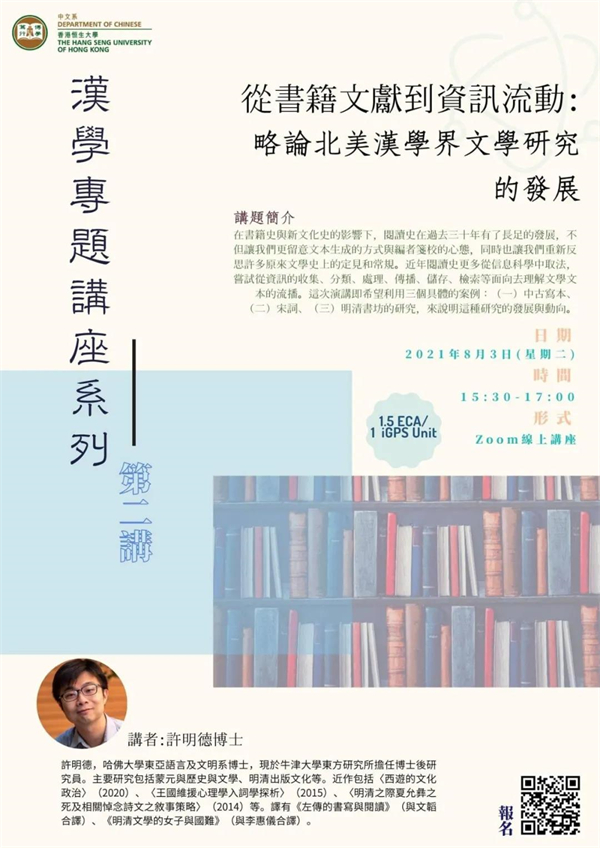
From books and documents to information flow: on the development of literary research in sinology in North America

Time:August 3rd (Tuesday) 15:30-17:00.

Location:ZOOM conference

Speaker:Xu Mingde (postdoctoral fellow, Institute of Oriental Studies, Oxford University)

Under the influence of the history of books and the history of new culture, the history of reading has made great progress in the past 30 years, which not only makes us pay more attention to the way of text generation and the editor’s mentality of proofreading, but also makes us rethink many stereotypes and conventions in the original literary history. In recent years, the history of reading is more based on information science, trying to understand the streaming of literary texts from the aspects of information collection, classification, processing, dissemination, storage and retrieval. In this speech, I hope to illustrate the development and trend of this kind of research by using three specific cases: (1) writing manuscripts in the Middle Ages, (2) Song Ci, and (3) the study of bookshops in the Ming and Qing Dynasties.

Darkness, Thriller, Profound and Interesting —— The Unique Soul World of Female mystery novel Writers

Time:August 3rd (Tuesday) 19:00-20:00.

Location:Litchi podcast

Guest:Ye Congling (mystery novel writer), Shui Mei Yiren (mystery novel writer), Qi Diao Xing (mystery novel writer) and Xiao Yao UU (mystery novel writer).

What are the characteristics of female mystery novel writers’ works? Litchi Podcast Suspense Live Week series, in which four women are invited to share their writing.

The "Controversy" between the Classics and Social Schools in the Reasoning Circle

Time:August 4th (Wednesday) 19:00-20:00.

Location:Litchi podcast

Guest:Beaver (science fiction writer, children’s literature writer), Shichen (mystery writer), Hu Yanyun (mystery writer), Wasby (mystery researcher)

In the last activity of Litchi Podcast Suspense Live Week, four distinguished guests were invited to talk about a topic that has been debated for a long time in the reasoning circle: Is it a stereotype or a social school?
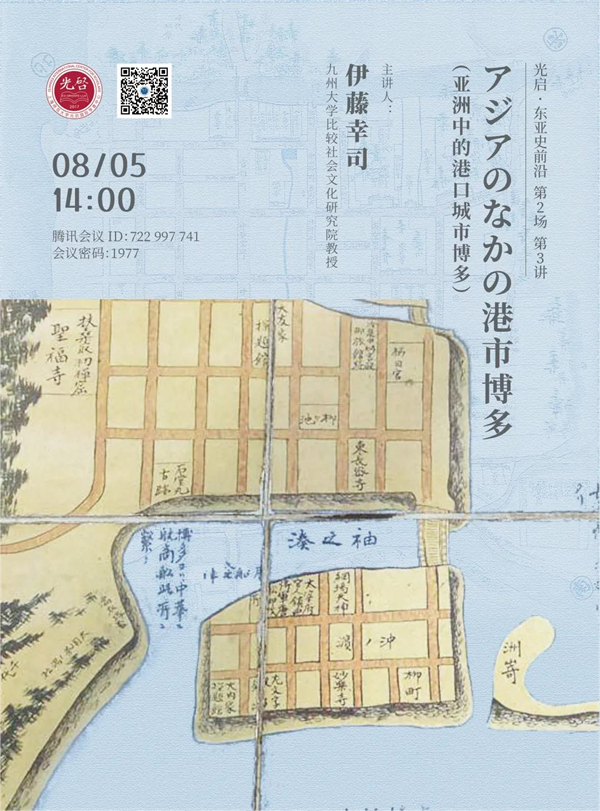
Hakata, a port city in Asia

Time:August 5 (Thursday) at 14:00

Location:Tencent conference (ID: 72297741, password: 1977)

Speaker:Koji Ito (Professor, Institute of Comparative Social Culture, Kyushu University)

Koji Ito is mainly engaged in the research on the history of Japan’s medieval foreign relations, the history of East Asian seas, the history of diplomatic documents and the history of Zen temples. His main works include Hakata and Asia in the Middle Ages (2021). In this lecture on the frontier of East Asian history, we invite Professor Yukio Ito to give a lecture on Hakata, a port city in Asia.

Attachment: Preview of offline activities
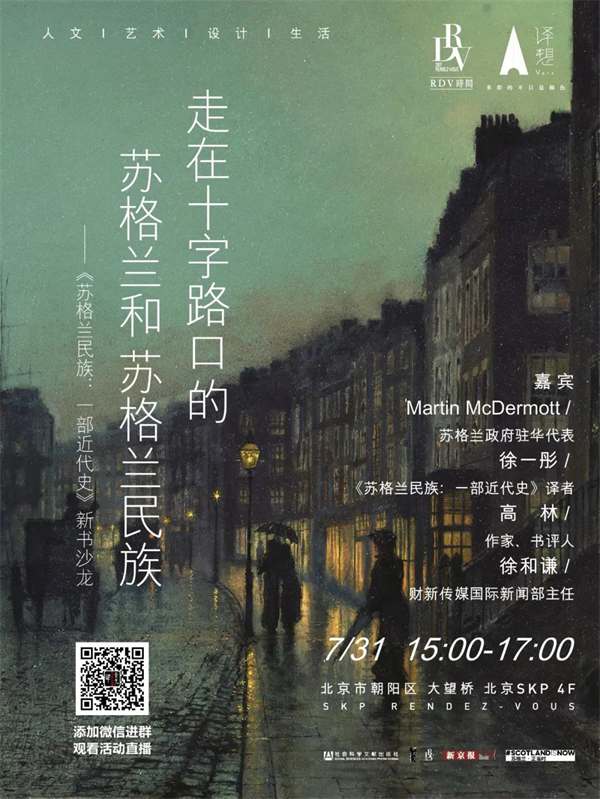
Beijing | Scotland and Scottish Nation at the Crossroads

Time:July 31st (Saturday) 15:00-17:00.

Location:SKP RENDEZ-VOUS, Floor 4, Beijing SKP Shopping Center, No.87 Jianguo Road, Chaoyang District

Guest:Meng Huaxuan (representative of the Scottish government in China), Xu Heqian (director of the international news department of Caixin Media), Xu Yitong (translator) and Gao Lin (writer and book reviewer).

The Scottish Nation: A Modern History is one of the "Scottish Trilogy" written by British scholar T.M. Devine. It describes in detail the history of Scotland from 1700 to 2007 for nearly 300 years, so as to help readers better understand why the alliance between Scotland and England, two independent nations, lasted for 300 years, the current situation of Scotland, and the historical origin of England and even Britain. On the afternoon of July 31st, when the Chinese version of The Scottish Nation was officially launched in Oracle Bone Inscriptions, we were fortunate to invite Martin McDermott, the representative of the Scottish government in China, Xu Yitong, the translator of this book, Xu Heqian, the director of the international news department of Caixin Media, who studied in Scotland, and Gao Lin, a writer who is familiar with European history, to review and analyze the past and present of Scotland, and to discuss the formation of Scotland’s "national image", its accession to the United Kingdom, Scotland and the European continent.
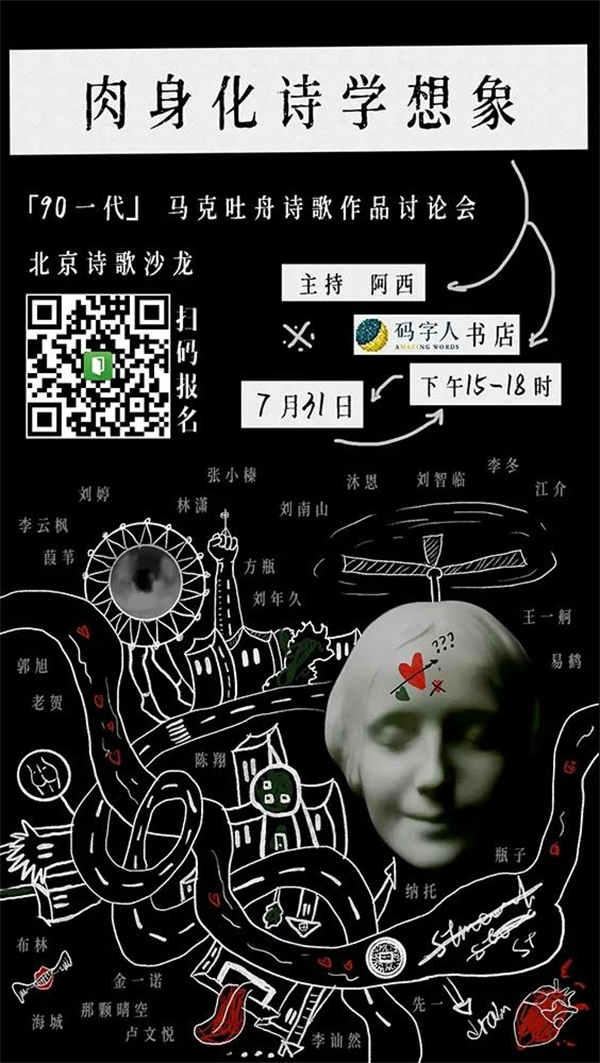
Beijing | Materialized Poetic Imagination —— A Seminar on Mark Tuzhou’s Poems of the "90s Generation"

Time:July 31st (Saturday) 15:00-18:00.

Location:Coder Bookstore, Floor 1, Building 15, Far East Instrument Company, No.6 Hepingli North Street, Dongcheng District

Guest:Mark Tuzhou (poet), Liu Nianjiu (poet, poetry critic), etc.

In fact, the incarnation of reason represents an important turn of modern philosophy, which has made considerable progress in maurice merleau-ponty’s phenomenology of body, and also spread throughout radical philosophy such as Alain Badiou’s claim to Pessoa. Bartius asked what kind of philosophy could be worthy of Pessoa’s poems, and we had to ask reversely, did our current poems keep up with the call of philosophy of the times, or could lead a more novel philosophy?
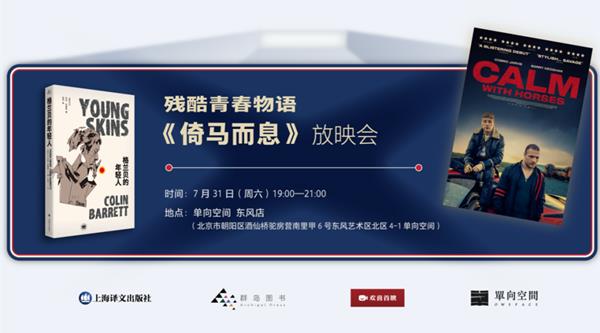
Beijing | Story of Cruel Youth —— A screening of "Rest on a Horse"

Time:July 31st (Saturday) 19:00-21:00.

Location:4-1 One-way Space, North Zone, Dongfeng Art District, No.6 Nanlijia, Jiuxianqiao Tuofangying, Chaoyang District

The Young Man of Grambe is a collection of stories consisting of six short stories and a novella, and the film "Rest on a Horse" is adapted from one of the novellas. On July 31, One-way Space will hold an offline free movie viewing activity of "Rely on the Horse".
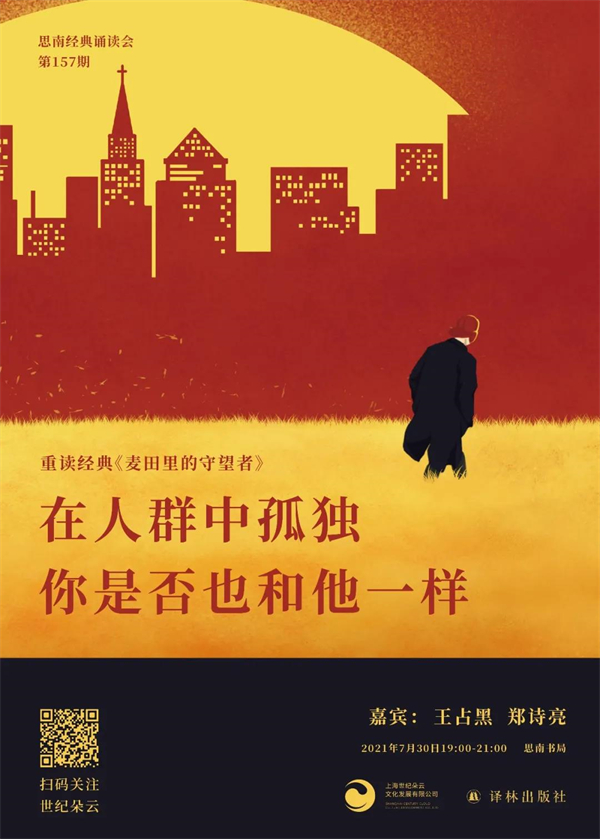
Shanghai | Reread the classic The Catcher in the Rye: Are you lonely in the crowd, too?

Time:July 30th (Friday) 19:00-21:00

Location:Sinan Bookstore, No.517 Fuxing Middle Road, Huangpu District

Guest:Wang Zhan Hei (writer) and Zheng Shiliang (executive editor of The Paper Shanghai Book Review)

Seventy years ago, on July 16th, American writer J.D. Salinger’s novel The Catcher in the Rye came out, which influenced the youth of generations. On the evening of July 30th, guests Wang Zhan Hei and Zheng Shiliang will come to Sinan Bookstore to take you into the inner world of the protagonist Holden again.
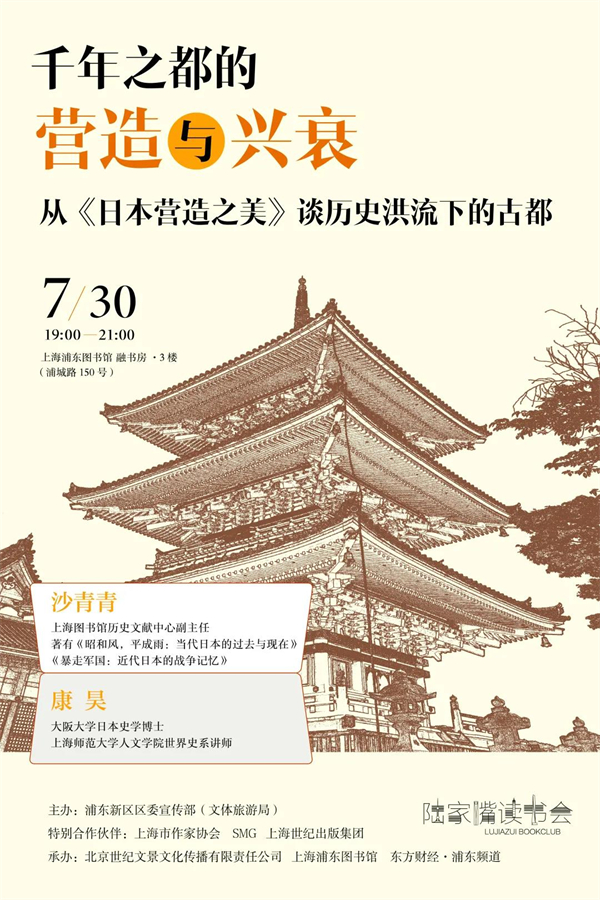
The Construction and Rise and Fall of Shanghai | the Millennium Capital: Talking about the Ancient Capital under the Historical Torrent from The Beauty Made in Japan

Time:July 30th (Friday) 19:00-21:00

Location:3/F, No.150 Pucheng Road, Pudong New Area, Shanghai Pudong Library Rong Study Room

Guest:Sha Qingqing (Deputy Director of Shanghai Library Historical Documentation Center) and Kang Hao (Lecturer of World History Department of Shanghai Normal University)

How was Kyoto, whose capital has been established for more than 1,200 years, built? How can the ancient capital, which has experienced numerous disasters and wars, be reborn? How do new political forces create new urban forms? How does the civic culture bred in it change or even dominate the fate of the city? Has Japan’s ancient capital been successfully transformed into a city suitable for the new era? What is the difference between Kyoto under the lens of tourists and Kyoto living in it? On Friday night, Lujiazui Reading Club invited Sha Qingqing and Kang Hao, Japanese historians, to talk with us about how the ancient Japanese capital was built under the historical torrent and how it became what it is today.
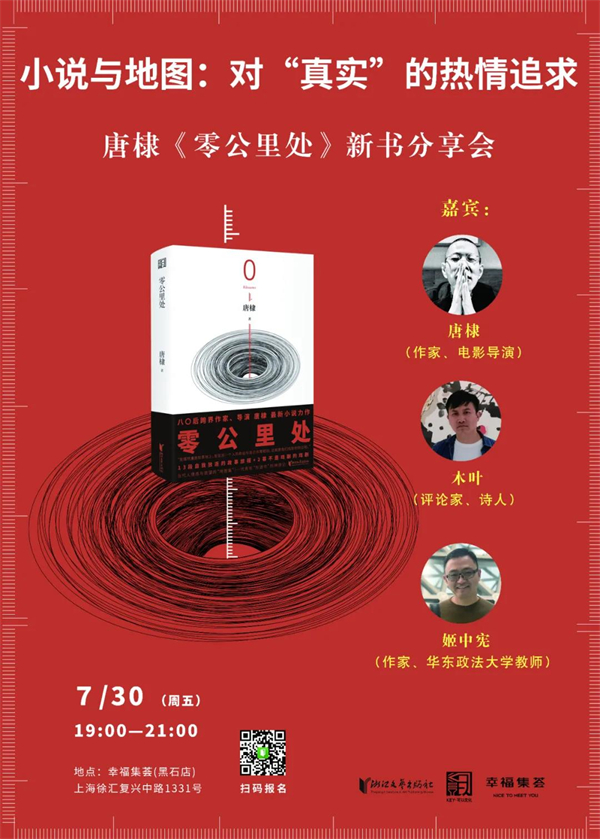
Shanghai | Novels and Maps: Passionate Pursuit of "Truth" —— Tang Di’s New Book Sharing Meeting of Zero Kilometers

Time:July 30th (Friday) 19:00-21:00

Location:Xingfu Jihui, No.1331 Fuxing Middle Road, Xuhui District

Guest:Tang Di (writer and director), Konoha (critic and poet) and Ji Zhongxian (writer and teacher of East China University of Political Science and Law).

Zero Kilometers is the first novel of Tang Di, a post-80s writer and film director, which shows his creative ambition different from writing short stories or screenplays. On the evening of July 30th, Tang Di, critic, poet Konoha, and writer Ji Zhongxian, will be a guest at the Happy Gathering Blackstone Store to talk about the work Zero Kilometers and share with readers a strange journey from Zero Kilometers.
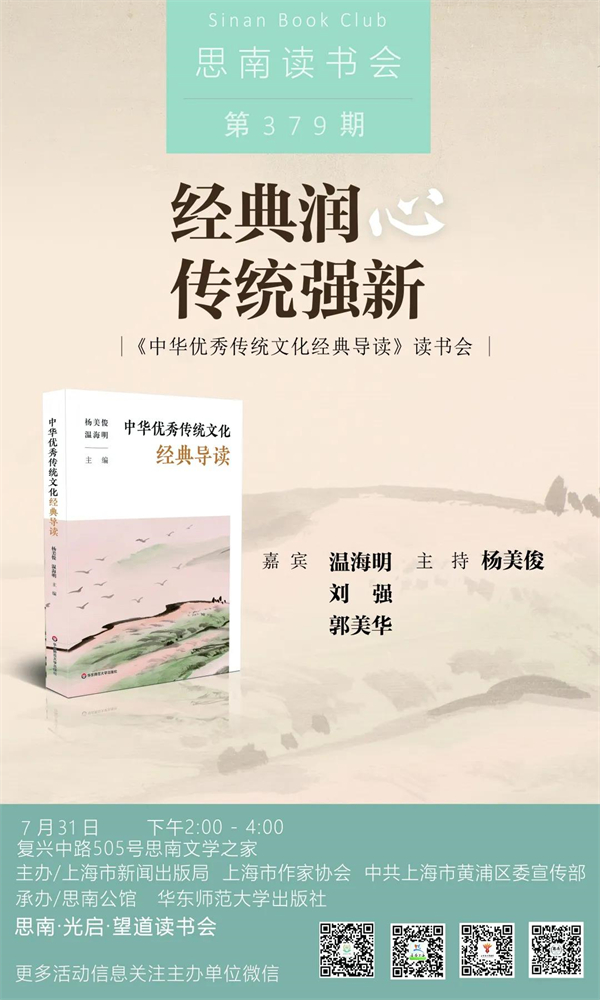
Shanghai | Classic Nourishes the Heart, Traditions Strengthen the New —— Reading Club of Classic Introduction of Chinese Excellent Traditional Culture

Time:July 31st (Saturday) 14:00-16:00.

Location:Sinan Literature House, No.505 Fuxing Middle Road, Huangpu District

Guest:Wen Haiming (Professor, Doctoral Supervisor, School of Philosophy, China Renmin University), Liu Qiang (Professor, School of Humanities, Tongji University) and Guo Meihua (Professor, School of Humanities, Shanghai University of Finance and Economics)

What does traditional culture mean to us today? Internally speaking, it can respond to our inner needs, nourish our hearts, and thus produce life ideals, ethical concepts and aesthetic tastes; Looking to the outside world, we can point to the educational goal of educating people in the new era, and use Chinese excellent traditional cultural classics to achieve the current cultural education and cultural power. "Those who get Chinese get the world, and those who get traditional culture get Chinese". What is the relationship between Chinese excellent traditional culture and the future development of teenagers? How should we view Chinese excellent traditional culture today? On the afternoon of July 31st, in Sinan Literature House, the creative team of "Introduction to Classic of Chinese Excellent Traditional Culture" will guide us into the classic of traditional culture, tell the story behind the classic, and explain why the classic becomes a classic, how the classic becomes a classic, what is the reading value of the classic, what is the reading method of the classic, and how we can learn from the classic.
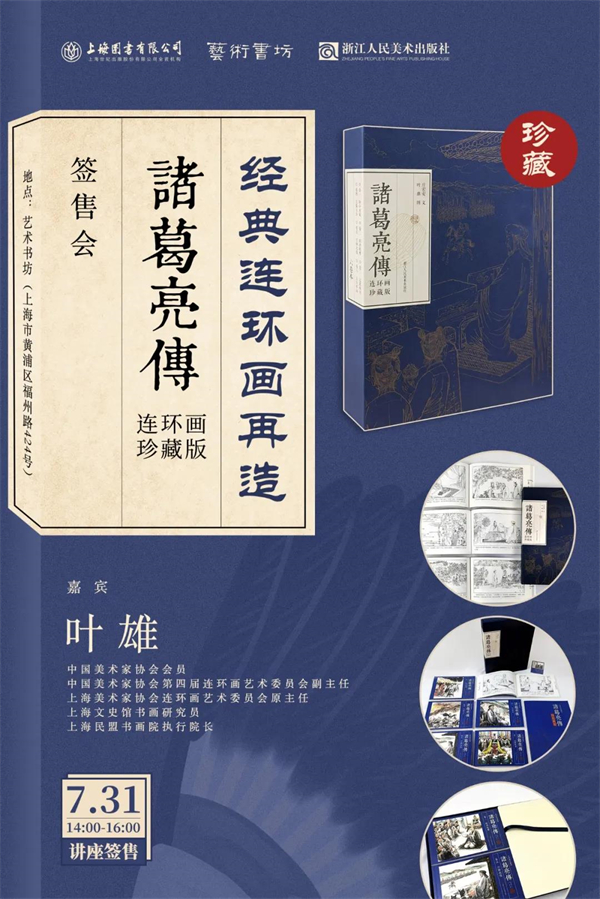
Shanghai | Reconstruction of Classic Comic Books —— Signing Meeting of Zhuge Liang Biography (Comic Book Collection Edition)

Time:July 31st (Saturday) 14:00-16:00. 

Location:Art Bookstore, No.424 Fuzhou Road, Huangpu District

Speaker:Ye Xiong (comic book artist, researcher of painting and calligraphy in Shanghai Literature and History Museum)

On July 31st, Ye Xiong, a famous comic book artist, will hold a signing ceremony in the art bookstore with his masterpiece Zhuge Liang Chuan (comic book collector’s edition).
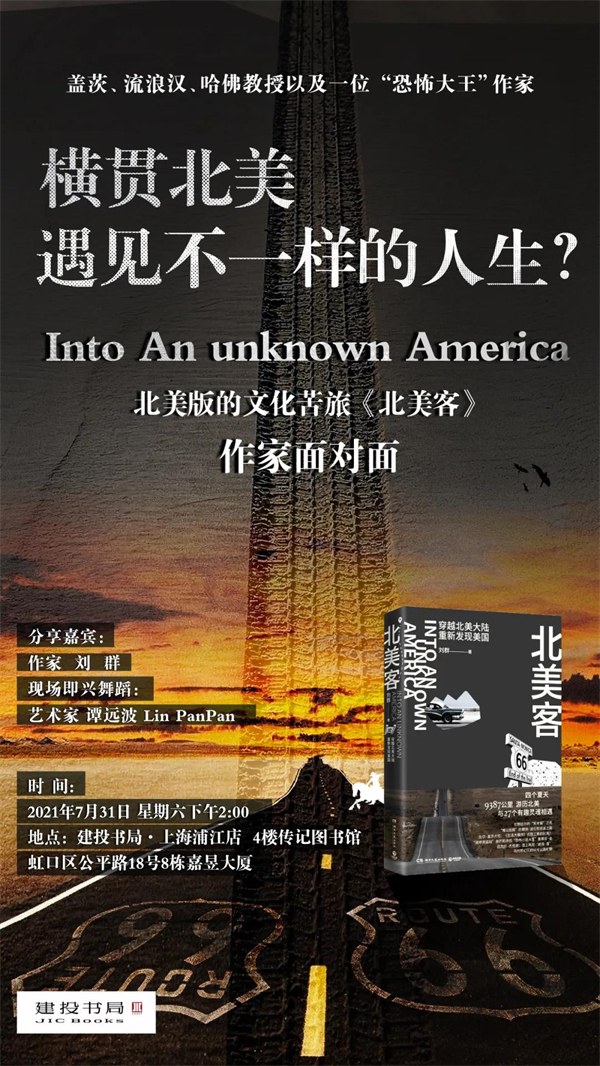
Shanghai | Across North America, Meet a Different Life? -The North American version of the cultural journey "North American Guest" writers face to face

Time:July 31st (Saturday) 14:00-16:00.

Location:The Biography Library on the 4th floor of Investment Press was built on the 1st floor of Jiayu Building, Building 8, No.18 Gongping Road, Hongkou District.

Guest:Liu Qun (writer), Tan Yuanbo (dance artist), Lin Panpan (impromptu body performer) and Wu Liqiang (artist).

On the afternoon of July 31st, Jiantou Bookstore will jointly collect Tianjuan and invite Liu Qun, the author of North American Guest, to share his 4-year, 9387-kilometer North American version of "Cultural Journey". During the activity, he will tell several life stories selectively, and dance artist Tan Yuanbo and impromptu body performer Lin Panpan will bring impromptu dance performances. Let’s meet interesting souls on the spot.
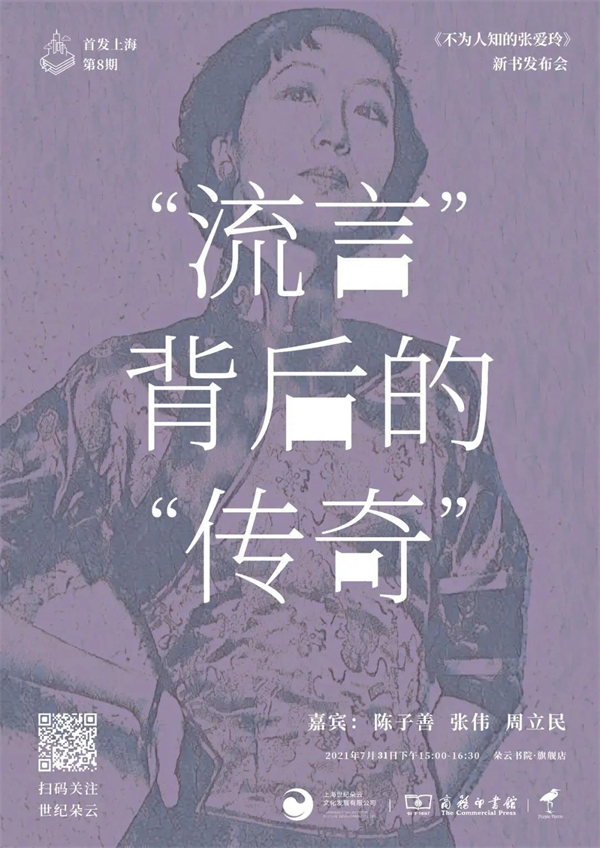
Shanghai | "Legend" Behind "Gossip" —— The release of the new book "Unknown Zhang Ailing"

Time:July 31st (Saturday) 15:00-16:30

Location:Duoyun Academy, 52nd Floor, Shanghai Tower, No.501 Yincheng Middle Road, Pudong New Area

Guest:Chen Zishan (researcher of Chinese Department of East China Normal University), Zhang Wei (research librarian of Shanghai Library) and Zhou Limin (executive deputy curator of Ba Jin’s former residence).

In addition to the Shanghai version of Legend and Gossip, Zhang Ailing also designed the binding of her own works? Zhang Ailing had a chance to leave images and sounds besides The Contrast? The Unknown Eileen Chang is the latest anthology of Chen Zishan’s discussion on Eileen Chang, which makes a new exploration, textual research, collation and interpretation of Eileen Chang’s literary historical materials, and "thinks that there is a new discovery". On the afternoon of July 24th, three distinguished guests, Chen Zishan, Zhang Wei and Zhou Limin, will come to the flagship store of Duoyun Academy to reveal the legend of Zhang.
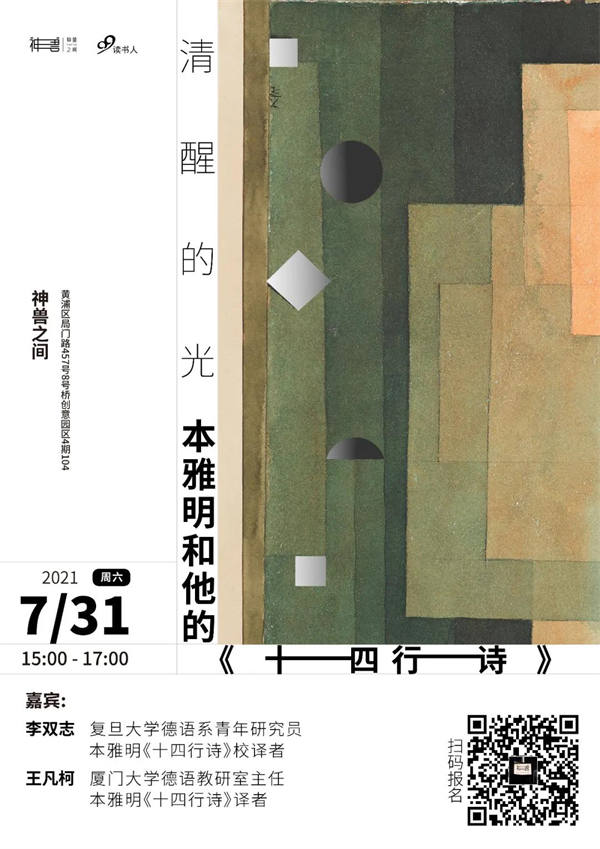
Shanghai | The Awake Light-Benjamin and His The Sonnets

Time:July 31st (Saturday) 15:00-17:00.

Location:Poorthater area between 104 God Beasts, Phase 4, No.8 Bridge, No.457 Jumen Road, Huangpu District

Guest:Li Shuangzhi (researcher of German Department of Fudan University) and Wang Fanke (director of German Teaching and Research Section of Xiamen University)

The Sonnets is a rare literary work in walter benjamin. These eighty poems were all written in the author’s youth, which is an important witness of the author’s ideological transformation period, and is of great significance to understanding and studying Benjamin and German poetry. On the afternoon of July 31st, with the publication of the Chinese version of The Sonnets, the translator Wang Fanke and the school translator Li Shuangzhi will come between the beasts, and the two scholars will lead you to read and understand Benjamin as a poet.
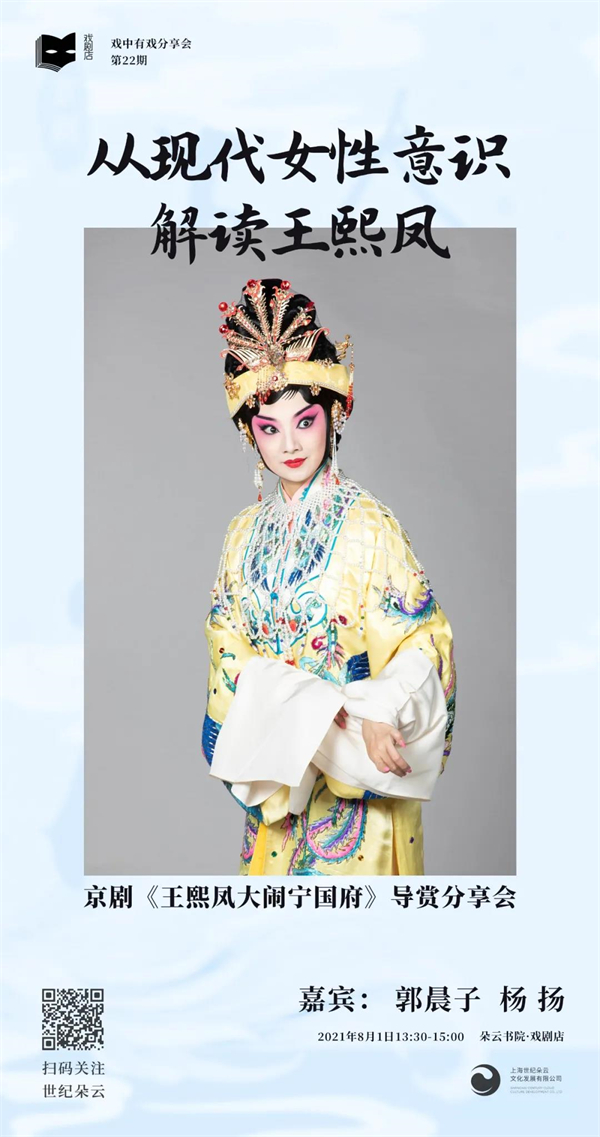
Shanghai | Interpreting Wang Xifeng from the Modern Feminine Consciousness —— Appreciation and Sharing Meeting of Peking Opera "Wang Xifeng makes a scene in Ningguo Mansion"

Time:August 1st (Sunday) at 13:30.

Location:Duoyun Academy Drama Store, No.398 Changle Road, Huangpu District

Guest:Guo Chenzi (Associate Professor of Shanghai Theatre Academy) and Yang Yang (Peking Opera Actor)

The Peking Opera Wang Xifeng made a scene in Ningguo Mansion, which was adapted from A Dream of Red Mansions, one of Four Great Classical Novels, and has defied the stage for decades. This performance, based on the version of Tong Zhiling’s performance in 1982, focuses on combing Wang Xifeng’s action clues and psychological context, highlighting the human tragedy in the atmosphere of a specific era. On the afternoon of August 1st, Guo Chenzi, an associate professor of Shanghai Theatre Academy, and Yang Yang, a national first-class actor, will come to Duoyun Academy and Drama Shop to deeply interpret Wang Xifeng from the perspective of modern female consciousness.
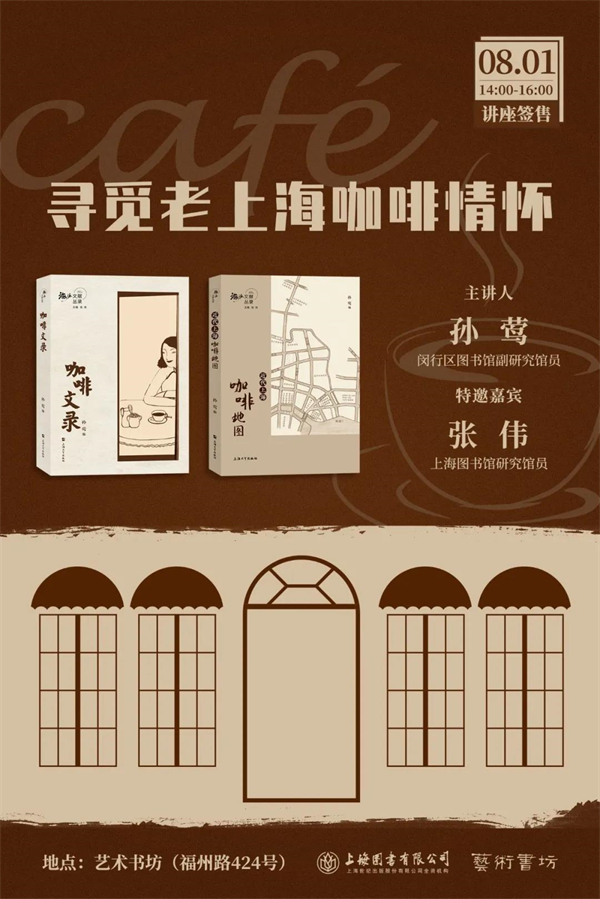
Shanghai | Looking for Old Shanghai Coffee Feelings

Time:August 1st (Sunday) 14:00-16:00

Location:Floor 1, Art Bookstore, No.424 Fuzhou Road, Huangpu District

Guest:Sun Ying (Deputy Research Librarian of Minhang District Library) and Zhang Wei (Research Librarian of Shanghai Library)

In the mid-19th century, coffee, as an exotic product, took root in Shanghai, a land where Chinese and Western cultures merged, and then gradually merged into the texture of the city. Coffee culture has become an important part of Shanghai culture, and coffee has also become a unique business card of Shanghai. On August 1st, we invited Sun Ying, deputy research librarian of Minhang District Library, and Zhang Wei, research librarian of Shanghai Library, to give a lecture on "Looking for Old Shanghai Coffee Feelings" in the Art Bookstore. During the activity, the two guests will lead the readers to start a special "taste journey" around the interesting culture, celebrity complex and historical events related to coffee.
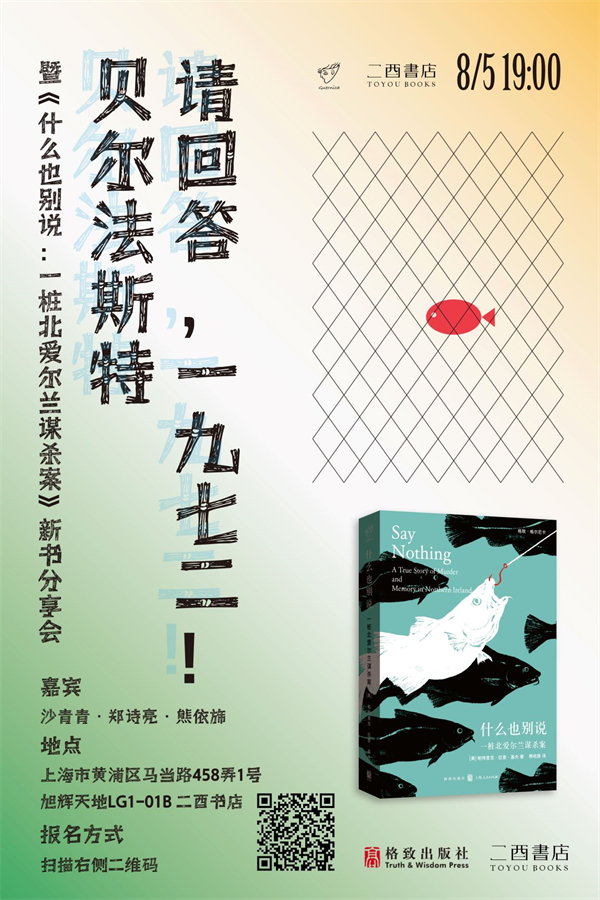
Shanghai | Come in, 1972! Belfast-Sharing Meeting of the New Book "Say Nothing: An Irish Murder"

Time:August 5 (Thursday) at 19:00

Location:Xuhui Tiandi LG1 Eryou Bookstore, No.1 Lane 458, Madang Road, Huangpu District

Guest:Sha Qingqing (deputy director of the Historical Documentation Center of Shanghai Library), Zheng Shiliang (executive editor of The Paper Shanghai Book Review), Xiong Yi-fang (translator).

One day at the end of 1972, Joan McConville, the mother of ten children, was kidnapped from her home in Belfast by a group of masked men, and her children never saw her again. This is the most notorious case in the Northern Ireland conflict. Who killed Joan McConville? At the launch of this new book, we invited three guests, Sha Qingqing, Zheng Shiliang and Xiong Yicheng, to introduce the contents of Don’t Say anything to readers and try to answer the question "What should Northern Ireland answer".
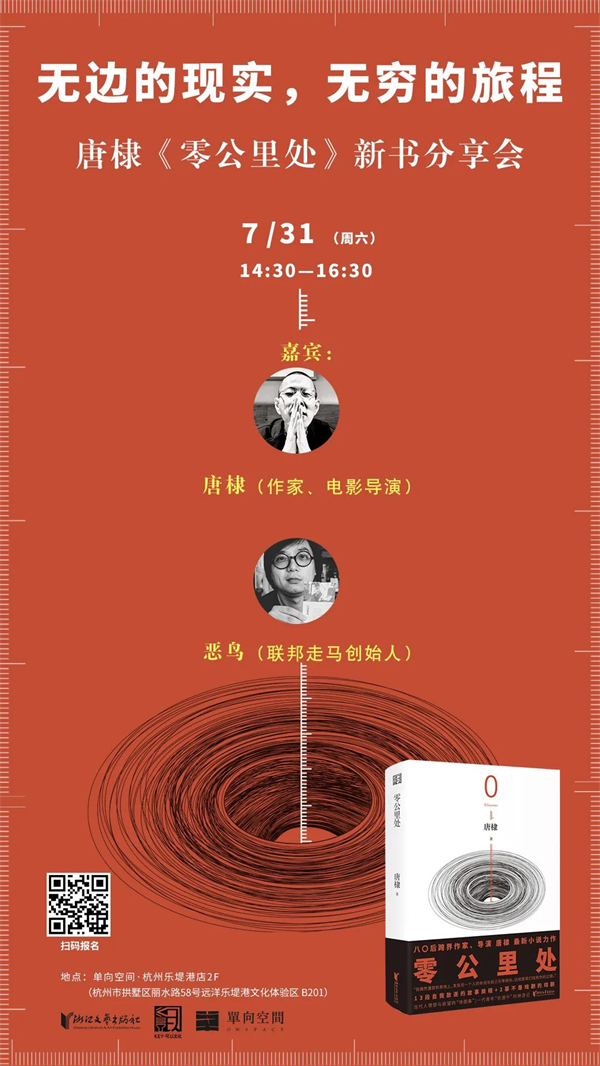
Hangzhou | Boundless Reality, Endless Journey —— Sharing Meeting of Tang Di’s "Zero Kilometers"

Time:July 31st (Saturday) 14:30-16:30

Location:One-way space 2F, B201, Yuanyang Ledigang Cultural Experience Zone, No.58 Lishui Road, Gongshu District

Guest:Tang Di (writer, director), Bad Bird (founder of the Federation)

On July 31st, Tang Di, a writer and film director, and Bad Bird, the founder of the Federation, will visit Hangzhou Ledigang Store in One-way Space to talk about the work Zero Kilometers and share with readers a strange journey from Zero Kilometers.
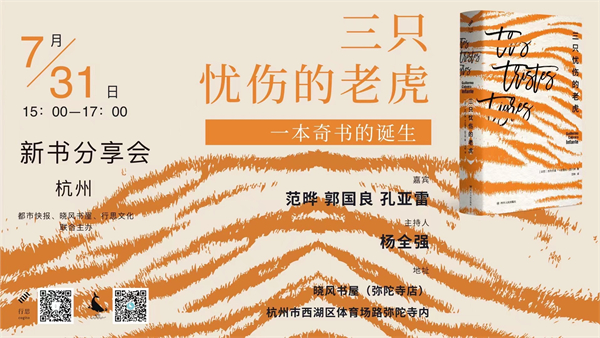
Hangzhou | Three Sad Tigers: The Birth of a Wonderful Book

Time:July 31st (Saturday) 15:00.

Location:Xiaofeng Bookstore in Mituo Temple, No.533 Tiyuchang Road, Xihu District

Guest:Fan Ye (Associate Professor, Department of Spanish-Portuguese, Peking University Foreign Studies University), Guo Guoliang (Professor, Doctoral Supervisor, School of Foreign Studies, Zhejiang University), Kong Yalei (novelist, translator).

Cabrera Infante is one of the most important writers in Latin America during the "literary explosion". Three Sad Tigers is his most important work. The background of the story is set in Cuba on the eve of the revolution. A group of bohemian artists and writers wander in Havana at night, shuttling between different bars and nightclubs. With this background, Infante fully reproduces the dreamy atmosphere of Havana at the end of 1950s. On July 31st, Fan Ye, the translator of this book, Kong Yalei, the novelist and translator, Guo Guoliang, a professor at the School of Foreign Languages of Zhejiang University, and Yang Quanqiang, the editor-in-chief of Xingsi Culture, will come to the Amitabha Temple Store in Xiaofeng Bookstore to discuss this wonderful work in the history of Latin American literature with readers, and tell about the author Infante and Three Sad Tigers, as well as the difficulties and happiness in the eight-year translation process.
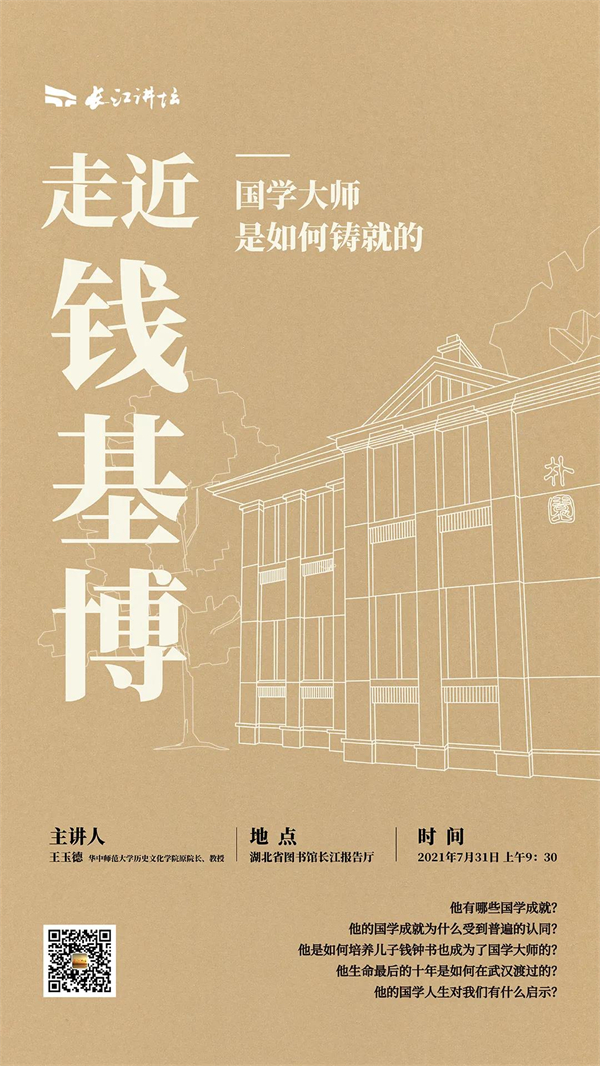
Wuhan | Approaching Qian Jibo —— How the Master of Chinese Studies was Created?

Time:July 31st (Saturday) at 9:30.

Location:Changjiang lecture hall of Hubei Provincial Library, No.25 Gongzheng Road, Wuchang District

Speaker:Wang Yude (former Dean and Professor of School of History and Culture, Huazhong Normal University)

Qian Jibo is one of the most outstanding masters of Chinese studies in the 20th century. What achievements has he made in Chinese studies? Why is his achievements in Chinese studies universally recognized? How did he train his son Qian Zhongshu to become a master of Chinese studies? How did he spend the last ten years of his life in Wuhan? What does his life of Chinese studies enlighten us? This Saturday, welcome to listen to Professor Wang Yude from the School of History and Culture of Central China Normal University about "Approaching Qian Jibo-How the Master of Chinese Studies was Made".

Grasping "Five in One" and "Four Comprehensiveness" Based on Ideological System

  According to the political judgment and orientation of the CPC Central Committee, "five in one" is the overall layout and "four comprehensive" is the strategic layout. Generally speaking, there is no essential difference between the overall layout and the strategic layout, because they are developed in the same dimension, so they can be expounded together, such as the overall strategic layout. Because the strategic height must be based on the overall situation, otherwise it will be promoted to strategy. Similarly, as long as it is an overall plan or measure, it must have strategic characteristics or be turned into a strategic plan. In that case, why should we separate two layouts? Just to distinguish words? Obviously not, there must be a deeper ideological connotation and logical relationship.

  The basic relationship between the overall layout of "five in one" and the strategic layout of "four comprehensive"

  China’s modernization road and construction goal and the Communist Party of China (CPC)’s self-construction and improvement of ruling ability are basically reflected in the overall layout of "five in one" and the strategic layout of "four comprehensive". And because both of them have rich connotations and extend to each other, which determines the intersection in some fields and contents. It is for this reason that we need to clarify the relationship between the two and clarify their respective boundaries. This is very important for better understanding the strategic deployment of the CPC Central Committee and the ruling ideology of the Supreme Leader General Secretary in theory, and it is equally important for the whole party and even the whole society to implement the major decision-making arrangements of the CPC Central Committee more consciously.

  From the analysis, there is a fundamental or objective consistency between them, that is, to let the people enjoy a better life in economy, politics, culture, society and environment. On this premise, there are also some differences between the two, which determines the necessity and importance of distinguishing the overall layout from the strategic layout.

  First of all, there are differences in the time, background and way of the two formulations. "Five in One" was put forward in the report of the 18th National Congress of the Communist Party of China. "The overall basis for building Socialism with Chinese characteristics is the primary stage of socialism, and the overall layout is five in one. The overall task is to realize socialist modernization and the great rejuvenation of the Chinese nation". Therefore, it is required that "comprehensive, coordinated and sustainable development must be more consciously regarded as the basic requirement for thoroughly implementing Scientific Outlook on Development, and the five-in-one overall layout of economic construction, political construction, cultural construction, social construction and ecological civilization construction should be fully implemented, so as to promote the coordination of all aspects of modernization, production relations and productivity, superstructure and economic base, and constantly explore the road of civilized development with production development, affluent life and good ecology". From this rigorous and comprehensive statement, we can see that the "five in one" is a political behavior that the party’s ideas are turned into the will of the country based on the country’s modernization process and goal.

  The "Four Comprehensiveness" was put forward twice by the Supreme Leader General Secretary in the process of grassroots investigation at the end of 2014. Once, when he went to Fujian for investigation, he put forward that "coordinating and promoting the building of a well-off society in an all-round way, comprehensively deepening reforms, and comprehensively promoting the process of governing the country according to law" contained "three comprehensiveness". After that, he went to Jiangsu for investigation, and especially emphasized the extreme importance of strictly administering the party in an all-round way, and put it together with the construction of a well-off society, deepening reform and governing the country according to law, so he had the enrichment and development from "three comprehensive" to "four comprehensive". It is this rich development that has enhanced the height, width and strength of the strategic layout. Because, China’s political system or political design, the most fundamental feature is the leadership of the party. As the saying goes, "the party is the leader of everything in the study of the party, government, military and civilian affairs, east, west, north and south". Since the party leads everything, its mission responsibility is irreplaceable, its ruling ability must be unparalleled, it is not strict with the party, and it is "comprehensive and strict". It is absolutely impossible to reach such a level of ability.

  If we probe into the formation process of "Four Comprehensiveness" more deeply, it will better help us to understand the formation, development and deepening of the Supreme Leader’s Socialism with Chinese characteristics Thought in the new era. The 18th National Congress proposed "building a well-off society in an all-round way", the Third Plenary Session of the 18th Central Committee proposed "comprehensively deepening reform", the Fourth Plenary Session of the 18th Central Committee proposed "comprehensively promoting the rule of law", and the summary meeting of the party’s mass line education practice activities proposed "comprehensively promoting the strict administration of the party". From this, we can see that the ideological system originates from practice and has an endogenous and rigorous logical relationship. It is by no means a slap in the face and a point of view. More importantly, we can also understand the ideological course of the top leaders of the party and the country.

  Secondly, the "two layouts" are developed in different dimensions. "Five in One" is the key aspect of China’s modernization, or the level of economic construction, political construction, cultural construction, social construction and ecological civilization. In other words, the construction level in all aspects is the development level of China’s modernization. It can also be said that only by realizing the "five in one" can we dare to say that Socialism with Chinese characteristics’s construction is on the right and broad road.

  "Four Comprehensiveness" is the overall judgment and planning made by the top leaders of the Party and the country from a strategic perspective based on the current international and domestic political ecology and development status, focusing on the historical mission shouldered by the ruling party, and combining the main contradictions and problems faced. In a sense, it is standing at the intersection of history and times, looking for the general plan of governing the party and the country, and exploring the direction and breakthrough of the country and society. Therefore, as long as we make efforts in several aspects and achieve results, the development goals we have set can be achieved. What needs to be particularly emphasized here is that the "four comprehensiveness" is more personalized than the "five in one", with more vivid efforts and more obvious results.

  Thirdly, the formation mode and process of "two layouts" are different. The overall layout is gradually formed and enriched by the Party in the process of promoting modernization, based on practical and ideological achievements, thus reflecting the process and height of the Party’s self-improvement. Including the "trinity" (economic construction, political construction and cultural construction) proposed in the report of the 16th National Congress, the "four-in-one" (economic construction, political construction, cultural construction and social construction) proposed in the report of the 17th National Congress, and the "five-in-one" (economic construction, political construction, cultural construction, social construction and ecological civilization construction) proposed in the 18th National Congress. Three party congresses have achieved three leaps.

  The strategic layout has also gone through a process of gradual enrichment and development, which contains the ruling thoughts and ideas of the top leaders of the party and the country, and follows the law of exploration in practice, exploration in practice, or practice to theory and theory guiding practice, so it can achieve more results. This also enables us to further understand that the supreme leader’s thought of governing the country is rooted in practice, so it is more targeted and instructive.

  The overall layout of "five in one" and the strategic layout of "four comprehensiveness" are both important categories of Socialism with Chinese characteristics Thought of the Supreme Leader in the new era.

  Socialism with Chinese characteristics Thought of the Supreme Leader in the New Era is the latest and important achievement of the third China of Marxism, which guides China’s road to great power, supports the "community of human destiny" under construction and inspires the development direction of human civilization. It is grand and systematic, which determines that the connotation is very rich and the ideological and theoretical significance is particularly significant.

  Further analysis along this line of thought shows that Socialism with Chinese characteristics Thought of the Supreme Leader in the New Era guides the Communist Party of China (CPC) to complete a new historical mission. So far, the Communist Party of China (CPC) has undertaken and is undertaking three historical missions, namely, "stand up, get rich and become strong" as clearly stated in the report of the 19th National Congress. The first two missions have been completed or basically completed, or the basic structure and main body construction have been completed. The latter is based on the first two, but it needs a bigger and more difficult breakthrough. Because it involves many fundamental propositions of the times that must be answered.

  As the supreme leader of the party and the country, the supreme leader undertakes the historical mission of leading the whole party and the people of the whole country to pursue the century-old dream and realize the great rejuvenation of the Chinese nation. At the same time, as the leader of a big country and the highest decision-maker of the world’s second largest economy, he inevitably has to focus on and answer the question of where the world is going. What distinguishes a big country from a small country lies in its international responsibility or the responsibility of leading the world. In this sense, his ideological theory must coordinate the international and domestic situations.

  We should answer the direction and path choice of human development in thought and theory. Where the world goes is not a natural or inevitable thing. It must be worked hard and won, and the key point is the choice of big countries and their leaders. The classic Marxist writers have long given an answer to what road mankind will take, that is, "Socialism will destroy capitalism and eventually realize communism." This ultimate goal has not changed so far, but the way and path to achieve it must change. Because, at that time, because the proletariat had not yet seized power, or after some countries seized power, the proletarian movement was generally in a weak position, and the political state of the whole world, various factors decided to take the road of violent revolution. This choice was in line with the world political ecology and its requirements at that time, but it had historical limitations. When history comes to the present, China has participated in the formulation of world rules. Since it is an important participant in the formulation of rules, the will can be realized in the game process, and there is no need to resort to violent means. Therefore, standing at the height of the times, General Secretary of the Supreme Leader clearly put forward "jumping out of the Cold War mentality and zero-sum game", emphasizing that "the Chinese dream and the American dream are interlinked", especially establishing the common mission of "building a community of human destiny" and proposing and actively promoting the construction of the Belt and Road. All these are different from "institutional confrontation to the death".It belongs to a new path of civilized development.

  We should answer China’s current development path theoretically. It is a proposition of the times and a historical proposition that what shortcomings should be made up for the party’s governance or system construction in order to achieve the set goals faster and better. One of the measures to make up for the shortcomings is reform. Our reform has been clearly defined as "neither taking the old road of closed and rigid, nor taking the evil road of changing the flag." At the same time, it is also emphasized that "the great social change in contemporary China is not a master that simply continues our history and culture, a template that simply applies the ideas of classic Marxist writers, a reprint of socialist practice in other countries, or a replica of foreign modernization." This brings a major problem, how to theoretically answer what kind of road we are taking, which determines the system construction and renewal. There is no doubt that we are taking a pioneering road that has never been seen before. Lu Xun said: "There is no road on the ground. If there are more people walking, it will become a road." A truly pioneering road, as a pioneer, must theoretically explain the external performance and essential connotation of its own road, especially the endogenous logic and scientific laws. Only in this way can it provide new choices for countries and nations in the world who want to accelerate their development and maintain their independence. To answer this question well, we must learn from or include the overall layout of "five in one" and the strategic layout of "four comprehensive".

  Only by deeply understanding and grasping the essential connotation of the theoretical system of the supreme leader’s thoughts on governing the country can we better promote and implement the "five in one" overall layout and the "four comprehensive" strategic layout.

  Socialism with Chinese characteristics Thought of the Supreme Leader in the New Era was born to meet the needs of the times, concentrating the wisdom of the whole Party. It is a grand ideological and theoretical system, including the overall layout of "five in one" and the strategic layout of "four comprehensive", but not limited to this. To be more accurate, both of them occupy an important position in the whole ideological and theoretical system, and they are indispensable, but not all of them. There are still many important ideas in them. Therefore, we need to master the whole ideological and theoretical system from a higher position, and only in this way can we dare to deepen the overall layout of the "five in one" and the "four comprehensive" strategic layout.

  On the one hand, the Supreme Leader’s Socialism with Chinese characteristics Thought in the new era was formed and developed at the height of the construction of Marxist political parties and the development direction of human civilization. Wang Huning put forward "four profound understandings" in his speech at the symposium on the publication of the second volume of The Supreme Leader’s Talks on Governing the Country, including "grasping the background of the emergence of the Supreme Leader’s Socialism with Chinese characteristics Thought in the new era, grasping this important thought profoundly has made great original contributions to the development of Marxism, providing an action guide for realizing the great rejuvenation of the Chinese nation, and pointing out the direction for promoting the construction of a community of human destiny and opening up a better development prospect for mankind".

  On the other hand, the Supreme Leader’s Socialism with Chinese characteristics Thought in the new era was born out of the Communist Party of China (CPC)’s historical mission, and it was also built and deepened to fulfill the mission. Therefore, not only can we not understand a speech or a certain ideological point of view in isolation, but we can also not understand the "five in one" and "four comprehensive" in isolation. We must comprehensively and systematically understand and grasp the ideological connotation and logical relationship between them, otherwise we may generalize and even split.

  This involves methodology. Generally speaking, the reason why a generation of leaders undertake the historical mission undertaken by a political party is because they are guided by systematic thought and theory with strict logic and rich endogeneity. Mao Zedong and Deng Xiaoping can undertake the historical mission of "standing up" and "getting rich" because they have formed a scientific ideological and theoretical system, which contains three major elements: political outlook, ideological line and ruling strategy. The party has a political line and leaders have a political view. Mao Zedong’s political view is class struggle, that is, people’s liberation is achieved through class struggle, the ideological line is seeking truth from facts, and the ruling strategy is to grasp revolution to promote production and lead production with revolution. Deng Xiaoping’s political view is peaceful development, that is, according to the development of the times, he jumped out of "taking class struggle as the key link", his ideological line is emancipating the mind, and his ruling strategy is to focus on economic construction and reform and opening up, that is, to stimulate productivity through reform and introduce productivity through opening up.

  The historical mission undertaken by the supreme leader is to "strengthen", that is, to realize the great rejuvenation of the Chinese nation. What is national rejuvenation? That is, to surpass ourselves and go to the forefront of human civilization to play a leading role, which requires the ability to provide "public goods" to the world. The supreme leader is leading our party to improve this ability, and has provided such products to the world, for example, proposing to build a "community of human destiny"; Advocate "to discuss, build and share ‘ Belt and Road ’ The principle of construction is guided by the Silk Road spirit of peaceful cooperation, openness and tolerance, mutual learning and mutual benefit, and the goal of cooperation is to build a community of destiny and interests "; Established the development concept of "innovation, coordination, green, openness and sharing", and so on.

  In short, only by comprehensively and profoundly understanding and grasping the thoughts of the Supreme Leader on governing the country, especially the essential connotation and basic characteristics of the Supreme Leader’s Socialism with Chinese characteristics Thought in the new era, can we better clarify the basic relationship between the various elements or categories, and then effectively promote the "five in one" overall layout and the "four comprehensive" strategic layout.

  (Author Gong Fangbin is a special researcher at the Beijing Supreme Leader New Era Socialism with Chinese characteristics Thought Research Center)

  [References]

  ① Supreme Leader: "Decisive victory to build a well-off society in an all-round way and win the great victory of Socialism with Chinese characteristics in the new era — — Report in The 19th National Congress of the Communist Party of China, Xinhuanet, October 27, 2017.

840,000 college students stayed in school for the Spring Festival. What are their New Year’s Eve dinners and Spring Festival gift packages?

  This year, more than 840,000 students in colleges and universities across the country stayed for the Spring Festival. How do these students spend their New Year’s Eve? What’s the taste of the Spring Festival on campus?

  The Paper noticed that in order to make the students staying in school have a safe, peaceful and annual Spring Festival, universities all over the country have sent out special Spring Festival gift packages and fancy New Year’s Eve dinners for the students staying in school.

  Warm-hearted New Year’s Eve is rich in dishes and varied in patterns.

  Judging from the information of "spoilers" in colleges and universities on the eve of New Year’s Eve, there are not only all kinds of "hard dishes" in colleges and universities, but also fruits and snacks.

  On February 10th, Xinjiang University announced through the official WeChat WeChat official account that this year’s dinner dishes include jiaozi, stewed mutton, braised beef, saute spicy chicken, braised fish, oily meat, broccoli with garlic, vegetarian fried yam and shredded potatoes with hot and sour taste. There are also bananas, apples, oranges, melon seeds, peanuts, cola, sprite, sugar and other delicacies. February 11th, 13: 00 on New Year’s Eve & mdash; At 15: 00, students staying in school can have a free meal in the college restaurant of the school headquarters.

  The day before, on February 9th, Beijing University of Technology announced the New Year’s Eve dinner set dishes for the teachers and students staying in school, including braised beef brisket, stir-fried shrimp, Orleans roast chicken steak, scrambled eggs with tomatoes, cowpea with garlic, rice, egg tarts, cakes, yogurt and bananas. The dishes prepared by the Muslim restaurant include braised beef brisket, radish lamb chops, potato chicken pieces, scrambled eggs with tomatoes, cowpeas with garlic, rice, corn, sweet potatoes, yogurt and bananas. On New Year’s Eve from 17: 00 to 19: 00, students can go to the relevant restaurant window to brush 0.01 yuan (to facilitate the statistics of the number of people and the internal accounting of the canteen) for dinner. On New Year’s Day from 11: 00 to 13: 00, students can have a delicious jiaozi at the second floor of the Olympic Restaurant, the Muslim Restaurant and the China Blue Restaurant.

  Henan University is at 17: 30 on New Year’s Eve & mdash; A food party will be held at 19: 30. At that time, the students staying in school can enjoy the delicious food prepared by the school, such as Governor’s tofu, chicken in the belly, stewed vegetables by Li Hongzhang, elbow wrapped in pot, Dongpo meat, bucket chicken, Shajia beef and so on. Not only that, from New Year’s Eve to the first and second days of the first year, the duty canteen in the new and old campuses of Henan University will provide dumplings for all students staying in school free of charge.

  The free New Year’s Eve dinner prepared by Beihang University for students staying in school includes braised fish pieces, braised pork, stewed beef, moo Shu pork, vermicelli baby dishes, diced chicken with soy sauce, shredded potatoes, goo-goo meat, chopped Chinese cabbage with pepper, hand-torn cabbage, dumplings, rice, crisp, peach crisp, soft twist, fried dumplings and so on.

  Food, red envelopes, campus network traffic, and Spring Festival gift packages are all available.

  In the Spring Festival, in addition to the nutritious and delicious New Year’s Eve dinner, many colleges and universities have also prepared loving and distinctive Spring Festival gift packages for students staying in school.

  Hebei University has prepared a "New Year Gift Package" for students staying in school, including Spring Festival couplets, blessings and red scarves.

  The "Love Gift Package" prepared by Hebei Agricultural University for students staying in school includes medical masks, alcohol wipes, disinfectant and "Taihang Station" apples.

  The New Year gift package prepared by China University of Science and Technology for students staying in school is even more creative. According to WeChat official account, the WeChat of Anhui Daily, the dining hall of the University of Science and Technology of China has made the four books with the highest annual borrowing in the school library into gift boxes. Open this set of "books" including Introduction to Astrophysics, Introduction to Quantum Mechanics, Course of Mathematical Analysis and Inorganic Chemistry, which contain four kinds of baked snacks with different tastes. As a online celebrity gift that is only made on special festivals, every student staying in the Chinese University of Science and Technology will get a box at random for free this Spring Festival. In addition, the school also specially ordered the New Year’s edition of Coke printed with "I USTC".

  Beijing Institute of Technology has also prepared a gift package for students staying in school, including blessing bags, greeting cards, snacks of the year, blessings and campus network traffic of 80G per person.

  Similarly, the Spring Festival gift package distributed by Beihang University to each student staying in school includes annual gifts such as Want Want Gift Package, paper lanterns, walnuts with dates, epidemic prevention materials such as masks and disinfectant wipes, and 100G campus network traffic.

  The Chinese New Year gift packages received by students staying in Hubei University include apples, milk and red envelopes.

Detective, the bane of super bacteria is coming.

Original Wuyuan Li Na and other SIFIC infection horizons 

Author: Wu Yuan Li Na Jin Wenting Ma Yuyan

Review: Hu Bijie and Pan Jue

First, a brief introduction to medical history

Male, 63 years old, from Shanghai, was admitted to the Infectious Diseases Department of Zhongshan Hospital for the second time on November 23, 2022.

Chief complaint: indwelling catheterization with repeated urine color turbidity for 2 months and then 8 days.

Current medical history:

On September 19, 2022, I went to a hospital in Shanghai for fatigue, anorexia and dysuria. WBC 10.12×10 9/L, N 87.6%, Hb 53g/L, hsCRP 135.22mg/L, ESR 62mm/H, albumin 30.1g/L, Scr 589μmol/L, K 2 were examined. Urine routine: WBC 3892/ul, occult blood 3+/RBC 5579/ul, protein 2+; Chest CT: bilateral pleural effusion, partial atelectasis of lower lobe of both lungs; Abdominal pelvic CT: Bilateral middle and upper ureteral dilatation and renal pelvis and calyceal dilatation, the patch in the right part of calyceal is slightly high density, the bladder wall is thickened, there is a little flocculent blur around the left renal fat sac and ileocecal part, and there is a little effusion in the pelvic cavity. A large amount of turbid urine was drained by indwelling catheter. Urine culture showed that Klebsiella pneumoniae was positive. Considering urinary tract infection, acute kidney injury, hypokalemia and severe anemia, patients were given symptomatic support treatment such as anti-infection, bladder irrigation, antioxidation, potassium supplementation and blood transfusion. The symptoms of patients improved and the urine was slightly clarified. 10-18 Review urine routine: WBC3+, RBC3+, protein 1+, SCR 263 μ mol/L.

I was admitted to our department on October 19, 2022. Blood routine: WBC 5.08X10 9/L, N 66.1%, inflammatory markers: ESR 19mm/H, hsCRP 52.3mg/L, PCT 0.52ng/ml, Scr 257μmol/L, and urine routine: WBC 28493/μ. Urinary color Doppler ultrasound: hydronephrosis, bilateral ureteral dilatation, bladder wall thickening significantly; Abdominal pelvic CT: hydronephrosis of both renal pelvis and ureter, thickening of ureter wall (inflammatory change), inflammatory change of bladder and ureter may be large, the volume of both kidneys increases and the substance is thin. Meropenem 1g q12h is given for empirical anti-infection. Urology consultation considers the acute stage of infection, so it is not suitable to put double J tubes. If necessary, pyelostomy can be done, but it does not improve renal function much. Bladder irrigation is recommended. 10-20 middle-stage urine culture (sampling on October 19): Klebsiella pneumoniae was positive; 10-22 urine culture drug sensitivity: Carbapenem-resistant Klebsiella pneumoniae (CRKP), adjusted to ceftazidime and abamectin 2.5g q12h for anti-infection, and daily bladder irrigation. After treatment, the urine color of the patients gradually became clear, and the urine white blood cell and bacterial count gradually decreased during follow-up. The urine bacterial culture was negative on November 1 and November 4. Check the urine routine on November 09: WBC 28/uL, RBC 4/uL, urine protein+,bacterial count 29/UL;Blood WBC 7.64×10 9/L, N 76.5%, hs-CRP 0.4mg/L, ESR 25mm/H, PCT 0.18ng/mL, Scr 175μmol/L, which were significantly improved compared with those at admission. Stop ceftazidime and abamectin on November 11 and be discharged.

On November 15, 2022, the patient appeared turbid urine again, and there was no fever and other discomfort. On November 23, he was admitted to the hospital for a second diagnosis and treatment.

Past history: In September, 1991, T12-L1 comminuted fracture was treated with internal fixation. After operation, the catheter was retained for half a year due to urinary incontinence, and then the catheter was removed after urination. There was no urinary tract infection during this period. Diabetes for 16 years, insulin therapy, blood sugar control can be; Hypertension for 5 years, oral amlodipine to reduce blood pressure, blood pressure control can be.

Second, the admission examination (admitted on November 23, 2022)

[physical examination]

T: 36.2℃ P: 90 times/min R: 20 times/min BP: 176/105 mmHg.

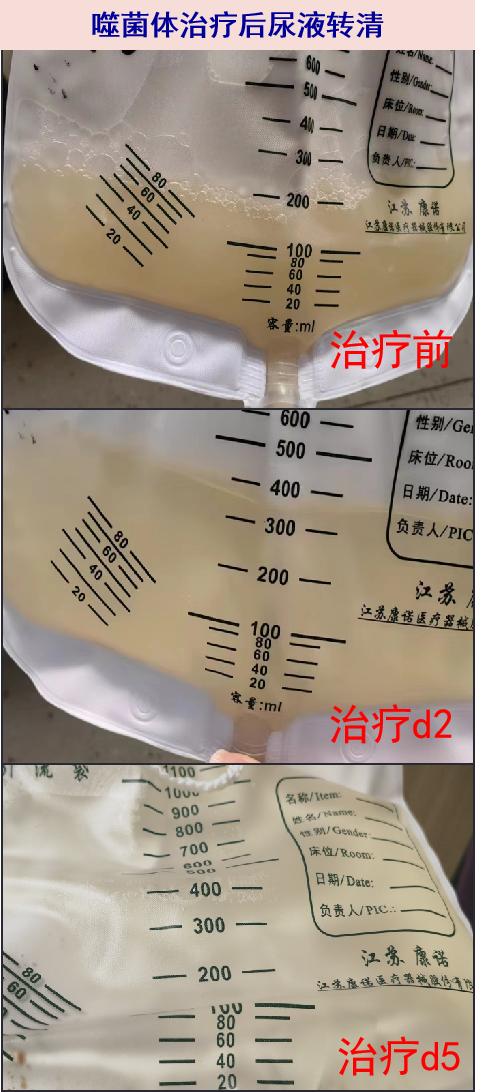
Stay in bed, feel refreshed and calm, lose weight, and muscle atrophy of lower limbs; Breathing sounds in both lungs are thick, and dry and wet rales are not heard; The rhythm of the heart is regular, the abdomen is soft, without tenderness and rebound pain, without mass, without percussion pain in both kidneys, without tenderness at ureter point and rib and waist point, and the lower abdomen does not touch the enlarged bladder. During indwelling catheterization, the urine in the urine collection bag is turbid and more white flocs are deposited. Limbs are not swollen.

[Laboratory examination]

Blood routine: WBC 7.85×10 9/L, N 81.3%, HB 121g/L, PLT 170×10 9/L.

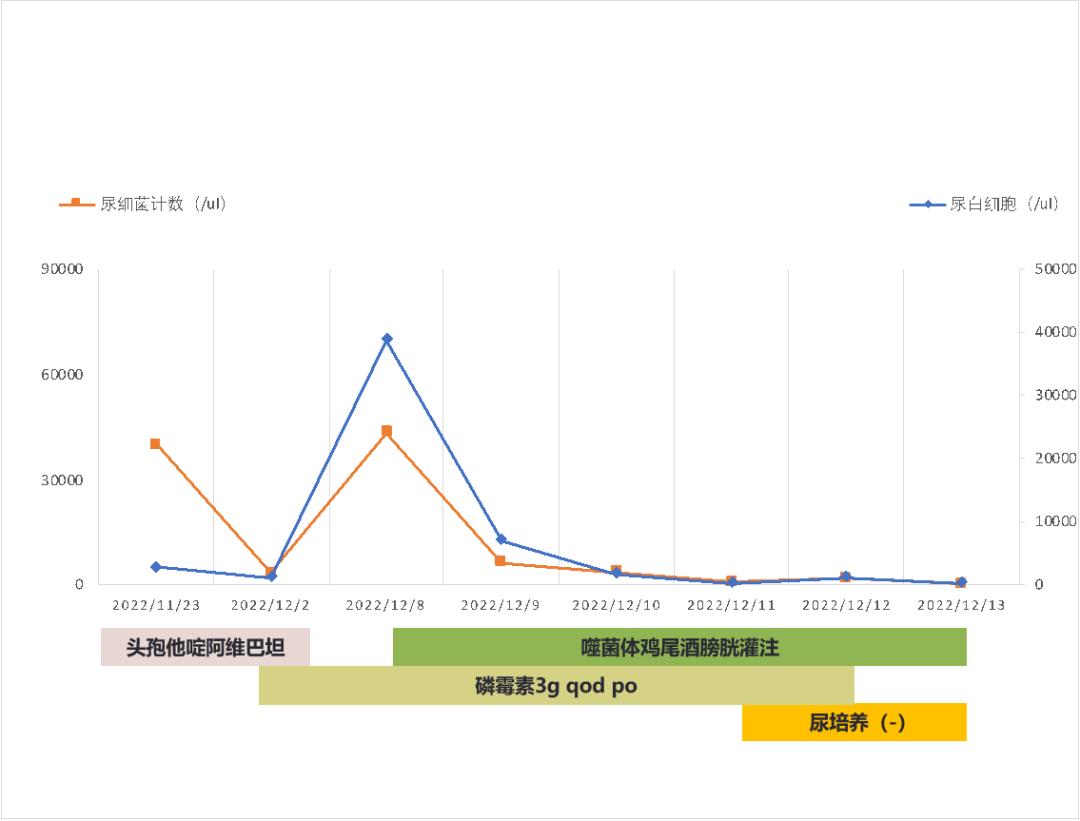
Urine routine: WBC 2775/μ l; RBC 2/μl, bacterial count: 39879/μl, nitrite positive, leukocyte esterase+++.

Inflammation markers: hs-CRP 17.9mg/L, ESR 68mm/H, PCT 0.12ng/mL.

Biochemistry: ALT/AST 23/21U/L, Alb 47g/L, Scr 199μmol/L, eGFR 30ml/min/1.73m2, na/k 140/5.5mmol/l.

Third, clinical analysis

Characteristics of medical history: middle-aged and elderly male, indwelling catheter, with repeated urinary turbidity and abnormal urine routine. Urine culture showed CRKP one month ago, and it improved after ceftazidime-ababactam treatment, but urine turbidity reappeared three days after drug withdrawal, blood inflammatory index increased, urinary leukocyte and bacterial count increased significantly, and the diagnosis of urinary tract infection was clear. The reasons for short-term recurrence after antibacterial drug treatment improved were considered:

Recurrence of CRKP infection: The patient has been indwelling catheter for 2 months, and there may be biofilm formation of catheter and abnormal urinary tract structure, which makes it difficult to completely eliminate the infection and relapse after stopping taking the drug. Therefore, urine culture and drug sensitivity test can be improved.

New infection: the patient has high risk factors of recurrent urinary tract infection, and the pathogen may be different each time. The patient’s previous CRKP infection treatment was effective, and the possibility of new pathogen infection should be considered in the short term, until the urine culture is perfect and clear.

Multiple infections: patients with abnormal urinary tract structure, indwelling catheter and other risk factors can not be removed, so it is necessary to be alert to the possibility of multiple pathogens including fungi combined with infection, repeat the cultivation of urine bacteria, mycoplasma, fungi and mycobacteria, and improve urine mNGS to help clarify the infected pathogens.

Four, further examination, diagnosis and treatment process and treatment response

On November 23, 2022, the middle urine smear was used to find bacteria: moderate amount of G- bacilli, and continued ceftazidime and abamectin 2.5g q12h ivgtt for anti-infection and bladder irrigation.

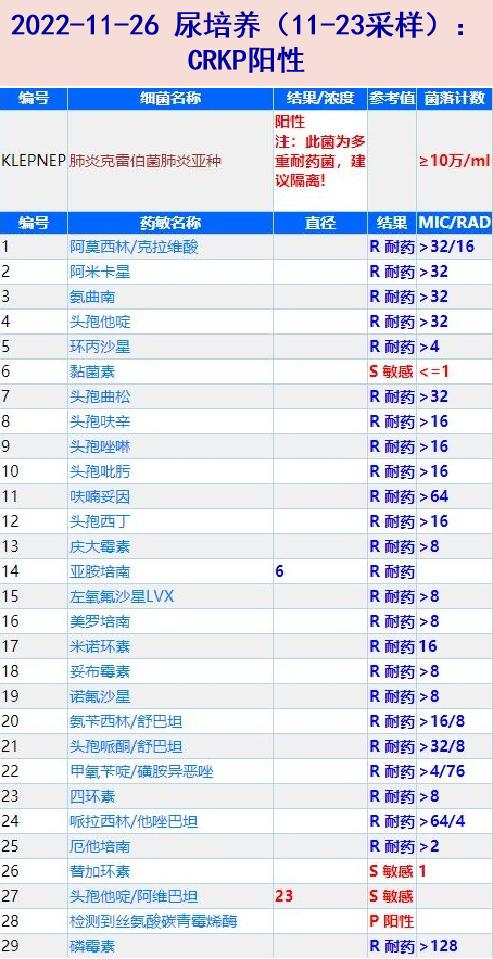
On November 26, 2022, the bacterial drug sensitivity of the middle-stage urine culture (sampling on November 23) was CRKP, ≥ 100,000 /ml, and urine mNGS: a large number of Klebsiella pneumoniae (species strict sequence number: 406,866) was detected.

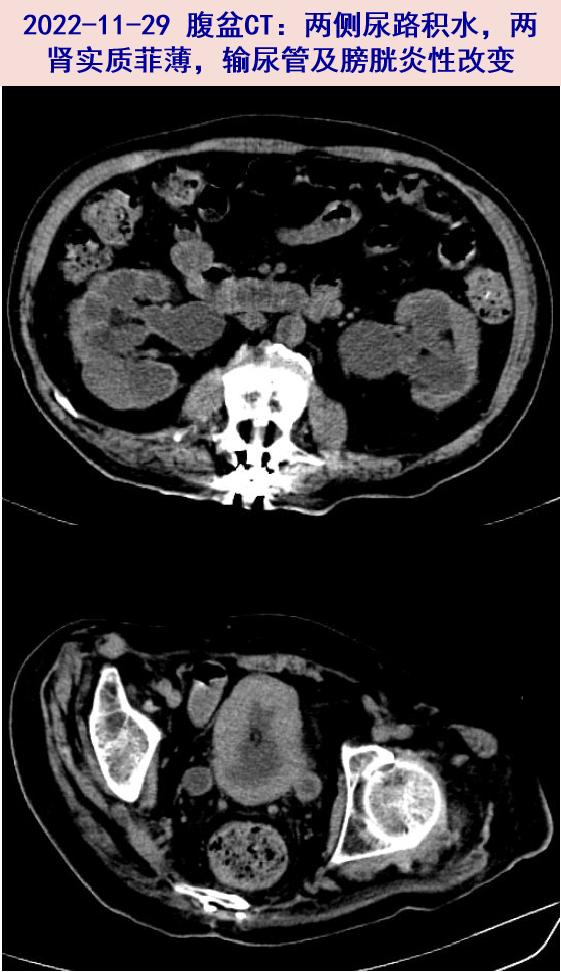
On November 29, 2022, the abdominal and pelvic CT was reexamined: bilateral dilated hydronephrosis accompanied with inflammatory changes of ureter, and the parenchyma of both kidneys was thin, and the inflammatory changes of cystitis might be larger, similar to that of 22-10-20 slices.

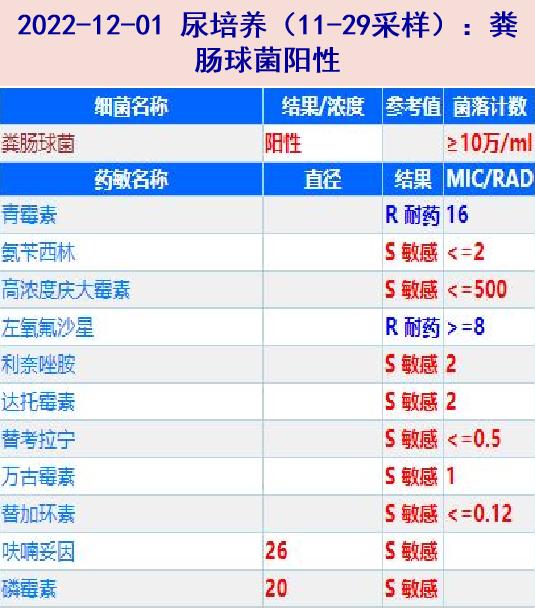
November 30, 2022 (sampling on November 29): Enterococcus faecalis was positive. On December 2, according to the drug sensitivity, fosfomycin 3g qod was added orally, and ceftazidime and abamectin were suspended.

Repeated urine cultures on March, April and June, December, 2022: Enterococcus faecalis was positive and CRKP was negative.

On December 8, 2022, the urine WBC was 38738/μ L, and the bacterial count was 43285/μ L; Urine culture: CRKP positive, Enterococcus faecalis negative.

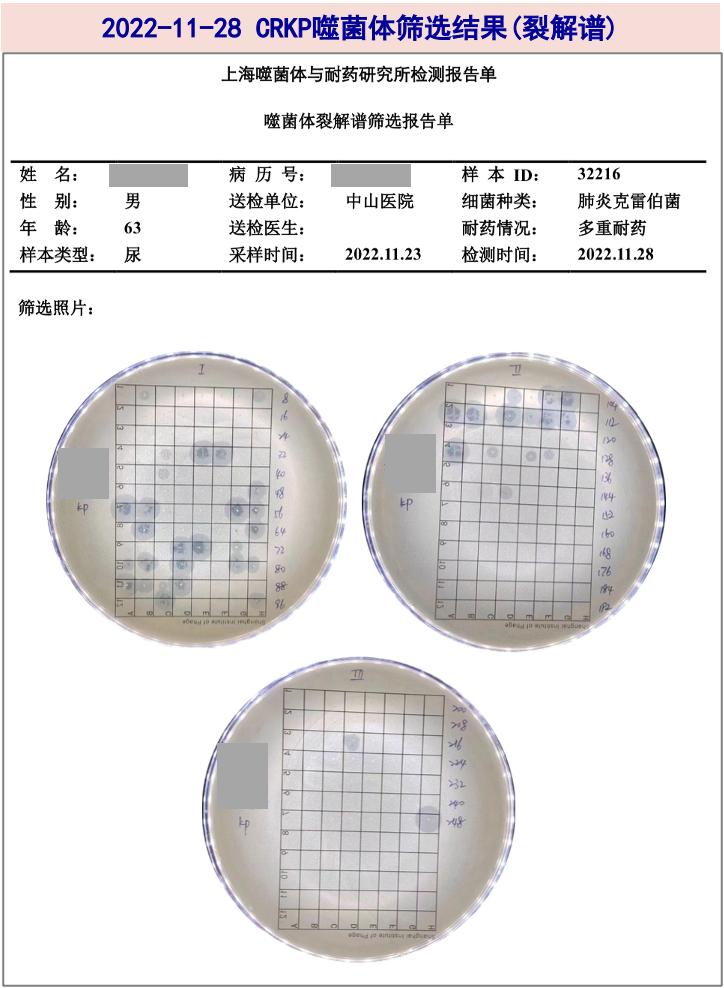
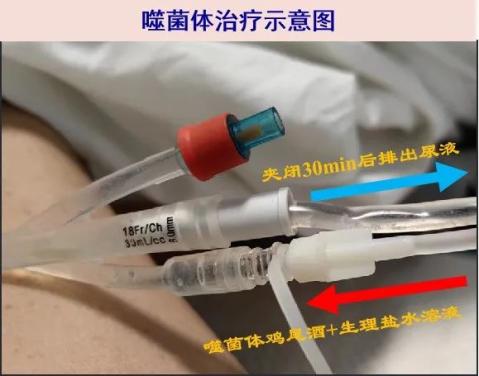
Phage therapy was carried out from the afternoon of December August, 2022: Phage cocktail (composed of 5 strains of Klebsiella pneumoniae phages A103KP172, A106KP176, A121KP192, A49KP106 and A58KP118, 5mL each), injected with 225mL physiological saline (according to the estimated bladder volume), and the total volume was 250mL, and then the catheter was clamped.

Urine routine on the third day of phage treatment on December 11, 2022: white blood cell count: 235/uL, bacterial count: 722/uL;; Urine bacterial culture was negative.

Urine routine on the 5th day of phage therapy on December 13th, 2022: white blood cell count: 279/uL, bacterial count: 92/ul; Urine bacterial culture was negative; Blood WBC 6.35X10⁹/L, N 70%, hs-CRP 0.9mg/L, ESR 26mm/H, and inflammatory index decreased compared with before; Re-examination of urinary color ultrasound showed that bilateral renal pelvis separation and upper ureteral dilatation were better than before (10-20), and the thickness of bladder wall was reduced (12-25mm→13mm).

He was discharged from hospital on December 14, 2022 for follow-up.

V. Final diagnosis and diagnosis basis

Final diagnosis:

Complex urinary tract infection (CRKP, Enterococcus faecalis)

Neurogenic bladder, hydronephrosis and hydroureter (indwelling catheter)

Renal insufficiency

Diagnostic basis:

The patient is a middle-aged and elderly male with neurogenic bladder caused by paraplegia, indwelling catheter, turbid urine with flocs, increased CRP and PCT, significantly increased WBC and bacterial count in urine, repeated CRKP positive in urine culture, positive in enterococcus faecalis, abdominal basin CT: hydronephrosis of renal pelvis and ureter, anti-infection, normal inflammatory markers and urine routine after phage treatment, clear urine and negative urine culture, so complicated urinary tract infection.

The patient suffered from anorexia and dysuria, and the serum creatinine increased obviously. Abdominal CT showed that both kidneys were enlarged, the cortex was thin, and bilateral urinary tract was hydronephrosis. After active treatment such as controlling infection and improving renal function, the serum creatinine decreased, so the diagnosis of renal insufficiency was clear.

Six, experience and experience

Phage is a targeted sterilization virus in nature and a sterilization star in the "pre-antibiotic era". Phage therapy has a history of more than 100 years, but the discovery and application of broad-spectrum antibiotics have gradually marginalized it. With the increasingly serious problem of bacterial drug resistance, phages have once again received attention and become the most promising supplement and alternative therapy for treating superbugs. The clinical application of phage in China is relatively late, but it has developed rapidly in recent years. In 2017, the Shanghai Institute of Phage and Drug Resistance was established, with Professor Hu Bijie as an academic member. Since 2018, the institute has carried out the first clinical trial of phage therapy in China. At present, it has treated nearly 100 patients with drug-resistant bacterial infections from all over the country and accumulated rich clinical experience in phage therapy, which is a leading position in the field of clinical phage therapy in China.

Phage has many advantages, such as host bacteria dependence, targeted specific sterilization, no infection to eukaryotic cells (little influence on normal flora), no influence on bacterial drug resistance, synergy with antibacterial drugs, penetration of biofilm and so on. The cure rate of acute bacterial infection is high, and the therapeutic effect of chronic bacterial infection is no less than that of antibacterial drugs, and the safety of phage treatment is also extremely high. A systematic retrospective study showed that the vast majority of patients who received phage therapy had no or only slight adverse reactions, 86.7% patients’ clinical symptoms improved, and 78.8% patients achieved the eradication of pathogenic bacteria. Our clinical trials also show that more than 70% of patients have achieved good therapeutic effects, and there are no obvious cases of adverse reactions. This patient was repeatedly infected with Klebsiella pneumoniae due to long-term paraplegia, abnormal urinary tract structure, indwelling catheter and other factors. The diagnosis of complicated urinary tract infection was unquestionable, and the choice of antibacterial drugs was limited due to multi-drug resistance and renal insufficiency. Phage therapy is very suitable.

The disadvantages of phage therapy include narrow host spectrum, individualized plan (it is difficult to treat empirically), no unified standard for the best treatment decision, and rapid tolerance. Phage cocktails, combined antibacterial drugs and multiple treatments are usually used in clinic to improve the curative effect. At present, the targeted pathogens of phage therapy in our team mainly include: multi-drug resistant Gram-negative bacteria (Klebsiella pneumoniae, Pseudomonas aeruginosa, Acinetobacter baumannii, Escherichia coli) and Gram-positive bacteria (Staphylococcus aureus, Enterococcus faecalis, Enterococcus faecalis); Covering respiratory system, urinary system, abdominal cavity, bones and joints, skin and soft tissue and other infected sites; Treatment depends on the site of infection, and intravenous application of phage is still being explored. In this case, the patient didn’t have percutaneous nephrostomy because of the little clinical benefit, so he was treated by transurethral bladder perfusion, and the phage could not cover the whole urinary tract evenly. Although the pathogen turned negative in a short period of time and was well tolerated, its long-term curative effect may not be good, and it needs repeated phage treatment.

Phage therapy has huge clinical demand and broad market. In recent years, our team has focused on the clinical application (treatment and prevention and control of nosocomial infection) and basic research of phage therapy, with a view to becoming a powerful weapon to curb drug-resistant bacteria in the future.

references

[1] Uyttebroek S, Chen B, Onsea J, Ruythooren F, Debaveye Y, Devolder D, Spriet I, Depypere M, Wagemans J, Lavigne R, Pirnay JP, Merabishvili M, De Munter P, Peetermans WE, Dupont L, Van Gerven L, Metsemakers WJ. Safety and efficacy of phage therapy in difficult-to-treat infections: a systematic review. Lancet Infect Dis. 2022 Aug; 22(8):e208-e220.

[2] Chegini Z, Khoshbayan A, Taati Moghadam M, Farahani I, Jazireian P, Shariati A. Bacteriophage therapy against Pseudomonas aeruginosa biofilms: a review. Ann Clin Microbiol Antimicrob. 2020 Sep 30; 19(1):45.

[3] Lusiak-Szelachowska M, Weber-Dabrowska B, Gorski A. Bacteriophages and Lysins in Biofilm Control[J]. Virol Sin, 2020,35(2):125-133.

Every Monday night

The Department of Infectious Diseases of Zhongshan Hospital affiliated to Fudan University in Shanghai will be with you!

Photo: Xiaoxiao

Original title: "Detective Case: The Nemesis of Super Bacteria is Coming"

Read the original text

Do you know how fruit ripens?

  This article is reproduced by Yi Heng Nutrition: eb_nutrition.

  We may have the common sense that if ripe bananas are put in green fruits, the fruits will ripen quickly.

  Immature fruits are "green" and generally hard but not sweet. "Green" comes from chlorophyll, "astringent" comes from tannin, while "hard" is mainly the function of pectin, and "not sweet" is because starch has not been converted into sugar.

  one

  How do fruits ripen?

  When it is ripe, plants will produce a substance called ethylene-this substance is "phytohormone". As soon as ethylene is produced, all parts of the fruit begin to join the mature "battle":

  There are enzymes to decompose chlorophyll and new pigments are produced, so green disappears, while red and yellow represent mature colors;

  Some kinases decompose acids and make fruits neutral;

  Amylase hydrolyzes starch into sugar to produce sweetness; The arrival of pectinase decomposes some pectin, which makes the fruit soft;

  There are also some enzymes that decompose certain compounds in fruits and release certain gases, so different fruits have different flavors. …

  The rapid development of science and technology in modern society gives us a more convenient and effective way to store fruits.

  two

  Which methods can effectively extend the storage period of fruits?

  Once the fruit is ripe, even if it is picked, the internal biochemical reaction is still difficult to contain, such as the sugar in the fruit is converted into alcohol and the fruit is further softened … What we see with the naked eye is that the fruit is rotten, and the rotten fruit often has a "wine smell". This process happens very quickly, such as bananas, which only takes a few days.

  When bananas are harvested when they are very raw and placed at the slowest temperature for ethylene production (scientists have found that the temperature is 13℃-14℃), they can be stored for a long time without rotting. If there is a material that can adsorb ethylene in the packaging box or box, it will be more helpful to control the concentration of ethylene lower and greatly extend the storage time.

  We often see high-grade fruits wrapped in paper or foam, which is not only for good-looking or "high-grade". Just as the human body will have a defensive reaction when it is stimulated by the outside world, which will lead to changes in some physiological indexes, the "injured" fruit will also stimulate the secretion of ethylene.

  In the process of transportation, it is inevitable that the fruits jostle with each other. Although it is only a minor injury, it is enough to make them produce more ethylene, accelerate maturity and decay, and the softening of maturity makes them more vulnerable. Good packaging reduces the chance of injury and helps to reduce losses.

  three

  How do we "ripen" fruits at home?

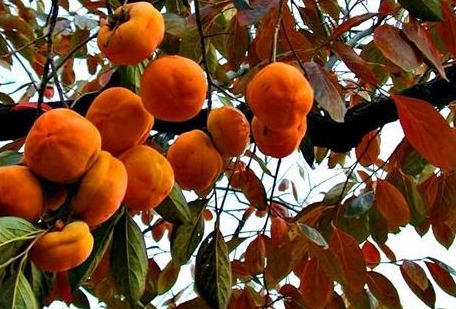
  Generally speaking, bananas, apples, grapes and other fruits are ripened before distribution. However, mangoes, persimmons, kiwis, etc. may be put on the shelves without ripening or ripening.

  If you buy such fruits, the easiest thing is of course to wait patiently for them to "grow old", but we can have a better way. Because apples and bananas can produce a considerable amount of ethylene, putting them together with the fruits to be ripened, whether pears, persimmons, mangoes or kiwis, can play a certain role in ripening.

  Because bananas are easy to go bad, and ethylene is mainly produced by banana peel, you can also eat bananas and put only banana peel.

  In addition, in theory, damaging fruits will promote the release of ethylene. In the folk, there is a practice of inserting straw on persimmons to make them soft. Therefore, it may also help to accelerate the ripening and softening of the fruit by pricking some scars on the irrelevant parts (such as the pedicles) or directly putting the broken fruit on the bag.

  Probably the best choice is to eat first and buy now.

  -THE END-

  How to contribute by running friends:

  Enter the word "contribute" in WeChat official account and you will receive an automatic reply.

  Hot content

  Wechat personal number of running girl who loves sports

  ipb42195

  Please contact for offline running activities and competition execution planning cooperation.

New Maiteng changes course, relying on the new Passat to re-enter the battle car market

  For a long time, competing with the same family has been the most hyped topic in the industry. As long as there is any trouble with one party’s model, the other party’s same-class car will inevitably be involved. And the new generation, which has just been listed and won numerous awards, has once again become the target of major media chase, and various comparisons with B7L are rampant.

  In fact, the B7L has not yet been listed, and various claims at this stage are still at the level of speculation and have not been confirmed by the official. After the listing, the price and configuration details have all been settled, and the market and consumers will naturally give the most fair judgment. But now it is hard not to think of the same dispute with Shanghai Passat before the listing of Maiteng in 2007. However, no matter how the industry predicts and analyzes before, it is ultimately up to the sales volume to speak.

New Maiteng

  The Volkswagen Maiteng went public in July 2007 with a high-profile listing, selling 3,490 units in September, while the Shanghai Volkswagen Passat led the sales of 11,046 units that month, which was three times the sales of Maiteng. This situation has not changed in the following years. Last year, the Passat sold more than 130,000 vehicles, while the Maiteng only sold more than 70,000 vehicles, a difference of nearly double. In contrast, since the launch of the Passat in November 2005, with excellent localization improvement and effective marketing promotion, it has always ranked among the top three in the mid- to high-end car market.

New Maiteng

  Judging from the real reaction of the market, FAW-Volkswagen Maiteng lost in the product and sales network. The Shanghai Volkswagen Passat led the way in response to the actual road conditions and oil conditions in China, and carried out strict debugging and appropriate improvement of important accessories such as chassis, powertrain system, front and rear bumpers, grille, and hood. Not only that, but Shanghai Volkswagen also took into account the special needs of Chinese consumers for interior configuration, BOSCH 68 audio, independent three-screen entertainment system, a full range of leather luxury electronic control seats, dual electronic fans, automatic anti-clip sunroof, Bluetooth mobile phone system, rain sensor, automatic anti-glare rearview mirror, satellite navigation, and PDC, declaring that humanized configuration is no longer just a synonym for Japanese cars.

New Maiteng

  In addition to products, Shanghai Volkswagen’s strong sales and after-sales services network has also become one of the boosters. Compared with FAW-Volkswagen, Maiteng did not have much sales experience before, and Maiteng’s failure reflects the shortcomings of FAW-Volkswagen’s sales network on the other hand. Perhaps after the B7L is listed, FAW-Volkswagen will not be as passive as it was a few years ago, but in terms of experience, it will be difficult to match the Shanghai Volkswagen sales network that has more than 20 years of experience in a few years. The battle between Maiteng and Passat to lead the same door in 2007 has become a thing of the past. After the B7L is listed, the strength and weakness of the new generation of Passat will eventually need to be determined through the market.

Nongfu Spring Vitamin Water is New: How Does a 13-Year-Old Brand Continue to Dialogue with Young People?

Since 2022, the big health trend has continued to be strong, and functional beverages have ushered in a dividend period. Nielsen data shows that in 2022, domestic functional beverage sales reached 46 billion yuan. Among them, nutritional supplements have become an important category driving the growth of the functional beverage market.

Recently, Nongfu Spring’s Vitamin Water has also launched two new flavors after seven years – prune peach flavor and grapefruit compound flavor. From the taste point of view, Vitamin Water uses the popular fruit prunes and fresh grapefruit as the fruity base in recent years, continuing the combination concept of vitamin C and vitamin B.

Industry insiders believe that it is not difficult to see from the two new flavors launched this time that Vitamin Water has been paying attention to the needs and taste trends of young people. In particular, the prune and peach flavor is very likely to lead to a new taste trend, so that near water drinks and functional drinks will be "rolled up" again.

In 2010, Nongfu Spring Power Emperor Vitamin Water was launched. Unlike later products such as charcoal and tea pi, "Vitamin Water" directly expresses the original intention of the product – hoping to help consumers meet their needs anytime and anywhere through Vitamin Water.

From today’s perspective, vitamin water is undoubtedly trendy and practical. More than a decade ago, the concept of big health was not deeply rooted in the hearts of the people, and vitamin water was still a trendy concept. However, consumers still accept and recognize the name. When it comes to "vitamin water", everyone subconsciously knows that it is a beverage under Nongfu Spring.

In 2017, Vitamin Water changed its packaging, and the bright color of the drink was matched with a capsule-like bottle design and a striking letter "V", which was very visual. The packaging style has always been based on the product itself, and the capital letter "V" represents both the product name "Vitamin" and the meaning of "Victory".

At the same time, the product concept of vitamin water has reached a consensus with consumers’ needs. Consumers can clearly know the flavors and formulas represented by different colored beverages at a glance, and quickly find what they need.

Some industry insiders have commented on the uniqueness of vitamin water. At present, functional drinks are no longer exclusive to sports and fitness enthusiasts, and this category is gradually becoming a daily lifestyle drink. And vitamin water, with its outspoken product name, bright and colorful appearance and rich taste, reduces the communication cost between functional supplement drinks and young consumer groups, and realizes personalized expression.

Vitamin Water has been named a "fashion trend" brand character by young consumers, not only because of its unique packaging design, but also because the brand has always maintained a close dialogue with young consumer groups. Since 2017, Vitamin Water has sponsored and supported a number of popular variety shows and music festivals, and has cooperated with popular movies on IP. Vitamin Water’s continuous brand cooperation is not only to take advantage of the opportunity to promote, but also to support shows or cultural products to help them realize their commercial value.

On the other hand, the continuous support of phenomenal cultural products has also made vitamin water the most trendy product under Nongfu Spring, and has also gained a large number of young fans. After 2017, vitamin water has become a super single product in the functional beverage category.

As a drink that has stood with young people since its birth, Vitamin Water not only cares about their preferences but also their needs. In recent years, "smooth intestines" has become the focus of young people’s attention, which is also the original intention of Vitamin Water to launch the first prune-flavored water drink on the market. For the industry, this is very likely to lead to a new taste trend. For consumers, this is another conversation between Vitamin Water and them.

@ Everyone! This conference is closely related to your eye health.

The National Health and Wellness Committee held a regular press conference in Beijing on June 5 to introduce the progress and effectiveness of eye health work in China.

In 1999, the World Health Organization and the International Association for the Prevention of Blindness launched the "Vision 2020" global initiative, with the mission of eliminating avoidable blindness (cataract, trachoma, river blindness, child blindness, low vision and ametropia) on a global scale by 2020, and reversing the trend that avoidable visual injuries may double from 1990 to 2020. China is the first country in the western Pacific to launch the "Vision 2020" action. Since then, the core strategy and objectives of the "Vision 2020" action initiative have been integrated in the formulation of the 11th and 12th Five-Year plans for preventing and treating blindness. At the World Health Assembly in 2013, after the resolution "Universal Eye Health: Global Action Plan 2014-2019" was passed (still a part of the "Vision 2020" action initiative), the country formulated the "Thirteenth Five-Year National Eye Health Plan (2016-2020)" according to the requirements of the new resolution and the overall requirements of building a healthy China and deepening the reform of the medical and health system.

The three core strategies of "Vision 2020" have been fully incorporated into our national defense blind treatment and eye health work: disease control combined with primary health care, human resource development, infrastructure construction and appropriate technology application.

Governments at all levels in China vigorously promote the prevention and treatment of blindness, constantly improve the national, provincial (autonomous regions and municipalities directly under the Central Government) and municipal management systems for prevention and treatment of blindness and the prevention and treatment network of eye diseases in counties, townships and villages, and ensure the accessibility of eye health services at the grassroots level through the construction of the prevention and treatment network. In addition, the work mode of preventing and treating blindness has changed from a single work of preventing and treating blindness to multi-faceted eye health management. At present, more attention is paid to moving forward the gateway and sinking resources, bringing primary eye care into primary health care, bringing ophthalmic diseases into chronic disease management, establishing eye health files, tracking and following up eye care and other long-term mechanisms. The prevention of blindness in China adheres to the government-led, multi-sectoral cooperation and the participation of the whole society. Through the overall planning and policy guidance of the government, the academic groups’ technical advantages, the participation of private hospitals and the active participation of social organizations, a model of eye disease prevention and treatment suitable for China’s national conditions has been formed, providing comprehensive, fair and accessible eye health services for the people.

Cataract is the first blinding eye disease in China.

Cataract is the first blinding eye disease in China. Through all-round long-term efforts, such as developing free cataract treatment project, realizing full coverage of medical insurance and improving the level of ophthalmology service in county-level medical institutions, the number of cataract operations per million people in China has increased from 83 in 1988 to 2205 in 2017, an increase of nearly 27 times. The surgical coverage rate of cataract patients has increased to 62.7%, and the goal that the number of cataract operations per million people in China should reach more than 2,000 by the end of 2020 proposed in the "Thirteenth Five-Year National Eye Health Plan" has been achieved ahead of schedule. In recent years, the state has promulgated a series of policies on promoting the construction and development of medical complexes, promoting the construction of graded diagnosis and treatment system, and comprehensively improving the comprehensive diagnosis and treatment capacity of county-level hospitals. The ophthalmic service capacity of county hospitals in China has been further improved. At present, about 90% of counties in China have ophthalmic medical institutions, and about 90% of them can independently carry out cataract surgery.

Our government actively promotes the early screening and early treatment of childhood blindness.

The proportion of children’s blindness in the total number of blind people is low, but because children are in the early stage of their life cycle, the number of years of disability life lost and the time of disability is long, children’s blindness often brings great burden to families and society. In 2006, the second national sampling survey of disabled people showed that the sampling ratio was 1.93%, the number of children aged 0-6 was 51,328, and there were 193 cases of visual disability, with a visual disability rate of 3.76‰. Over the years, the Chinese government has been actively promoting the early screening and early treatment of blindness in children. Among them, the incidence of retinopathy of prematurity has dropped from 20.3% in the 1990s to 10.8% in 2005, and the blindness rate has dropped significantly. In 2004, after the publication of "Guidelines for the Prevention and Treatment of Oxygen and Retinopathy in Premature Infants", a screening system was basically formed in Beijing, Shanghai, Guangzhou, Shenzhen and other places, which was under the responsibility of an eye center and jointly operated by several neonatal intensive care units. In 2013, in order to improve the quality of children’s health care, and further standardize the contents, methods, processes and assessment of children’s health care services in related fields, the state issued the Notice on Printing and Distributing the Technical Specifications for Children’s Eye and vision care (Wei Ban Fu She Fa [2013] No.26). In 2019, the state issued the "Notice on Doing a Good Job in Eye Care and Vision Examination for Children Aged 0-6", demanding that the establishment and improvement of the residents’ electronic health record information system be accelerated, and the electronic management of the vision health records of children aged 0-6 should be realized as soon as possible.Ensure that the contents related to children’s vision health records in children’s health records of 0-6 years old are completely, accurately and smoothly extracted when children enter school, and handed over to educational institutions in time. In addition, statistical indicators such as the number of children aged 0-6 who have eye care and vision examination, the number of children aged 6 who have vision examination, and the number of children aged 6 who have poor eyesight have been added to the Annual Report on Health Care and Health of Children under Seven. The coverage of eye care and vision examination for children aged 0-6 years and the establishment of electronic files of vision health have been included in the assessment system, and it is required that the annual coverage of eye care and vision examination for children aged 0-6 years will reach over 90% from 2019.

Until the early 1980s, the rehabilitation of low vision was still a blank in China. In 1983, Beijing Tongren Hospital set up the first low vision clinic in China, which filled the gap in the rehabilitation of low vision in China. In 1991, China incorporated the rehabilitation of low vision into the Outline of the Eighth Five-Year Plan for the Disabled in China. Since then, until the Thirteenth Five-Year Plan, the China Disabled Persons’ Federation has made the rehabilitation of low vision one of its key tasks. Through the establishment of the low vision rehabilitation department, training personnel, developing and supplying visual AIDS, and popularizing knowledge, it has trained a large number of low vision rehabilitation professionals and trained hundreds of thousands of parents of children with low vision. According to the National Plan for the Prevention and Treatment of Blindness (2012-2015), all provincial rehabilitation institutions for the disabled have established "low vision rehabilitation centers" to strengthen the service capacity building of low vision rehabilitation centers. Establish the production and supply service network of low-vision AIDS to improve the quality of life of low-vision patients. In 2013, the State issued the Notice on Printing and Distributing Technical Specifications for Children’s Eye and vision care, which clearly stipulated that newborns should be screened for eye diseases regularly after birth, so as to reduce the occurrence of children’s low vision from the source. By 2020, China has initially established a relatively complete service network covering urban and rural areas, and a policy system has been formed in various places to guarantee basic assistive devices services for patients with low vision.The service ability and service status of fitting visual AIDS have been improved, and the adaptation rate of basic assistive devices for disabled people and disabled children with needs has reached over 80%. It can be predicted that under the overall planning of the national health administrative department and the China Disabled Persons’ Federation, through the joint efforts of the whole society, especially professional and technical personnel, China will gradually form a complete and formal evaluation and rehabilitation system to help patients with low vision improve their quality of life and participate in social life.

The number of ophthalmologists in China is estimated to have reached 40 thousand.

The number of ophthalmologists in China was 19,100 in 2003, and now it is estimated that the number has reached 40,000, which is more than twice that of 2003. As early as 2014, there were 1.13 ophthalmologists in every 50,000 people in China, which has exceeded the WHO requirement that there should be one ophthalmologist in every 50,000 people in a well-off country. In 2018, the number of doctors with cataract surgery ability in China was 13,835, 2.33 times that of 2000 (5,939). The number of full-time nurses in ophthalmology has also increased significantly, from 16,100 in 2003 to 50,000. In addition, the proportion of middle and senior ophthalmologists and the ratio of ophthalmologists to doctors and nurses are gradually becoming reasonable. The number of optometrists increased from 1487 in 2006 to 6218 in 2018, a fourfold increase. The number of ophthalmic medical service institutions has increased from more than 4,000 in 2006 to more than 6,000 today, an increase of more than 50%. The number of ophthalmic beds has increased from more than 40,000 in 2000 to more than 130,000 in 2018, a threefold increase.

Trachoma is no longer a public health problem that harms our visual health.

Through the long-term investment and efforts of the China Municipal Government, the patriotic health campaign of the whole society, the implementation of a series of measures such as environmental improvement and the promotion of SAFE strategy, the improvement of economic level and medical level, the state’s investment in rural medical construction and medical insurance, the public health conditions and medical conditions have been greatly improved, and the accessibility of antibiotics for trachoma patients has been greatly improved. In 2014, China achieved the goal of eliminating blinding trachoma proposed by WHO. On May 18th, 2015, it was officially announced at the 68th World Health Assembly: In 2014, China met the requirements of WHO to eradicate blinding trachoma, and eliminated blinding trachoma ahead of schedule. Trachoma is no longer a public health problem that harms our visual health. In 2019, the World Health Organization certified the work of eliminating blinding trachoma in China according to new procedures and standards.

The prevention and treatment of uncorrected ametropia has become an important part of eye health work in China.

屈光不正中的近视是世界范围内发病率最高且年龄跨度最大的眼健康问题,其中高度近视视网膜病变在致盲原因中占相当高的比例,未矫正屈光不正的防治已成为我国眼健康工作的重要内容。2018年下半年,国家卫生健康委员会同教育部、民政部组织开展了2018年全国儿童青少年近视调查工作。2019年4月29日,国家卫生健康委员会举办新闻发布会,介绍2018年儿童青少年近视调查结果。调查结果显示,2018年全国儿童青少年总体近视率为53.6%。其中6岁儿童为14.5%,小学生为36.0%,初中生为71.6%,高中生为81.0%。近年来,党中央、国务院高度重视儿童青少年近视防控工作,近视防控已成为国家战略。2016年至2019年,连续4年将全国“爱眼日”的主题聚焦在儿童青少年的近视防控。为做好近视的防治工作,2018年6月5日,国家卫生健康委员会召开专题新闻发布会,介绍儿童青少年科学防控近视情况,同时发布了《近视防治指南》《弱视诊治指南》和《斜视诊治指南》三部指南。2018年8月28日,习近平总书记再次就儿童青少年近视问题作出重要指示,强调全社会都要行动起来,共同呵护好孩子的眼睛,让他们拥有一个光明的未来。为贯彻落实习近平总书记关于近视问题的重要指示批示精神,切实加强新时代儿童青少年近视防控工作,2018年8月30日,教育部会同国家卫生健康委员会、体育总局、财政部、人力资源社会保障部、市场监督管理总局、国家新闻出版署、广播电视总局八部门制定了《综合防控儿童青少年近视实施方案》(以下简称《实施方案》)。《实施方案》不仅明确了家庭、学校、医疗卫生机构、学生、政府相关部门应采取的防控措施,还明确了八个部门防控近视的职责和任务。2019年10月,国家卫生健康委员会疾控局组织制定并印发了《儿童青少年近视防控适宜技术指南》,指导科学规范开展防控工作,提高防控技术能力。全国防盲技术指导组组织编写的《儿童青少年近视防治科普100问》,对近视防治中的疑问和误区,给出了科学解释。目前,在全社会已营造了儿童青少年近视防控“政府主导、部门配合、专家指导、学校教育、家庭关注”的良好氛围。

With the great attention of the party and the government, the ophthalmology medical and health undertakings have developed rapidly through various joint efforts. The results of two epidemiological surveys of blindness and visual impairment in nine provinces and cities in 2006 and 2014 showed that the prevalence of blindness and moderate and severe visual impairment in China decreased by 37.8% and 15.4% respectively according to the assessment of daily life vision. According to the best corrected vision, it decreased by 37.6% and 27.2%. It is estimated that only among people over 50 years old, the number of blind people in China has decreased by more than 700 thousand, and the number of patients with severe visual impairment has decreased by more than 500 thousand.

At present, the biggest challenge for eye health is the increasing population and aging.

With the promotion of national defense blindness, the improvement of national economic level, the change of people’s lifestyle and the change of population structure in China, the spectrum of blinding eye diseases has changed greatly. The main blinding eye diseases have changed from infectious eye diseases of trachoma in the past to metabolic and age-related non-infectious eye diseases, mainly cataract, keratopathy, retinal diseases, ametropia, glaucoma and amblyopia. The biggest challenge facing China’s eye health at present is the increase of population, especially the increasing aging. By 2019, China’s population over 60 years old has reached 253.88 million, accounting for 18.1% of the country’s total population, and the elderly population is still increasing. The increase in the number of elderly people means that the number of patients with age-related eye diseases is increasing, including ametropia and cataract, which are the main burden of eye diseases in China. In addition, the common blinding eye diseases, including glaucoma, macular degeneration and other fundus diseases, are also age-related eye diseases, and the prevalence rate in the elderly population is much higher than that in young people. These are still the challenges faced by eye health work in China and the focus of eye health work in the future.

除了推动我国自身眼健康事业的发展,我国在防盲与眼健康领域加强国际交流与合作,践行我国全球卫生战略。全国防盲技术指导组整合全国防盲资源,启动的集流行病学调查、专业培训、医疗和健康教育为一体的“光明行”项目中,除了我国老少边困及高原地区的4万余名白内障患者受益,该项目还从2008年开始,跨出国门,在亚太地区的朝鲜、柬埔寨、蒙古国、老挝、越南、孟加拉国、巴基斯坦等国家及地区开展公益活动。2010年“光明行”走入非洲,在津巴布韦、马拉维、赞比亚和莫桑比克等开展白内障复明活动。2015年12月习近平主席在中非合作论坛约翰内斯堡峰会开幕式上致辞时将“中非公共卫生合作计划”作为未来三年同非方重点实施的“十大合作计划”之一予以提出。2015年国家卫生健康委出台的《推进“一带一路”卫生交流合作三年实施方案(2015-2017)》中也明确将开展“光明行”眼科义诊活动列为卫生发展援助的重要内容之一。至今,中国已在40多个国家开展“光明行”活动,其中十多个国家是多次活动,帮助数万名白内障患者重见光明。

"Guangmingxing" not only provides free cataract surgery for local people, but also donates advanced ophthalmic surgery equipment and instruments and medicines. It also provides students with vision screening, donates glasses, and carries out complicated fundus diseases and glaucoma surgery. Academic lectures and clinical teaching have been held in the local area, and an "Ophthalmology Cooperation Center" has been established with relevant countries to conduct long-distance consultation on eye diseases by using the Internet and expand various forms of technical exchanges and cooperation. At the same time, we should pay attention to personnel training and organize local doctors to go to China for training. China’s internationalization of public welfare for the prevention of blindness has brought light to the people of the aided countries, fully demonstrated China’s actions and contributions in building a community of human destiny and countries along the Belt and Road, and also became an important force in China’s diplomacy, further promoted international exchanges and cooperation in health, and enhanced China’s voice and influence in regional and global multilateral health governance mechanisms.

With the change of lifestyle, social development and aging population, the spectrum of ophthalmic diseases in China has undergone major changes. According to the National Health China 2030 Program, we should integrate eye health into general health, formulate our eye health plan, and formulate the 14 th and 15 th eye health plan according to our national conditions. Change the unbalanced regional allocation of ophthalmic resources in China, promote balanced development, shift the treatment of blinding eye diseases to disease prevention and control, pay special attention to the sinking of major blinding eye disease prevention and control technologies, strengthen the construction of primary ophthalmology and ophthalmology teams, and continue to improve the construction of China’s three-level blindness prevention system. It is necessary to continue to promote the training and promotion of appropriate technologies that can prevent and control blinding eye diseases, and move the gateway forward to reduce the incidence and increase the control effect. When the technology is mature, we should promote the screening of eye diseases based on artificial intelligence technology to achieve early detection and early treatment of blinding eye diseases, and try our best to bring the screening of common blinding eye diseases into the chronic disease management system under the premise of China’s economic conditions.

Myopia of children and adolescents has become the main cause of vision damage in China.

Myopia of children and adolescents has become the main cause of vision damage in China. We should resolutely implement the national implementation plan on myopia prevention and control to achieve the goal of myopia prevention and control of children and adolescents in China. For the evaluation of cataract surgery, we should not only consider the quantity, but also evaluate the quality, pay attention to the important index of cataract surgery coverage, formulate the prevention and control index of cataract surgery according to the national conditions, and moderately relax the indications according to the level of social and economic development. In addition, in terms of commonly used ophthalmic equipment and technology, we should vigorously promote localization and completely change the current situation of relying heavily on imported equipment and technology. Breakthroughs have been made in common technology and neck sticking technology. Through scientific popularization, we will enhance people’s understanding of the basic knowledge of eye disease prevention and control, improve the awareness rate, enhance people’s awareness of blinding eye disease prevention and control, and incorporate popular science work into the national eye health plan and the national health science popularization plan. Due to the extension of life expectancy, the increase of the total population, the acceleration of the aging process of the population, and the continuous improvement of people’s demand for eye health, the prevention and treatment of eye diseases in China is still an arduous task, and the primary eye care work still needs to be strengthened, and the concept of healthy living of like eyes needs to be further strengthened.

Amazing time, about those nicknames of autumn.

Autumn is rich in Gao Shuang’s autumn sky, and there are many beautiful nicknames. For example, July in the lunar calendar is called first autumn, Meng autumn, early autumn, early autumn, new autumn and last autumn, August in the lunar calendar is called positive autumn, mid-autumn, Mid-autumn and Guiqiu, and September in the lunar calendar is called late autumn, seasonal autumn, cool autumn and late autumn. In addition, there are many nicknames for autumn. Have you heard of the following?

1.jpg

Jiuqiu

The whole autumn is about 90 days, divided into 90 days, so autumn is called nine autumn. Tang Du Fu’s poem "Moon" said: "Considering Heng E’s widowhood, it is cold and resistant to nine autumn."

2.jpg

Jintian

According to the ancient five elements, autumn belongs to gold, so it is called golden sky or golden autumn. Tang Wang Wei has a poem: "Jin Tian Jing Xi Li San Guang, Tong Ting Shu Xi Yan Ba Huang." There is a poem by Chen Ziang in Tang Dynasty: "The Jin Tianfang is cold, and the Millennium is special."

3.jpg

Jinsu

In ancient times, the five elements said that autumn was golden, but gold was white, so autumn was called "golden element". Xie Lingyun of the Southern Dynasty stated in the poem "The county of Yongming three years began to make its capital on July 16th": "The period of technical post was stopped, and the reason was changed into golden element". Shan Li later explained this: "Gold element, autumn also. Autumn is gold and white, so it is called gold. "

4.jpg

Suqiu

According to the ancient five elements, autumn belongs to gold and its color is white, so autumn is also called plain autumn. Tang Du Fu’s Autumn Prosperity (VI): "Qujiangtou at the mouth of Qutang Gorge, Wan Lifeng smoke meets Suqiu." Song Ouyang Xiu’s poem "Clear Business Complaints" says: "The river is full of worries, and it is getting late in autumn."

5.jpg

Shangqiu

In ancient times, the five tones (Gong Shang Jiao Zheng Yu) cooperated with the four seasons, and Shang was autumn. The sound of business is piercing, corresponding to the cold air in autumn, so it is called business autumn. Jin Panni’s "An Pomegranate Fu": "Shang and Qiu gave gas, and collected China and gathered reality." Lu-Ji’s "Xing Si Fu": "Shang and Qiu Su’s hair festival, mysterious clouds and shadows." Besides Shang Qiu, there are other nicknames such as Shang Xu, Shang Jie and Bai Shang.

6.jpg

Xilu

Refers to autumn. "Sui Shu Tian Wen Zhi" records: "The sun travels eastward along the ecliptic, once a day and once a night, 365 days are strange and Sunday. (Japan) The trip to the east is called spring, the trip to the south is called summer, the trip to the west is called autumn, and the trip to the north is called winter. "

8.jpg

Bai Zang

According to the five-color theory, autumn is white with five colors, and autumn is the harvest and storage season, so autumn is called Bai Zang. Tang Weizheng’s "Five Suburbs Movement Bai Di Shang Yin": "Bai Zang should celebrate the festival, the sky is high and the air is clear, and the old years are both rich, and the harvest is ordinary." In the poem "Xuanpu Lecture" by Xiao Tong of the Southern Dynasties, he said: "Bai Zang is already dying, and Xuan Ying is in order."

9.jpg

Jinqiu

It refers to the cold autumn, hence the name because of the strong autumn wind. In the Wei and Jin Dynasties Lu Ji’s Wen Fu, there is a saying: "Sad leaves fall in the autumn, and joy is in the spring."

Taiqiu

Autumn is also called "Tai Qiu" because it is the season of harvest, rich in things and auspicious. There is a saying in the "Wen Fu" by Lu Ji, a writer in the west of Shanxi Province: "Sad leaves fall in the autumn, and I like the softness in the spring." In Guanzi Rolling Abroad, there is a record that autumn day is called "Tai Qiu": "Tai Qiu, when people order it, it is made."

10.jpg

Shuangjie

It is also known as the "cool festival" because of the crisp weather in autumn. Xie Muzhao, a poet in the Southern Dynasties, wrote in One of the Sixteen Poems of His Royal Highness "On a high autumn night in Fang Jing, the gods live in a peaceful and deep place … The deep feelings are in harmony with each other, and words are sung to promote virtue". Sometimes "Shuang Jie" refers to the Double Ninth Festival. For example, there is a saying in Tang Dezong Li Shi’s poem "Double Ninth Festival": "Shuang Jie is in the Double Ninth Festival, and things are new and rainy."

11.jpg

clear autumn air

It can also be called "high autumn" and "frosty day". This is because there are white and cold autumn frost and clear autumn sky in autumn.

Don’t say I don’t know, I’m shocked! It turns out that there are so many nice nicknames in autumn. Which one surprised you?

Source: Xinhuanet, China Meteorological Network

[Disclaimer] The texts, pictures, audio and video that are not marked with "Source: Upstream News-chongqing morning post" or "Upstream News LOGO" on the upstream news client are all reposted. If the reposted manuscript involves copyright issues, please contact the upstream news.

The correct way to open celebrity endorsements Ceng Li, Viya and Chen Jianbin were well received.


1905 movie network news A few days ago, I specially wore a Xinjiang cotton when attending the event. In the interview, the host asked Ceng Li what he thought of the title of 200-year-old beauty in Chinese opera. Ceng Li said with high emotional intelligence: "It’s not as good as Xinjiang cotton in my hand." I also posted a photo of myself wearing Xinjiang cotton on Weibo, with the caption "I love my China cotton and I support Xinjiang cotton". Who wouldn’t love such a beautiful woman with a high emotional intelligence and a good outlook on the third year? Give Ceng Li a compliment.


In addition to Ceng Li, there are many star artists who express their support for Xinjiang cotton in their own way: directly removing the products of the enterprises involved, and going to Xinjiang to bring goods to Xinjiang cotton live broadcast; Teachers write poems to support Xinjiang cotton. However, because of Xinjiang cotton, a series of events with high attention and influence have been triggered. The most striking thing is that many brand spokespersons have issued statements of understanding with these brands that don’t respect our country.


"The attitude of artists in China actually represents our own attitude. In the face of this choice of right and wrong, each of us in China is actually with the country, and in this matter, we can see that artists, as far as our artists are concerned, have actually promoted the sustained attention of ordinary people to this matter, so it has formed a joint force of the whole country." Dr Diao Jinuo, a civil scholar from Tsinghua University who was a guest in "The Movie", also spoke highly of the decisiveness of these famous artists.


These domineering star artists really make us feel relieved and happy, but when the incident is fermented, we can’t help but worry that these star artists will be asked for high liquidated damages by these brands. Therefore, we invited the director of Beijing Taoan Law Firm, the chief legal adviser of the Actor Brokers Committee of China Performance Industry Association, and lawyer Wang Jun to answer our questions.


"If the brand violates China’s national interests, sovereign interests and political stance, the artist can of course put forward a unilateral right to terminate the contract based on the terms of the contract without any liability for compensation, and may even pursue the corresponding legal responsibility from the brand based on this clause."


I hope that our artists will not suffer losses because of the evil deeds of these brands, and I hope that our artists will keep their eyes open when endorsing brands in the future, and be careful, careful and careful in the terms of the contract! As an artist, we also need to protect our own vital interests, and we must be more careful when conducting commercial endorsement activities. Today’s Film Review also invited Mr. Zhang Zhipeng, Secretary General of the Advertising Spokesperson Committee of China Advertising Association, to give some suggestions.


"I think when they do business endorsements in the future, they should do something before, during and after signing the contract. For example, before signing the contract, they should conduct a background check on the other company, including the management of the company. The other is that after we sign the contract, we should not take it lightly and maintain smooth communication with these advertisers and enterprises."


As the saying goes, it’s necessary to have the heart to harm others and the heart to prevent others, especially in the choice of brand endorsement. We must be cautious, because celebrity artists choose endorsement not for products, but for the concept and style of this brand. Recently, Yang Li has experienced the time of endorsement rollover, so it is very important for a celebrity artist to choose a brand image that suits him.


On the other hand, we have to nip in the bud. I don’t know which brands will make these artists trample on thunder for no reason in the future. To this end, Professor Zhang also proposed a solution. "Can we be a red and black list of international brands, and the country or an association will come forward to do a relatively authoritative survey to help our artists plan?"


In any case, star artists should be supported and respected for the sake of national interests and national dignity. In the long run, even if they pay some price, it is worthwhile. We should not only support the stars to cancel their contracts morally, but also take actions to support them. If enterprises can invite these stars to speak for them, it is also the best response to these enterprises that insult China. For example, in the near future, we saw the official announcement of cooperation with Li Ning.


"I think this is a very good phenomenon. First of all, the strength and influence of our country’s own brands and national brands have been greatly improved. Second, the brand concept just mentioned by the professor is very critical. When we cooperate, it is not only a business behavior, but also a process of common growth."


Star artists, as a public group with extensive attention in society, will have a great influence on social values, so they should always focus on major issues and stand firm in order to set a correct example. "Traffic is a kind of social responsibility. If you want to wear a crown, you must bear its weight. Since there is traffic, you must bear the weight of this society, so we are also looking forward to it. Our stars can really shoulder their social responsibilities."