A new wave of "interest rate cuts" was launched, this time by city rural commercial banks and rural banks, with a reduction rate as high as 65 basis points.

China Business Daily (Reporter Wang Tongxu)A new wave of "interest rate cuts" by commercial banks started, and this time, city rural commercial banks and village banks "carried the banner".
Recently, a number of small and medium-sized banks intensively announced the adjustment of deposit listing interest rates, lowering the listing interest rates of 1-year, 3-year and 5-year deposits. Among them, the adjustment of medium and long-term time deposits is relatively large, and the listing interest rate of 5-year deposits is lowered by 65 basis points at the highest.
"This adjustment is mainly a follow-up to the interest rate adjustment actions of state-owned banks at the end of last year, and it also reflects the pressure faced by small and medium-sized banks and the low net interest margin of the banking industry. Lowering the deposit interest rate will help ease the pressure on banks’ interest margin, and also stabilize the net interest margin to enhance the sustainability of supporting the real economy. " Bai Wenxi, chief economist of IPG China, told China Business Daily.
At the rural inclusive finance comprehensive service point of Guilin Bank in Shangzheng Village, Tanluo Town, Xixiangtang District, Nanning, the bank staff are activating the social security card for farmers. (Image courtesy of CNSPHOTO)
The downward adjustment is as high as 65 basis points.
According to the reporter’s incomplete statistics, up to now, 10 small and medium-sized banks, including Guilin Bank, Yushu Rural Commercial Bank, Lingui Rural Commercial Bank, Huadian Rural Commercial Bank, Guangxi Fengshan Rural Commercial Bank, Jiaohe Rural Commercial Bank, Lingchuan Shentong Village Bank, Fusui Shentong Village Bank, Qinnan National Village Bank of Qinzhou City and Nanning Xingning Changjiang Village Bank, have lowered their deposit listing interest rates, and the adjustment time is generally from February 21, 2024.
Generally speaking, the adjustment mainly involves demand deposits, time deposits, certificates of deposit and other deposit products, and the adjustment of medium and long-term time deposits is even greater.
Among them, two rural banks, Lingchuan Shentong Village Bank and Fusui Shentong Village Bank, made the same adjustment to the listing interest rate of lump-sum deposits, and the five-year interest rate was adjusted from 3.85% to 3.2%, with a downward adjustment of 65 basis points; The 2-year interest rate was adjusted from 2.75% to 2.55%, down by 20 basis points; The one-year interest rate remains unchanged at 2.15%.
Guilin Bank also adjusted the 5-year deposit rate to 3.2%. It is worth noting that this is the second time that the bank lowered the listing interest rate of deposit products during the year. On January 21st, the bank adjusted the five-year deposit interest rate from 3.9% to 3.35%. Together with this adjustment, the five-year deposit interest rate of the bank has dropped by 70 basis points since the beginning of the year.
For the reasons for this adjustment, a number of banks said in the announcement that it is to further promote the marketization of interest rates.
On the whole, the adjusted 3-year and 5-year time deposit rates of these small and medium-sized banks are still mostly above 3%, which is higher than that of state-owned banks.
"Lowering the deposit interest rate is to stabilize growth and adjust the structure." Yu Xi, co-founder of Communication Planet App, told reporters that in the current economic situation, lowering the deposit interest rate will help reduce the financing cost of the real economy, promote investment and consumption, and thus stimulate economic growth. At the same time, this is also part of the central bank’s prudent monetary policy, which supports the development of the real economy by adjusting the interest rate transmission mechanism, optimizing the allocation of resources.
Respond to the pressure of narrowing the net interest margin
On the evening of February 21st, the Table of Main Supervision Indicators of Commercial Banks in 2023 (Quarterly) issued by the State Financial Supervision Administration showed that by the end of 2023, the net interest margin of important indicators of commercial banks had fallen to 1.69%, which was below the 1.7% mark for the first time.
On February 22nd, CICC released a research report saying that the narrowing of net interest margin of commercial banks in 2023 was mainly due to the adjustment of existing mortgage interest rate, repricing of loans and the downward trend of new loan interest rate.
The "unprecedented" reduction of LPR by 25 basis points over five years will put the banking industry under pressure to further tighten the net interest margin.
Lou Feipeng, a researcher at China Postal Savings Bank, believes that this round of reduction of deposit interest rates by small and medium-sized banks will help reduce debt costs, hedge the pressure of further narrowing the net interest margin caused by the reduction of LPR for more than five years, and enhance the sustainability of banks’ support for the real economy.
However, it is worth noting that in the context of the general decline in bank deposit interest rates, some banks have raised deposit interest rates against the trend.
Recently, many banks, including Xinxiang Rural Commercial Bank, Suining Rural Commercial Bank and Huojia Rural Commercial Bank, announced that they would raise the deposit interest rate.
As for the reason for raising the deposit interest rate, Xinxiang Rural Commercial Bank said in the announcement that it is a means to give back to customers at a "good start".
Wu Zewei, a researcher at Xingtu Financial Research Institute, said in an interview that small and medium-sized banks are in a weak position in saving money, and the debt side is under pressure. In addition, in order to sprint, the deposit interest rate is raised to attract depositors’ deposits.
Zhang Xuefeng, a financial commentator, told reporters that the impact of bank interest rate cuts on the economy and financial system needs to be carefully evaluated. The interest rate cut may stimulate the demand for loans, but it will also pose a challenge to the profitability and stability of banks. Especially for small and medium-sized banks, interest rate cuts may further squeeze their profit margins and increase risks. Therefore, the regulatory authorities need to closely monitor the impact of interest rate cuts on bank risks and take necessary measures to ensure the stable operation of the financial system.
There is still room for lowering the deposit interest rate.
In order to alleviate the downward pressure on net interest margin, commercial banks have lowered deposit interest rates several times.
According to the research report of Guojin Securities, the reduction of deposit interest rate is expected to ease the pressure on banks’ net interest margin and enhance the enthusiasm of finance for supporting the real economy.
The report on the implementation of China’s monetary policy in the fourth quarter of 2023 issued by the central bank also proposes to continuously deepen the interest rate marketization reform, further improve the formation mechanism of quoted interest rate in the loan market, give play to the role of market-oriented adjustment mechanism of deposit interest rate, and promote the steady decline of comprehensive social financing costs.
Looking into the future, people in the industry generally believe that there is still room for the deposit interest rate to fall.
Bai Wenxi said that the central bank recently announced that the LPR for more than five years will be lowered by 25 basis points, which is expected to further guide banks to lower deposit interest rates and promote the orderly decline of LPR, thus reducing the financing cost of the real economy.
Dong Ximiao, chief researcher of Zhaolian, believes that the Central Economic Work Conference calls for "promoting the steady and declining cost of comprehensive social financing". Under this background, banks will still reduce costs on the capital side, and the deposit interest rate is more likely to fall. Small and medium-sized banks should abandon the "speed complex" and "scale complex" and rationally expand their deposit business according to their own assets and liabilities. They should not only maintain the appropriate growth of deposit business, but also keep the debt cost within a reasonable range.
"For depositors, when the deposit interest rate drops, the savings income decreases, which may reduce the willingness to save and increase the demand for consumption and investment. In the long run, this adjustment will help optimize the allocation of resources, improve the efficiency of capital use, and be conducive to the sustainable development of the economy. " Said by the sunrise.
Reporting/feedback

Nancai Dialogue | Zheng Zhiming, Academician of Chinese Academy of Sciences: Blockchain will change the pattern of digital finance in the future

08:53

From the "Fourteenth Five-Year Plan", we can see that the digital economy has been increased in many places, and the blockchain technology has been upgraded to the development strategy of the next generation information technology. So, what is a blockchain? At present, it is in a critical period of innovation and reform of the financial system. How will the blockchain change the pattern of digital finance in the future? What are the application explorations of blockchain in the digital financial market? Zheng Zhiming, an academician of China Academy of Sciences, first put forward the model of blockchain distributed trusted system in China, and put forward the ternary optimization and balance strategy of blockchain.

On July 30th, Academician Zheng Zhiming was invited to attend the 7th Risk Management and Financial Statistics Forum held in Nansha, Guangzhou and delivered a keynote speech. During the forum, he accepted an exclusive interview with Southern Finance.

(Zheng Zhiming, Academician of China Academy of Sciences and Professor of Guangzhou University)

Blockchain will reconstruct the financial credit system

Southern Finance and Economics: The first thing I want to ask is whether it is possible.Tell us about some applications of blockchain in digital finance with a vivid and simple example.

Brian cheng:The simplest thing is digital finance. All financial transactions must consider the risk issue, because the core of finance, its first element is risk, so how to control risk, blockchain will do this. It is to establish a credible platform to exclude the risks in the process of financial digital finance and financial transactions, and its core point lies in this place. Because it is a trust system, the role of blockchain makes the transaction process simpler, more direct, simpler and clearer. It is a technology that uses the traditional trust model in the past to establish a rapid trust relationship through technology.

You see, if there is a problem with that financial system, the risks are not well controlled or there is a problem, so I think blockchain technology can greatly improve the efficiency of financial transactions. This efficiency is established on the basis of ensuring its credibility, so improving the efficiency is what we talked about at the beginning, that is, what GDP is equal to, that is, M times V, that V is the circulation speed, and that M is the money invested, so with the blockchain technology, the circulation speed (V) will be greatly improved, so that is to say, I will change the economic model and then improve the whole GDP.

Blockchain helps the transformation from "owner mode" to "property mode"

Southern Finance and Economics: Was it like the Bank of China, which had to go through this procedure, and then ICBC had to go through the procedure, which might be some repetitive work?

Brian cheng:Here’s the thing. For example, the Agricultural Bank of China made its own system, while the Bank of China made its own system. This system is all internal, and the system it made will not be used by the Agricultural Bank in the future, so it is not only a duplication of work in the past, but also a repetition of the platform it built, which is tantamount to isolated islands.

So in fact, no matter the development of information technology in the future, it is very important to change the concept. The past concept was called "owner mode", right? The "owner mode" means that I am the owner and I am the platform, so if you come to me to use my things, who will come to you to use them? Therefore, to change this mode, it is necessary to make it a "property mode". I have done a very good job in the property, and I have served all of you well. You are all on my platform, and then you can get your past stock, which can be consolidated and added new increments. Everyone is satisfied.

Therefore, it is such a thing with low cost and high efficiency. For the blockchain, it should be jointly supported to make a high-level platform that everyone builds and shares, which is the so-called "property platform". Only in this way can we do this well.

It is extremely urgent to establish China’s national blockchain basic platform.

Southern Finance: It really seems that especially in the first two years, the concept of blockchain was particularly popular and well known, but at the same time, it seems that the threshold is relatively low, as if there are many (fake) financial products, and even the phenomenon of swindling with it actually exists. What do you think of this problem?

Brian cheng:Because that blockchain technology is actually a very difficult technology, why does it suddenly feel very simple? Because now the United States has launched several open source chains, such as Bitcoin, after this open source chain comes out, information people are most afraid of not having open source. After it has an open source chain, frankly speaking, it has been trained for two or three months. After a code transformation and a white paper, it will set up a company, so it will become a very low threshold thing. But in fact, it is difficult and difficult to really do this technology well, frankly speaking, there are few people in China.

Because blockchain is an expansive technology, as long as you use mine, you have to abide by my rules, which is equivalent to turning this obvious and unreasonable treaty in the past into a hidden one, that is, an obvious and hidden treaty. Then, for our country, we also want to develop into a strong country. If we want to develop a strong country, we must make full use of blockchain technology, and then we can push out our country’s influence.

Doing a blockchain is a scene and a chain, which is basically a life cycle of several years. It can’t last long, because with the development of blockchain technology, after this so-called "property platform" is built for it, it can adapt to multi-business scenarios. If the "property platform" is built, you think that the blockchain like it will soon be destroyed.

It is necessary to speed up the improvement of the original innovation capability of blockchain.

Southern Finance & Economics: At present, all our industrial chains have encountered a problem, so they all set up their own set of intelligent management systems. On this basis, why can’t it get through? What is its difficulty?

Brian cheng:A business scenario, if it is so slow and produced little by little, will have no digital economy and digital finance. Digital financial data requires fast, and business scenario transactions should be realized quickly. It is safe for you to use Bitcoin, and its network is fine, but it is not alive. Although it has many advantages, it is not the best blockchain in the world.

Then, after sacrificing security, after you throw away the security and credibility, is it still called blockchain? Therefore, it is easy for many people who want to do blockchain, so its threshold is very low. But how to prove how high the security level of this system is, few people in China can do this.

How does blockchain promote the development of digital finance industry in Guangdong?

Southern Finance: How does the blockchain promote the development of the entire digital finance industry in Guangdong?

Brian cheng:I think compared with other places, Guangdong’s economic development is more open, more flexible, more pragmatic, and its policies are wider. Moreover, Guangdong, Hong Kong and Macao have traditions, and I think it will definitely take the lead in digital finance in the future. Therefore, I hope that our technology can first serve the rapid development of digital finance in Guangdong and make it a good platform. Second, we should learn from its reform, and understand the whole reform idea of learning from it. Then adjust the technical characteristics of the whole technology platform to suit the development of digital finance in Guangdong.

Academician Zheng Zhiming emphasized that "trust" is the core connotation of blockchain, "trustworthiness" and "intelligence" are its core characteristics, and blockchain is the only way for the development of digital economy. From the multiple perspectives of demand side, market application, underlying technology and social structure, blockchain has a wide range of applications and a promising future.

Reporter: Lai Xi Huang Haiqing

Editor: Wang Minling, Peng Shuai (Internship) and Cui Jiali (Internship)

Shooting: Zhao Zhihui, Xu Zhixiang, Xie Xiangwen

Poster: He Haoming

New Media Coordinator: Ding Qingyun Zeng Tingfang Ding Haili Huang Daxun

Producer: Yang Haitao

Coordinator: Cao Jun.

Produced by: Southern Finance All Media Group

(Editor: Wang Minling)

Reporting/feedback

The US defense budget for fiscal year 2024 may significantly increase expenditure on weapons procurement and R&D.

  Bloomberg news on March 8, US President Biden will present a budget on Thursday local time. It is reported that 170 billion US dollars of defense expenditure is used for weapons procurement and 145 billion US dollars for research and development, both of which have set the highest records in recent years, respectively, which is 8 billion US dollars more than the appropriation of Congress this fiscal year and nearly 5 billion US dollars. According to a US official, the budget of the US Department of Defense will exceed $835 billion for the fiscal year 2024 starting from October 1, which is higher than the allocation of $816 billion approved by Congress for this fiscal year.

  It is reported that the budget will list $13.5 billion for purchasing, continuously developing and upgrading Lockheed Martin’s F-35 fighter. It is reported that the Pentagon will apply for 83 F-35 fighters for the Air Force, Navy and Marine Corps, including 48 for the Air Force and 35 for the Navy and Marine Corps. The US government applied for 61 aircraft last year. Congress added 19 aircraft to the final expenditure law, making a total of 80 aircraft.

  Biden will travel to Philadelphia, Pennsylvania on March 9, local time, and release the budget for fiscal year 2024. According to a statement issued by the White House, Biden will deliver a speech introducing his investment plan in the United States, proposing to continue to reduce family costs, protect and strengthen social security and medical insurance, and reduce the deficit. It is reported that the main highlights of the fiscal year 2024 budget include a commitment to cut the government deficit by 2 trillion US dollars within 10 years and extend the duration of the Medicare program for at least 20 years.

The Ministry of Education makes every effort to do a good job in the investigation and rectification of teaching materials for primary and secondary schools.

  Cctv newsAccording to the website of the Ministry of Education, the Ministry of Education attaches great importance to the illustration of the primary school mathematics textbook of People’s Education Publishing House, and makes a comprehensive investigation and rectification of the illustrations and contents of the national primary and secondary school textbooks and extracurricular reading materials to ensure the correct political direction and value orientation, carry forward the excellent Chinese culture, and conform to the aesthetic habits of the public.

  After the investigation and rectification work started, the Ministry of Education organized nearly 350 experts from the Expert Committee of the State Textbook Committee to conduct a comprehensive review of 359 sets of 2,487 national curriculum textbooks used in primary and secondary schools. The provincial education administrative departments set up special classes for investigation and rectification, organized special forces to conduct a comprehensive review of local curriculum textbooks for primary and secondary schools and teaching AIDS recommended by provincial education administrative departments, and conducted a comprehensive investigation of extracurricular reading materials entering primary and secondary schools. At the same time, ordinary colleges and vocational colleges proofread the teaching materials used in schools, and publishing units conduct a comprehensive self-examination of all published teaching materials and extracurricular reading materials. On the basis of comprehensive self-examination, the Ministry of Education and provincial education administrative departments also conducted key spot checks. For the problems found, we have timely guided and urged the writing and publishing units to seriously complete the revision. At present, teaching materials and teaching AIDS have been printed and distributed. Since late July, the Office of the State Council Education Steering Committee has carried out special supervision on the investigation and rectification work, covering 31 provinces (autonomous regions and municipalities) and Xinjiang Production and Construction Corps, and comprehensively urged and inspected the implementation and effectiveness of various investigation and rectification tasks.

  In addition, in view of the problem of teaching materials reflected by the society through special mailboxes, the Ministry of Education has established a 24-hour disposal mechanism, in which mail is checked in time by special personnel, classified and registered one by one, and ledger management is implemented. As of August 21st, a total of 1,780 emails reflecting the problems of teaching materials were received, and special forces were organized to analyze and judge the emails, which were classified and fed back to relevant publishing units and responsible departments for research and handling. Improving the quality of teaching materials is a process of continuous improvement. In the next step, the Ministry of Education will further broaden channels, listen to opinions and suggestions from front-line teachers, students and parents, improve the daily revision mechanism, and constantly improve and perfect teaching materials. All sectors of the society are welcome to continue to make comments and suggestions at any time through the fast response channel of textbook problems (e-mail: jcwt@moe.edu.cn).

Artificial intelligence is an opportunity and a challenge. Experts suggest that supervision should be strengthened from all aspects.

CCTV News:As an important part of Cyber Security Publicity Week, the 2023 Cyber Security Expo is being held in Fuzhou. The reporter noted that how to better develop the artificial intelligence industry attracted the attention of the participants. Many experts believe that although generative artificial intelligence can greatly facilitate and improve human life style, it also poses a new challenge to network security and needs to strengthen supervision from all aspects.

Experts pointed out that any technology has two sides, and there are a series of security risks hidden behind generative artificial intelligence, which poses new challenges to national security, social security, network security and data security.

In terms of security, experts pointed out that excluding human intervention, the security problem of artificial intelligence itself is also obvious.

China computer federation (CCF) Computer Security Professional Committee Member Degree:First, at the source, the data may be poisoned and polluted, so the original training data may have problems. Second, when training, there may be a big data discrimination algorithm in it, and it may not be a fair algorithm, which will lead to problems in the results. Thirdly, there will be a feedback mechanism in the final output stage, and the feedback mechanism may inject some malicious data or samples, which will also lead to the deviation of the answers obtained by this model.

So, how to deal with the hidden dangers of artificial intelligence? Experts said that this requires joint efforts from the supervision, practitioners and enterprises.

Li Xinliang, Expert of Guangdong Digital Government Network and Data Security Emergency Response Expert Group:In view of the security risks that AI may bring, I personally feel that it is necessary to speed up relevant legislation at the national level and formulate relevant industry standards as soon as possible. In addition, for AI practitioners, it is necessary to strengthen the corresponding training so that they can carry out it at the level of national laws and regulations when using AI technology. From the enterprise level, we must fully consider the compliance of collecting citizen information, and at the same time, we must strengthen the relevant actions of data protection in the transmission and storage of these collected data.

The price reduction of Mercedes-Benz GLE coupe in Suzhou is coming, and the reserve price 641,800! Today’s great discount

At Autohome Suzhou Promotion Channel, we bring you exciting news! Currently, a high-profile promotion is underway, and consumers in Suzhou are fortunate to enjoy this grand car purchase benefit. The maximum discount is an amazing 202,000 yuan, and the starting price is as low as 641,800 yuan. This undoubtedly provides an excellent opportunity for car fans who are interested in buying this luxury coupe. To seize this rare opportunity, click "Chatti Car Price" in the quotation form immediately and let professional consultants help you get higher discounts and realize your driving dream.

苏州地区奔驰GLE轿跑降价来袭,底价64.18万!今日钜惠

The Mercedes-Benz GLE coupe expresses luxury sports with its unique design language. The front face is exquisitely designed and sharp, with a large chrome-plated air intake grille integrated with LED headlights, showing the perfect combination of power and elegance. The body lines are smooth and dynamic, highlighting the sporty characteristics of the coupe. The overall style is atmospheric without losing a modern sense, and the carefully crafted details reflect the luxury and quality of the Mercedes-Benz brand.

苏州地区奔驰GLE轿跑降价来袭,底价64.18万!今日钜惠

Mercedes-Benz GLE coupe with its elegant side lines outline the perfect combination of luxury and dynamic. The body size is 4941mm*2018mm*1716mm, the wheelbase reaches 2935mm, showing a spacious interior space and excellent driving stability. In terms of tire specifications, 275/50 R20 wide tires are used at the front and rear, and the wheel design created by Seiko not only strengthens the visual impact of the vehicle, but also provides excellent grip performance and driving smoothness.

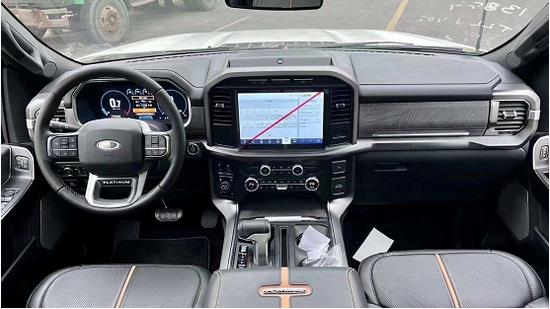
The interior design of the Mercedes-Benz GLE coupe shows a sense of luxury and technology. In the spacious compartment, the steering wheel is made of fine-grained leather, providing manual and electric adjustment functions, which is convenient for drivers to adjust according to their personal preferences. The 12.3-inch central control screen stands on the dashboard, displaying clear information and easy operation. It integrates practical functions such as multimedia, navigation, phone and air conditioning, and supports automatic speech recognition to make driving easier.

The seats are made of imitation leather, which is comfortable to sit on and supports multi-directional adjustment, including front and rear, backrest, height and waist support. The main and passenger seats provide heating and ventilation functions, and the driver’s seat also has power seat memory function. The rear seats support proportional reclining, providing passengers with flexible loading space to meet diverse needs. Overall, the interior design of the Mercedes-Benz GLE coupe combines luxury and practicality, creating an elegant and comfortable interior environment for passengers.

苏州地区奔驰GLE轿跑降价来袭,底价64.18万!今日钜惠

The Mercedes-Benz GLE Coupe is equipped with a 2.0T turbocharged engine with a maximum power of 190 kilowatts and a peak torque of 400 Nm. This power unit provides a strong output of 258 horsepower to the vehicle, and with a 9-speed automatic transmission, it ensures a smooth and efficient driving experience.

Summarizing the full text, the Mercedes-Benz GLE Coupe, as a high-profile luxury SUV, has always won the favor of consumers with its excellent performance, exquisite craftsmanship and luxurious configuration. Today, in order to give back the love of the majority of car fans, Mercedes-Benz has launched a special price reduction promotion. This not only brings real car purchase discounts to consumers, but also provides the best time to buy a car. Seize this opportunity, you will have the distinguished experience brought by the Mercedes-Benz GLE Coupe, drive it in every corner of the city, and feel the perfect combination of luxury and performance. Take action now and let the Mercedes-Benz GLE Coupe become your driving partner in life and start an unforgettable driving journey together.

What’s the key? What is a key?

The key is the activation code, which generally refers to the digital key of various network products. The key is used to verify and enable a function. Among the conventional activation codes, it is used for online game novice card encryption, online game internal test activation code and open network product invitation code. Universal digital key, the main concept, refers to the digital key of activation code, which has the characteristics of circulation, extensibility and initiative, and can be extended as an invitation code for various products or enterprise network publicity activities.

The Academic Advisory Committee of China Institute of History was established, with Dai Yi, an expert in Qing history, as the director.

The China Institute of History of China Academy of Social Sciences, which was officially unveiled in January this year, has now set up an academic advisory committee, and 41 committee members from the national history circle have officially made public appearances.

In the 19th edition of People’s Daily published on September 24th, it was announced that "according to the establishment plan approved by the central authorities, the China Institute of History selected 41 experts and scholars from the national history circle to set up an academic advisory committee. Members of the Academic Advisory Committee of China Institute of History are now announced. "

According to the announcement, the director of the Academic Advisory Committee of China Institute of History is Dai Yi, director of the National Compilation Committee of Qing History and a first-class post professor at Renmin University of China.

According to public information, Dai Yi, male, born in September, 1926, is a native of Changshu, Jiangsu Province. His academic expertise is the modern history of China and the history of Qing Dynasty, and his representative works include Modern History of China. At present, Dai Yi is honorary director of the Institute of Qing History of China Renmin University, librarian of central research institute of culture and history, and curator of Beijing Literature and History Research Museum.

Dai Yi was admitted to Shanghai Jiaotong University in 1944. Two years later, he dropped out and transferred to Peking University History Department, where he studied under Hu Shi, Zheng Tianting, Zhu Guangqian, Xu Deheng, Xiang Da and Deng Guangming. In 1948, under the arrangement of the Party organization, Dai Yi left Peking University for the Liberated Area, entered North China University in the Liberated Area, and then stayed there to teach, initially engaged in the study of China’s revolutionary history and modern history.

In 1955, Dai Yi was promoted to associate professor, served as the academic secretary of Wu Yuzhang, then president of China Renmin University, and later served as the editorial board of China History Series edited by Wu Han. During the Cultural Revolution, Dai Yi was shocked and sent to Jiangxi’s May 7th cadre school for labor reform, and returned to Beijing in 1972.

Dai Yi devoted his life to the compilation of Qing history. In 1978, with the approval of the Ministry of Education, the Qing History Research Institute was formally established on the basis of the former Qing History Research Group. Dai Yi was in charge of the practical work, and for the purpose of compiling the Qing history, the academic research and personnel training of the Qing history were carried out in an all-round way. In 2002, the compilation plan of Qing history was approved by the state, and Dai Yi, who was over 70 years old, once again went into battle and became the director of the editorial board.

According to official website of Renmin University of China, "In the past ten years, under the overall framework of compiling the history of the Qing Dynasty as the main body and sorting out the documents and archives of the Qing Dynasty as the two wings, not only the main project of the history of the Qing Dynasty has been carried out smoothly, but also billions of words of archives and documents have been sorted out, and efforts have been made to save these cultural relics."

The Academic Advisory Committee of China Institute of History also set up two deputy directors, namely Jin Chongji, an expert on the history of the Communist Party of China and the modern history of China, and Wang Wei, an archaeologist.

According to the official resume, Jin Chongji, male, born in December 1930, Shanghainese, former executive deputy director and researcher of the Central Committee of the Communist Party of China Literature Research Office, whose academic expertise is the history of the Communist Party of China and the modern history of China, and his representative works include The Outline of China in the Twentieth Century. Wang Wei, male, born in May, 1954, is an adult in Shandong Province. He is a member of the Chinese Academy of Social Sciences, director of the Department of History, and a researcher at the Institute of Archaeology, China Institute of History. His academic expertise is in the study of the origin of Chinese civilization, archaeology from prehistoric times to Xia, Shang and Zhou dynasties, and archaeological research on ancient cultural exchanges in East Asia. His representative works include "Seeing the evil Matai country and the Japanese regime from China".

The remaining 38 members of the Academic Advisory Committee of China Institute of History announced in the announcement are:

Pei yu, male, born in May 1944, is from Fushan, Shandong. Researcher, Institute of World History, China Institute of History. Academic expertise is historical theory and history of historiography. His representative works include The History of Marxist Historiography (Editor-in-Chief).

Ma Min, male, born in June 1955, is from Fushun, Sichuan. Director and Professor, China Institute of Modern History, Huazhong Normal University. Academic expertise is the economic and social history of China, the history of exposition and the history of cultural exchange between China and the West. His representative works include between officials and businessmen: modern gentry and businessmen in social upheaval.

Ma Dazheng, male, born in August 1938, is from Shanghai. Researcher, China Frontier Research Institute, China Institute of History. His academic expertise is the history of China territory. His representative works include A Brief History of China’s Frontier (Editor-in-Chief) and so on.

Wang Xianming, male, born in February 1957, is from Changzhi, Shanxi. Professor, School of History, Nankai University. Academic expertise is the modern history and social history of China. His representative works include squire in the changing times-squire and the change of rural social structure (1901-1945) and so on.

Deng Xiaonan, female, born in June 1950, is from Linyi, Shandong. Professor, History Department, Peking University. Academic expertise is the history of Song Dynasty and the history of bureaucracy. Representative works include "The Law of Ancestors-A Brief Introduction to Politics in the Early Northern Song Dynasty" and so on.

Shi Jinbo, male, born in March 1940, is from Gaobeidian, Hebei. Member of Chinese Academy of Social Sciences, director of Xixia Cultural Research Center of China Academy of Social Sciences, and researcher of Institute of Ethnology and Anthropology of China Academy of Social Sciences. His academic expertise is China’s ethnic history, Xixia literature and history, and China’s ancient ethnic literature. His representative works include Research on Xixia Economic Documents, etc.

Feng Shi, male, born in October 1958, is from Beijing. Member of Chinese Academy of Social Sciences, researcher of Archaeology Institute of China Institute of History. Academic expertise is ancient philology, astronomy and archaeology, pre-Qin history, historical philology, and the history of ancient thought. His representative works include Astronomy and Archaeology in China.

Liu Beicheng, male, born in August 1949, is from Beijing. Professor, History Department, Tsinghua University. Academic expertise is modern world history, western thought history and historical theory. Representative works include "Portrait of Foucault’s Thought" and so on.

Liu Qingzhu, male, born in August 1943, is from Nanle, Henan. Member of Chinese Academy of Social Sciences, researcher of Archaeology Institute of China Institute of History. His academic expertise includes archaeology of ancient capitals in China, archaeology of ancient imperial tombs and archaeology of Han and Tang Dynasties. Representative works include "The Ancient Capital Asked" and so on.

Li Jie, male, born in November 1954, is from Kunming, Yunnan. Researcher, Development Research Institute, Yunnan University. Academic expertise is historical theory. His representative works include Research on Early Marxist Historical Thought.

Li Jie, male, born in February 1955, is from Pingyin, Shandong. Former president and researcher of Qiushi magazine. His academic expertise includes the history of the Communist Party of China, the history of People’s Republic of China (PRC), Mao Zedong’s life and thoughts, Socialism with Chinese characteristics’s theoretical system and the China of Marxism. His representative works include Mao Zedong’s Historical Contribution to New China.

Li Boqian, male, born in February 1937, is from Zhengzhou, Henan. Professor, Peking University Institute of Archaeology and Culture. Academic expertise is archaeology in China. His representative works include The Origin of Civilization and Collection of Three Generations of Archaeology.

Yang Gongle, male, born in April 1962, is from Zhuji, Zhejiang. Dean and Professor, School of History, Beijing Normal University. Academic expertise is the comparison of Chinese and foreign ancient history, ancient Roman history, etc. His representative works include A Probe into the Early Silk Road and so on.

Yang Guozhen, male, born in March 1940, is from Longyan, Fujian. Professor, History Department, Xiamen University. Academic expertise is social and economic history and marine history of China. His representative works include Research on Land Contract Documents in Ming and Qing Dynasties.

Wu Enyuan, male, born in April 1948, is from Chongqing. Researcher, Russian Institute of Eastern Europe and Central Asia, China Academy of Social Sciences. Academic expertise is world history, Russian history and the history of international communist movement. His representative works include The History of the Soviet Union.

He Yimin, male, was born in June 1953 in Chengdu, Sichuan. Professor, School of History and Culture, Sichuan University. His academic expertise includes China city history, China modern history and regional cultural history. His representative works include General History of China City.

Sha Jiansun, male, born in February 1934, is from Yixing, Jiangsu. Former deputy director and professor of the Party History Research Office of the CPC Central Committee. His academic expertise is the history of the Communist Party of China and the modern history of China. His representative works include The Historical Road of China in the Twentieth Century —— Comments on Some Social Thoughts, etc.

Zhang Shujun, male, born in October 1957, is from Laiwu, Shandong. Former member (deputy minister level) and researcher of the Central Committee of the Communist Party of China Institute of Party History and Literature. Academic expertise is the history of the Communist Party of China. His representative works include The Great Turning Point-A Record of the Third Plenary Session of the Eleventh Central Committee of the Communist Party of China.

Zhang Haipeng, male, born in May 1939, is from Hanchuan, Hubei. Member of Chinese Academy of Social Sciences, researcher of Institute of Modern History, China Institute of History. Academic expertise is the modern history of China. His representative works include A Concise Reader of Modern History of China (co-author).

Chen Qingying, male, born in October 1941, is from Taishan, Guangdong. Researcher, China Tibetology Research Center. Academic expertise is Tibetan history books. His representative works include Eight Sibas, the Imperial Teacher of Yuan Dynasty, etc.

Chen Zuwu, male, born in October 1943, is from Guiyang, Guizhou. Member of the Chinese Academy of Social Sciences, researcher of the Institute of Ancient History, China Institute of History. Academic expertise is the ancient academic history of China. His representative works include History of Learning Cases in China.

Chen Jin, male, born in October 1958, is from Jianyang, Sichuan. Former member (deputy minister level) and researcher of the Central Committee of the Communist Party of China Institute of Party History and Literature. His academic expertise is Mao Zedong and the history of the CPC. His representative works include Mao Zedong’s Cultural Character and so on.

Chen Qianping, male, born in February 1955, is from Yangzhou, Jiangsu. Chairman and Professor, Academic Committee, Research Center for the History of the Republic of China, Nanjing University. Academic expertise is the history of the Republic of China. Representative works include "Negotiations between China, Britain and Xizang before and after the Anti-Japanese War (1935-1947)" and so on.

Miao Pusheng, male, born in November 1948, is from chiping, Shandong. Researcher, Academy of Social Sciences, Xinjiang Uygur Autonomous Region. Academic expertise is national history and local history of Xinjiang. Representative works include Outline of Xinjiang History (co-editor) and so on.

Lin Wenxun, male, born in March 1966, is from Qujing, Yunnan. Party secretary and professor of Yunnan University. Academic expertise includes Chinese economic history, China rural social history and Chinese frontier studies. His representative works include Outline of Social Change in Tang and Song Dynasties.

Zhou Weizhou, male, born in February 1940, Kaiping, Guangdong. Professor, China Western Frontier Research Institute, Shaanxi Normal University. His academic expertise is the national history of China. His representative works include "A Study of Ethnic Relations in the Middle Northwest of China" and so on.

Zheng Shiqu, male, born in August 1946, is from Fuzhou, Fujian. Professor, School of History, Beijing Normal University. Academic expertise is China’s modern history, modern ideological and cultural history. His representative works include "A Study on the Cultural Thought of the quintessence School in the Late Qing Dynasty" and so on.

Hu Dekun, male, born in March 1946, is from Suizhou, Hubei. Chairman, chief expert and professor of China Institute of Border and Ocean Studies, Wuhan University. Academic expertise is the history of World War II, the history of borders and oceans. His representative works include China and World Studies during the World Anti-Fascist War (Editor-in-Chief).

Hou Jianxin, male, born in Tianjin in October 1950. Deputy Director of Academic Committee of Tianjin Normal University, Dean and Professor of European Civilization Research Institute. Academic expertise is world history. His representative works include Western Europe and China in the Period of Social Transformation.

Geng Yunzhi, male, born in December 1938, is from Haicheng, Liaoning. Member of Chinese Academy of Social Sciences, researcher of Institute of Modern History, China Institute of History. His academic expertise is in the history of modern thought, culture and politics in China. His representative works include Introduction to the Study of Cultural Transformation in Modern China: Cultural Transformation and so on.

Xu Lan, female, born in November 1947, is from Beijing. Director and Professor, Center for International Relations Studies, School of History, Capital Normal University. Academic expertise is world history, modern world history and the history of international relations. His representative works include Britain and the Sino-Japanese War (1931-1941).

Gao Xing, male, born in February 1962, is from Kuandian Manchu Autonomous County, Liaoning Province. Director and researcher of Zhoukoudian International Paleoanthropology Research Center of China Academy of Sciences, and director of Paleolithic Professional Committee of China Archaeological Society. Academic expertise is prehistoric archaeology, human origin and evolution. His representative works include Shuidonggou: Archaeological Excavation and Research Report from 2003 to 2007, etc.

Ge Jianxiong, male, born in December 1945, is from Shaoxing, Zhejiang. Professor, China Institute of Historical Geography, Fudan University. Academic expertise is historical geography, population history, immigration history and cultural history. His representative works include History of Chinese Immigrants (editor-in-chief, author of the first and second volumes).

Jiao Nanfeng, male, born in January 1954, is from Yijun, Shaanxi. Researcher, Shaanxi Institute of Archaeology. His academic expertise is archaeology in Qin and Han Dynasties and the study of the ancient mausoleum system in China. His representative works include The Mausoleum of Emperor Han Jingdi and so on.

Xiong Yuezhi, male, born in December 1949, is from Huaiyin, Jiangsu. Researcher, Shanghai Academy of Social Sciences. Academic expertise is the modern history of China. His representative works include "The Spread of Western Learning to the East and the Society in the Late Qing Dynasty".

Wei Jian, male, born in December 1955, is from Hohhot, Inner Mongolia. Professor and Director of Northern Institute of Ethnic Archaeology, Renmin University of China. Academic expertise for the northern ethnic archaeology, Mongolian archaeology. His representative works include On the Capital of the Yuan Dynasty.

Wei Cuncheng, male, born in October 1945, is from Pingxiang, Hebei. Professor, School of Archaeology, Jilin University. His academic expertise is Koguryo’s archaeology and history in Bohai Sea, and archaeology in the Three Kingdoms, Jin, Southern and Northern Dynasties, Sui and Tang Dynasties. His representative works include Archaeology of Bohai Sea.

Qu Lindong, male, born in December 1937, is from Feidong, Anhui. Professor, School of History, Beijing Normal University. Academic expertise is historical theory and the history of Chinese historiography. His representative works include Collected Works of Qu Lindong.

Report card for the first anniversary of Beijing’s medical reform: 12 million primary patients increased.

What is the effect of medical reform for one year? On April 20, Beijing released the "medical reform report card": 210 million outpatient and emergency visits were completed, and 3.9 million discharged patients were treated in an orderly manner; There was a net increase of more than 12 million person-times in primary medical treatment; The average length of stay in tertiary hospitals decreased by 0.7 days … … "The overall situation is stable and orderly, with positive changes, in line with expectations and good response." Lei Haichao, Party Secretary and Director of the Municipal Health Planning Commission, gave comments.

Outpatient and emergency volume

Third-level hospitals reduced the number of primary hospitals increased.

Hierarchical pricing of medical service fees, differentiated medical insurance reimbursement policies and the construction of medical associations have greatly promoted graded diagnosis and treatment.

Over the past year since the reform, the number of outpatient and emergency consultations in tertiary hospitals has decreased by 11.9% compared with the previous year, while the number of outpatient and emergency consultations in secondary hospitals has remained basically the same. The cumulative number of outpatient and emergency consultations in primary hospitals and primary health care institutions has reached nearly 80 million, a net increase of more than 12 million over the previous year, with an increase of 16.1%. The number of consultations in some community health service institutions has increased by about 25% to 30%. Some common diseases have been gradually diverted to grass-roots institutions, which has reversed the situation that the amount of diagnosis and treatment at grass-roots level has declined or wandered for more than a decade, and the overcrowding of large hospitals has been alleviated.

The number of emergency visits by the deputy director and chief physician of the hospital decreased by 9.7% and 25.5% respectively, making it more rational for patients to choose experts to see doctors, alleviating the difficulty of seeing experts, and the limited resources of experts and famous doctors can better serve critically ill patients and prolong the communication time between doctors and patients.

While outpatients and emergency patients are diverted to grass-roots institutions, inpatient medical services are concentrated in tertiary hospitals. Over the past year since the reform, the number of discharges from tertiary hospitals has reached 3.2 million, an increase of 2.7%; The average length of stay was 8.6 days, a decrease of 0.7 days compared with the previous year, and the advantages of hospitalization service in tertiary hospitals were more obvious.

Medical expenses

Save more than 6 billion yuan a year.

The new compensation mechanism of medical institutions has begun to play an effective role. The old compensation mechanism that public medical institutions rely on drug income no longer exists.

The newly established medical service fee can replace the original registration fee, medical treatment fee and drug bonus income in the fourth week after the reform is initiated. When the total income of medical institutions is basically stable, the structure is optimized and the gold content is improved. Compared with before the reform, the disposable income of medical institutions is generally in a good trend, and the new compensation mechanism effectively supports the smooth operation of medical institutions.

Over the past year, the increase of medical expenses has declined. The city’s medical expenses only increased by about 5%, which is the lowest year since 2000. Medical institutions have saved more than 6 billion yuan in medical expenses. The total amount of drugs purchased in sunshine was 62.4 billion yuan, saving 5.51 billion yuan in drug expenses. Only one measure of drugs purchased in sunshine reduced the overall drug price by 8.8%. The proportion of drugs in secondary and tertiary hospitals in the city decreased by 9 percentage points.

Medical insurance assistance

Reduce personal burden by nearly 60 million yuan

The city will include all 435 medical services that meet the requirements in the scope of medical insurance reimbursement; Open up the difference in the scope of reimbursement of medical insurance drugs between community hospitals and large hospitals. Targeted implementation of the reform method of paying the hospitalization medical expenses of mental patients according to the fixed bed day, reducing the burden of special people, and the personal burden of urban and rural medical insurance patients is generally stable. Taking the basic medical insurance for urban workers as an example, as of April 7 this year, the medical insurance fund has increased its special expenditure by 2.28 billion yuan and reduced its personal burden by nearly 60 million yuan.

People in need have also received effective assistance. The proportion of outpatient assistance and hospitalization assistance for social assistance objects was adjusted from 70% to 80%, the annual ceiling line of outpatient assistance was adjusted from 4,000 yuan to 6,000 yuan, and the annual ceiling line of hospitalization assistance was adjusted from 40,000 yuan to 60,000 yuan; The proportion of major disease relief was adjusted from 75% to 85%, and the annual relief ceiling line was adjusted from 80,000 yuan to 120,000 yuan. The per capita burden of social assistance objects such as outpatient service, hospitalization and major disease assistance policies has been reduced by about 30%.

Medical institutions in this city have achieved results in improving medical services. Promote the appointment service to shorten the appointment time to less than one hour; Strengthen in-hospital hierarchical referral, and the number of well-known expert teams has reached 113.

The 261 community health service centers in the city implemented the service mode of "diagnosis first, settlement later", and reduced the medical service fee for the elderly over 60 by 26.65 million person-times. Patients with chronic diseases such as hypertension and diabetes can use 105 kinds of commonly used drugs in the community, and prescribe more than 40,000 "two-month long prescriptions" to save the cost of medical treatment for patients.

Hot spot response  

How do community hospitals attract patients?

Lei Haichao: To make the graded diagnosis and treatment system develop deeply and persistently, we must further improve the ability of grassroots services.

At present, the number of patients in community medical institutions is increasing. In the future, we will consider setting up certain rehabilitation and long-term nursing beds in community health service centers according to the needs of residents.

We also need to train more pediatric graduates. By 2020, each community health service center must have at least one doctor who can carry out diagnosis and treatment of common and frequently-occurring diseases in pediatrics.

How to break the shortage of drugs in the community?

Lei Haichao: At present, some patients report that some drugs cannot be prescribed in community health service institutions, mainly because the space of community health service institutions is limited. At the same time, it is necessary to further explore the characteristics of drug use for patients who are diverted from tertiary hospitals and secondary hospitals to the grassroots level and optimize drug allocation. At the same time, explore and promote the innovation of pharmacy management mode in community medical institutions.

Will the diseases with long prescriptions be expanded?

Lei Haichao: This year, the city will study increasing the number of long prescription diseases in community health service institutions and adjusting the long prescription drug list in a timely manner, so as to truly solve the demand for drugs and medical treatment at the grassroots level.

Check how to run less.

Lei Haichao: In the future, information technology will be used to improve the diagnosis and treatment capabilities of community primary medical and health service institutions. For example, we are considering establishing consultation or diagnosis centers for inspection, pathology, imaging and electrocardiogram. Through the Internet+medical technology, patients can complete the corresponding examination at the grassroots level, and then transmit the relevant information to the secondary and tertiary hospitals to complete the diagnosis, so as to ensure and improve the quality of patients’ treatment at the grassroots level in the community.

Progress in medical reform  

20% experts give priority to staying in the community.

Li Sufang, deputy director of the Municipal Development and Reform Commission, revealed that the next step will be to improve the quality of primary health care services, ensure that patients can see diseases in the community, get medicines, and be good gatekeepers of people’s health.

The city will continue to increase the training of primary medical service personnel, especially the training of general practitioners, introduce a number of talents in short supply, and enrich the front-line strength of primary medical service. Give full play to the role of medical associations hand in hand, and give priority to leaving 20% of the expert sources in large hospitals to community medical institutions as an important channel for making appointments for referral. In the future, the source of the secondary and tertiary hospitals in the medical association of this city will be open and inclined to the primary medical and health institutions, and the on-demand directional referral appointment will be realized in 2020. At the same time, encourage and guide doctors from large hospitals to visit the community, and improve the ability to guarantee primary drugs.

The city will continue to promote the adjustment of medical service prices. It will also improve the procurement mechanism of drugs and medical consumables, and further reduce the space of inflated prices of pharmaceutical consumables; Improve the supervision mechanism, promote the construction of the whole supervision mechanism of medical behavior, and promote the information disclosure of the price, average cost and drug use of pharmaceutical consumables in hospitals.

New things in medical reform  

Century altar hospital opens special clinic in community.

After the medical reform, the Millennium Hospital opened a special clinic in the community to attract a large number of patients. For example, the clinic for lumbago and leg pain at Fuxingmen Community Station, the clinic for constipation at Ronghui Clinic and Lianhuachi Community Station; Cough clinics of ganjiakou Community Health Service Center and Wanshou Road Community Health Service Center, the governing units of the Medical Association.

"The demand for these clinics is very high, and our hospital regularly sends experts to the grassroots every week." Xu Jianli, president of the Millennium Monument Hospital, revealed that the hospital also organized experts to go to the community to make house calls, make rounds, teach and give health talks in a number of primary medical institutions. According to statistics, last year, experts made a total of 1517 visits to the grassroots, 156 rounds and 286 consultations. "Residents have enjoyed the diagnosis and treatment services of tertiary hospital experts in the community, achieving a high level of medical continuity." Xu Jianli said.

Xuanwu hospital reduced unreasonable drug costs by 3.157 million yuan.

During the implementation of medical reform, in order to ensure the safety and benefits of patients’ medication, xuanwu hospital adopted a prescription review pre-system to expand the scope of prescription review. Over the past year, through prescription review and rational drug use monitoring, as well as the implementation of prescription/doctor’s advice pre-audit system, the unreasonable drug costs for patients have been reduced by 3.157 million yuan, the average outpatient drug costs have decreased by more than 20 yuan year-on-year, and the average drug costs for discharged patients have decreased by 25.19% year-on-year.

The proportion of drugs in the Third Hospital of Beijing Medical University decreased by 14.7% compared with the previous year.

Since the medical reform, the Third Hospital of Beijing Medical University has launched a series of measures to control the increase of medical expenses, drug expenses and sanitary materials expenses and reduce the burden of medical expenses for patients. For example, in drug management, the hospital set up a list of key monitoring drugs based on evidence-based, combined with the special management of antibacterial drugs, tumor treatment drugs and auxiliary drugs, and further reduced the proportion of drugs by guiding rational drug use. In 2017, the proportion of drugs in this hospital was 32.39%, which was 14.7% lower than the previous year.

Chaoyang hospital

Shooting in the community

The diagnosis is in the top three

During the medical reform, Chaoyang Hospital established the first remote imaging diagnosis center in this city. The patient "shoots" in the community hospital nearby, and the experts in the radiology department of Chaoyang Hospital will read the film remotely through the Internet and complete the diagnosis report in time. At present, the hospital’s remote imaging diagnosis center can issue radiation diagnosis reports for 7 community health service centers in Chaoyang District.

Online Reading Club | The Construction and Rise and Fall of the Millennium Capital: Kyoto under the Historical Flood

How to write a frightening and thought-provoking mystery novel?

Time:July 30th (Friday) 20:00-21:00

Location:Litchi podcast

Guest:Zhuang Qin (thriller mystery novel writer) and Inspector Tie (manager of Sanhuqiao Detective Agency)

Litchi Podcast Suspense Live Week series activities, this field invited mystery novel writer Zhuang Qin to talk with Inspector Tie, the manager of Sanhuqiao Detective Agency. The biggest goal of Zhuang Qin’s writing is to write a frightening and thought-provoking mystery novel, and strive to combine Hitchcock’s suspense with Poe’s horror. So how can we do it?

What kind of mystery novel has the potential of film and television?

Time:July 30th (Friday) 21:00-22:30.

Location:Litchi podcast

Guest:Kwai Taguchi (mystery writer), Afra (manager of whispering), An Zhiyong (screenwriter), Cao Yun (producer and script planner)

Many mystery novel films have been remake into TV dramas, with good box office and good reputation. So what kind of mystery novel has the potential of film and television? Litchi Podcast Suspense Live Week series activities, this field invites mystery writers and screenwriters and producers in the film and television circle to talk about the topic of film and television.

Deciphering the era of pressure: how to scientifically "stress mountain"

Time:July 31st (Saturday) 10:00-11:00.

Location:Sina Weibo @ Shanghai Library Messenger

Speaker:Li Shijia (Associate Professor, School of Psychology and Cognitive Science, East China Normal University)

Stress is the "spice of life" and the sharpening stone of a strong self. Stress and coping experience shape lifestyle and mind, just like getting sick after being infected with bacteria or viruses, and gaining immunity after recovery. Taking stress as a mirror, we can know ourselves better and love ourselves more. How do we deal with emotions and coexist with stress? On Saturday morning, Sina Weibo @ Shanghai Library Messenger watched the online sharing meeting.

Citing the past, evaluating the degree, and the order of etiquette: poetry and gentleman’s interpretation in Zuo Zhuan

Time:July 31st (Saturday) at 18:30.

Location:Tencent conference (ID: 81585448056)

Speaker:Ke Martin (Chair Professor, Princeton University)

Among the many unusual features of Zuo Zhuan (compared with any other historical writing in all ancient civilizations around the world), two are interrelated: first, the quotation and performance of traditional texts, especially the poem; Secondly, a kind of comment and historical appreciation (that is, one of several evaluation methods) on a specific level caused by "gentleman saying". A gentleman is not any specific figure, but an anthropomorphic representative of Confucianism in the Warring States period. His comments on historical narrative are independent of the narrative and wander in it, thus blurring and diluting the boundary between "text" and "comment". Secondly, what the gentleman said is closely related to quoting the ancient times, especially the poem, and is always presented in a moral preaching mode. The purpose of this lecture is to analyze the phenomenon that quoting Poems is closely related to "Gentleman’s Saying", and put forward that they actually serve two important purposes: first, to put the original materials of Zuo Zhuan under the ideological framework of Confucianism in the Warring States Period; Secondly, it teaches readers of Zuo Zhuan how to evaluate history morally and how to immerse themselves in traditional classics and idealized cultural practices. To sum up, Zuo Zhuan not only has expressiveness and performance, but also teaches readers how to become a gentleman and how to master the biography of Poetry.

From books and documents to information flow: on the development of literary research in sinology in North America

Time:August 3rd (Tuesday) 15:30-17:00.

Location:ZOOM conference

Speaker:Xu Mingde (postdoctoral fellow, Institute of Oriental Studies, Oxford University)

Under the influence of the history of books and the history of new culture, the history of reading has made great progress in the past 30 years, which not only makes us pay more attention to the way of text generation and the editor’s mentality of proofreading, but also makes us rethink many stereotypes and conventions in the original literary history. In recent years, the history of reading is more based on information science, trying to understand the streaming of literary texts from the aspects of information collection, classification, processing, dissemination, storage and retrieval. In this speech, I hope to illustrate the development and trend of this kind of research by using three specific cases: (1) writing manuscripts in the Middle Ages, (2) Song Ci, and (3) the study of bookshops in the Ming and Qing Dynasties.

Darkness, Thriller, Profound and Interesting —— The Unique Soul World of Female mystery novel Writers

Time:August 3rd (Tuesday) 19:00-20:00.

Location:Litchi podcast

Guest:Ye Congling (mystery novel writer), Shui Mei Yiren (mystery novel writer), Qi Diao Xing (mystery novel writer) and Xiao Yao UU (mystery novel writer).

What are the characteristics of female mystery novel writers’ works? Litchi Podcast Suspense Live Week series, in which four women are invited to share their writing.

The "Controversy" between the Classics and Social Schools in the Reasoning Circle

Time:August 4th (Wednesday) 19:00-20:00.

Location:Litchi podcast

Guest:Beaver (science fiction writer, children’s literature writer), Shichen (mystery writer), Hu Yanyun (mystery writer), Wasby (mystery researcher)

In the last activity of Litchi Podcast Suspense Live Week, four distinguished guests were invited to talk about a topic that has been debated for a long time in the reasoning circle: Is it a stereotype or a social school?

Hakata, a port city in Asia

Time:August 5 (Thursday) at 14:00

Location:Tencent conference (ID: 72297741, password: 1977)

Speaker:Koji Ito (Professor, Institute of Comparative Social Culture, Kyushu University)

Koji Ito is mainly engaged in the research on the history of Japan’s medieval foreign relations, the history of East Asian seas, the history of diplomatic documents and the history of Zen temples. His main works include Hakata and Asia in the Middle Ages (2021). In this lecture on the frontier of East Asian history, we invite Professor Yukio Ito to give a lecture on Hakata, a port city in Asia.

Attachment: Preview of offline activities

Beijing | Scotland and Scottish Nation at the Crossroads

Time:July 31st (Saturday) 15:00-17:00.

Location:SKP RENDEZ-VOUS, Floor 4, Beijing SKP Shopping Center, No.87 Jianguo Road, Chaoyang District

Guest:Meng Huaxuan (representative of the Scottish government in China), Xu Heqian (director of the international news department of Caixin Media), Xu Yitong (translator) and Gao Lin (writer and book reviewer).

The Scottish Nation: A Modern History is one of the "Scottish Trilogy" written by British scholar T.M. Devine. It describes in detail the history of Scotland from 1700 to 2007 for nearly 300 years, so as to help readers better understand why the alliance between Scotland and England, two independent nations, lasted for 300 years, the current situation of Scotland, and the historical origin of England and even Britain. On the afternoon of July 31st, when the Chinese version of The Scottish Nation was officially launched in Oracle Bone Inscriptions, we were fortunate to invite Martin McDermott, the representative of the Scottish government in China, Xu Yitong, the translator of this book, Xu Heqian, the director of the international news department of Caixin Media, who studied in Scotland, and Gao Lin, a writer who is familiar with European history, to review and analyze the past and present of Scotland, and to discuss the formation of Scotland’s "national image", its accession to the United Kingdom, Scotland and the European continent.

Beijing | Materialized Poetic Imagination —— A Seminar on Mark Tuzhou’s Poems of the "90s Generation"

Time:July 31st (Saturday) 15:00-18:00.

Location:Coder Bookstore, Floor 1, Building 15, Far East Instrument Company, No.6 Hepingli North Street, Dongcheng District

Guest:Mark Tuzhou (poet), Liu Nianjiu (poet, poetry critic), etc.

In fact, the incarnation of reason represents an important turn of modern philosophy, which has made considerable progress in maurice merleau-ponty’s phenomenology of body, and also spread throughout radical philosophy such as Alain Badiou’s claim to Pessoa. Bartius asked what kind of philosophy could be worthy of Pessoa’s poems, and we had to ask reversely, did our current poems keep up with the call of philosophy of the times, or could lead a more novel philosophy?

Beijing | Story of Cruel Youth —— A screening of "Rest on a Horse"

Time:July 31st (Saturday) 19:00-21:00.

Location:4-1 One-way Space, North Zone, Dongfeng Art District, No.6 Nanlijia, Jiuxianqiao Tuofangying, Chaoyang District

The Young Man of Grambe is a collection of stories consisting of six short stories and a novella, and the film "Rest on a Horse" is adapted from one of the novellas. On July 31, One-way Space will hold an offline free movie viewing activity of "Rely on the Horse".

Shanghai | Reread the classic The Catcher in the Rye: Are you lonely in the crowd, too?

Time:July 30th (Friday) 19:00-21:00

Location:Sinan Bookstore, No.517 Fuxing Middle Road, Huangpu District

Guest:Wang Zhan Hei (writer) and Zheng Shiliang (executive editor of The Paper Shanghai Book Review)

Seventy years ago, on July 16th, American writer J.D. Salinger’s novel The Catcher in the Rye came out, which influenced the youth of generations. On the evening of July 30th, guests Wang Zhan Hei and Zheng Shiliang will come to Sinan Bookstore to take you into the inner world of the protagonist Holden again.

The Construction and Rise and Fall of Shanghai | the Millennium Capital: Talking about the Ancient Capital under the Historical Torrent from The Beauty Made in Japan

Time:July 30th (Friday) 19:00-21:00

Location:3/F, No.150 Pucheng Road, Pudong New Area, Shanghai Pudong Library Rong Study Room

Guest:Sha Qingqing (Deputy Director of Shanghai Library Historical Documentation Center) and Kang Hao (Lecturer of World History Department of Shanghai Normal University)

How was Kyoto, whose capital has been established for more than 1,200 years, built? How can the ancient capital, which has experienced numerous disasters and wars, be reborn? How do new political forces create new urban forms? How does the civic culture bred in it change or even dominate the fate of the city? Has Japan’s ancient capital been successfully transformed into a city suitable for the new era? What is the difference between Kyoto under the lens of tourists and Kyoto living in it? On Friday night, Lujiazui Reading Club invited Sha Qingqing and Kang Hao, Japanese historians, to talk with us about how the ancient Japanese capital was built under the historical torrent and how it became what it is today.

Shanghai | Novels and Maps: Passionate Pursuit of "Truth" —— Tang Di’s New Book Sharing Meeting of Zero Kilometers

Time:July 30th (Friday) 19:00-21:00

Location:Xingfu Jihui, No.1331 Fuxing Middle Road, Xuhui District

Guest:Tang Di (writer and director), Konoha (critic and poet) and Ji Zhongxian (writer and teacher of East China University of Political Science and Law).

Zero Kilometers is the first novel of Tang Di, a post-80s writer and film director, which shows his creative ambition different from writing short stories or screenplays. On the evening of July 30th, Tang Di, critic, poet Konoha, and writer Ji Zhongxian, will be a guest at the Happy Gathering Blackstone Store to talk about the work Zero Kilometers and share with readers a strange journey from Zero Kilometers.

Shanghai | Classic Nourishes the Heart, Traditions Strengthen the New —— Reading Club of Classic Introduction of Chinese Excellent Traditional Culture

Time:July 31st (Saturday) 14:00-16:00.

Location:Sinan Literature House, No.505 Fuxing Middle Road, Huangpu District

Guest:Wen Haiming (Professor, Doctoral Supervisor, School of Philosophy, China Renmin University), Liu Qiang (Professor, School of Humanities, Tongji University) and Guo Meihua (Professor, School of Humanities, Shanghai University of Finance and Economics)

What does traditional culture mean to us today? Internally speaking, it can respond to our inner needs, nourish our hearts, and thus produce life ideals, ethical concepts and aesthetic tastes; Looking to the outside world, we can point to the educational goal of educating people in the new era, and use Chinese excellent traditional cultural classics to achieve the current cultural education and cultural power. "Those who get Chinese get the world, and those who get traditional culture get Chinese". What is the relationship between Chinese excellent traditional culture and the future development of teenagers? How should we view Chinese excellent traditional culture today? On the afternoon of July 31st, in Sinan Literature House, the creative team of "Introduction to Classic of Chinese Excellent Traditional Culture" will guide us into the classic of traditional culture, tell the story behind the classic, and explain why the classic becomes a classic, how the classic becomes a classic, what is the reading value of the classic, what is the reading method of the classic, and how we can learn from the classic.

Shanghai | Reconstruction of Classic Comic Books —— Signing Meeting of Zhuge Liang Biography (Comic Book Collection Edition)

Time:July 31st (Saturday) 14:00-16:00. 

Location:Art Bookstore, No.424 Fuzhou Road, Huangpu District

Speaker:Ye Xiong (comic book artist, researcher of painting and calligraphy in Shanghai Literature and History Museum)

On July 31st, Ye Xiong, a famous comic book artist, will hold a signing ceremony in the art bookstore with his masterpiece Zhuge Liang Chuan (comic book collector’s edition).

Shanghai | Across North America, Meet a Different Life? -The North American version of the cultural journey "North American Guest" writers face to face

Time:July 31st (Saturday) 14:00-16:00.

Location:The Biography Library on the 4th floor of Investment Press was built on the 1st floor of Jiayu Building, Building 8, No.18 Gongping Road, Hongkou District.

Guest:Liu Qun (writer), Tan Yuanbo (dance artist), Lin Panpan (impromptu body performer) and Wu Liqiang (artist).

On the afternoon of July 31st, Jiantou Bookstore will jointly collect Tianjuan and invite Liu Qun, the author of North American Guest, to share his 4-year, 9387-kilometer North American version of "Cultural Journey". During the activity, he will tell several life stories selectively, and dance artist Tan Yuanbo and impromptu body performer Lin Panpan will bring impromptu dance performances. Let’s meet interesting souls on the spot.

Shanghai | "Legend" Behind "Gossip" —— The release of the new book "Unknown Zhang Ailing"

Time:July 31st (Saturday) 15:00-16:30

Location:Duoyun Academy, 52nd Floor, Shanghai Tower, No.501 Yincheng Middle Road, Pudong New Area

Guest:Chen Zishan (researcher of Chinese Department of East China Normal University), Zhang Wei (research librarian of Shanghai Library) and Zhou Limin (executive deputy curator of Ba Jin’s former residence).

In addition to the Shanghai version of Legend and Gossip, Zhang Ailing also designed the binding of her own works? Zhang Ailing had a chance to leave images and sounds besides The Contrast? The Unknown Eileen Chang is the latest anthology of Chen Zishan’s discussion on Eileen Chang, which makes a new exploration, textual research, collation and interpretation of Eileen Chang’s literary historical materials, and "thinks that there is a new discovery". On the afternoon of July 24th, three distinguished guests, Chen Zishan, Zhang Wei and Zhou Limin, will come to the flagship store of Duoyun Academy to reveal the legend of Zhang.

Shanghai | The Awake Light-Benjamin and His The Sonnets

Time:July 31st (Saturday) 15:00-17:00.

Location:Poorthater area between 104 God Beasts, Phase 4, No.8 Bridge, No.457 Jumen Road, Huangpu District

Guest:Li Shuangzhi (researcher of German Department of Fudan University) and Wang Fanke (director of German Teaching and Research Section of Xiamen University)

The Sonnets is a rare literary work in walter benjamin. These eighty poems were all written in the author’s youth, which is an important witness of the author’s ideological transformation period, and is of great significance to understanding and studying Benjamin and German poetry. On the afternoon of July 31st, with the publication of the Chinese version of The Sonnets, the translator Wang Fanke and the school translator Li Shuangzhi will come between the beasts, and the two scholars will lead you to read and understand Benjamin as a poet.

Shanghai | Interpreting Wang Xifeng from the Modern Feminine Consciousness —— Appreciation and Sharing Meeting of Peking Opera "Wang Xifeng makes a scene in Ningguo Mansion"

Time:August 1st (Sunday) at 13:30.

Location:Duoyun Academy Drama Store, No.398 Changle Road, Huangpu District

Guest:Guo Chenzi (Associate Professor of Shanghai Theatre Academy) and Yang Yang (Peking Opera Actor)

The Peking Opera Wang Xifeng made a scene in Ningguo Mansion, which was adapted from A Dream of Red Mansions, one of Four Great Classical Novels, and has defied the stage for decades. This performance, based on the version of Tong Zhiling’s performance in 1982, focuses on combing Wang Xifeng’s action clues and psychological context, highlighting the human tragedy in the atmosphere of a specific era. On the afternoon of August 1st, Guo Chenzi, an associate professor of Shanghai Theatre Academy, and Yang Yang, a national first-class actor, will come to Duoyun Academy and Drama Shop to deeply interpret Wang Xifeng from the perspective of modern female consciousness.

Shanghai | Looking for Old Shanghai Coffee Feelings

Time:August 1st (Sunday) 14:00-16:00

Location:Floor 1, Art Bookstore, No.424 Fuzhou Road, Huangpu District

Guest:Sun Ying (Deputy Research Librarian of Minhang District Library) and Zhang Wei (Research Librarian of Shanghai Library)

In the mid-19th century, coffee, as an exotic product, took root in Shanghai, a land where Chinese and Western cultures merged, and then gradually merged into the texture of the city. Coffee culture has become an important part of Shanghai culture, and coffee has also become a unique business card of Shanghai. On August 1st, we invited Sun Ying, deputy research librarian of Minhang District Library, and Zhang Wei, research librarian of Shanghai Library, to give a lecture on "Looking for Old Shanghai Coffee Feelings" in the Art Bookstore. During the activity, the two guests will lead the readers to start a special "taste journey" around the interesting culture, celebrity complex and historical events related to coffee.

Shanghai | Come in, 1972! Belfast-Sharing Meeting of the New Book "Say Nothing: An Irish Murder"

Time:August 5 (Thursday) at 19:00

Location:Xuhui Tiandi LG1 Eryou Bookstore, No.1 Lane 458, Madang Road, Huangpu District

Guest:Sha Qingqing (deputy director of the Historical Documentation Center of Shanghai Library), Zheng Shiliang (executive editor of The Paper Shanghai Book Review), Xiong Yi-fang (translator).

One day at the end of 1972, Joan McConville, the mother of ten children, was kidnapped from her home in Belfast by a group of masked men, and her children never saw her again. This is the most notorious case in the Northern Ireland conflict. Who killed Joan McConville? At the launch of this new book, we invited three guests, Sha Qingqing, Zheng Shiliang and Xiong Yicheng, to introduce the contents of Don’t Say anything to readers and try to answer the question "What should Northern Ireland answer".

Hangzhou | Boundless Reality, Endless Journey —— Sharing Meeting of Tang Di’s "Zero Kilometers"

Time:July 31st (Saturday) 14:30-16:30

Location:One-way space 2F, B201, Yuanyang Ledigang Cultural Experience Zone, No.58 Lishui Road, Gongshu District

Guest:Tang Di (writer, director), Bad Bird (founder of the Federation)

On July 31st, Tang Di, a writer and film director, and Bad Bird, the founder of the Federation, will visit Hangzhou Ledigang Store in One-way Space to talk about the work Zero Kilometers and share with readers a strange journey from Zero Kilometers.

Hangzhou | Three Sad Tigers: The Birth of a Wonderful Book

Time:July 31st (Saturday) 15:00.

Location:Xiaofeng Bookstore in Mituo Temple, No.533 Tiyuchang Road, Xihu District

Guest:Fan Ye (Associate Professor, Department of Spanish-Portuguese, Peking University Foreign Studies University), Guo Guoliang (Professor, Doctoral Supervisor, School of Foreign Studies, Zhejiang University), Kong Yalei (novelist, translator).

Cabrera Infante is one of the most important writers in Latin America during the "literary explosion". Three Sad Tigers is his most important work. The background of the story is set in Cuba on the eve of the revolution. A group of bohemian artists and writers wander in Havana at night, shuttling between different bars and nightclubs. With this background, Infante fully reproduces the dreamy atmosphere of Havana at the end of 1950s. On July 31st, Fan Ye, the translator of this book, Kong Yalei, the novelist and translator, Guo Guoliang, a professor at the School of Foreign Languages of Zhejiang University, and Yang Quanqiang, the editor-in-chief of Xingsi Culture, will come to the Amitabha Temple Store in Xiaofeng Bookstore to discuss this wonderful work in the history of Latin American literature with readers, and tell about the author Infante and Three Sad Tigers, as well as the difficulties and happiness in the eight-year translation process.

Wuhan | Approaching Qian Jibo —— How the Master of Chinese Studies was Created?

Time:July 31st (Saturday) at 9:30.

Location:Changjiang lecture hall of Hubei Provincial Library, No.25 Gongzheng Road, Wuchang District

Speaker:Wang Yude (former Dean and Professor of School of History and Culture, Huazhong Normal University)

Qian Jibo is one of the most outstanding masters of Chinese studies in the 20th century. What achievements has he made in Chinese studies? Why is his achievements in Chinese studies universally recognized? How did he train his son Qian Zhongshu to become a master of Chinese studies? How did he spend the last ten years of his life in Wuhan? What does his life of Chinese studies enlighten us? This Saturday, welcome to listen to Professor Wang Yude from the School of History and Culture of Central China Normal University about "Approaching Qian Jibo-How the Master of Chinese Studies was Made".